Top AI Agent Development Companies and Services in 2026: Expert-Reviewed Guide
Compare the top AI agent development companies in 2026, with real cost ranges, timelines and a six-point checklist for picking the right partner.
Top AI Agent Development Companies and Services in 2026: Expert-Reviewed Guide
5 mins
September 1, 2026
Author
Arunachalam
TL;DR
The guide reviews 10 AI agent development companies side by side, comparing size, headquarters, strengths and the type of buyer each one actually fits.
Vendor choice comes down to six checks: industry track record, LLM and framework depth, delivery method, support model, security posture and transparent pricing.
Budget realistically. A simple agent runs $15K to $35K in 4 to 6 weeks, an MVP $40K to $90K, and enterprise builds climb past $300K with ongoing token and monitoring costs.
Gartner expects 33% of enterprise software to include agentic AI by 2028, and the market is tracking from roughly $10 billion in 2026 to $52.62 billion by 2030.
Want your AI to set its own goals, make decisions, and carry them out without constantly waiting for your command? As industries have adapted to automate research and end-to-end task management, organizations are looking for agents that can act as coworkers. Agentic AI was built to solve it - the next level of Artificial Intelligence. Traditional AIs are like calculators, whereas Agentic AI is like a virtual assistant that makes decisions.
AI agent development services are transforming the way organizations operate by handling repetitive tasks without human oversight, but can make decisions in real-time. Choosing the right AI agent development company determines whether your agentic AI project ships on time, performs in production, and scales.
Let’s delve into how Agentic AI is transforming business operations through autonomous task execution, how to evaluate companies, cost ranges, and a reviewed list of the top 10 AI agent development companies that have been providing custom agentic AI development services.
Table of Contents▾
What Are AI Agent Development Services?
AI Agent Development Services refer to the end-to-end engagements that cover designing, creating, deploying, and maintaining intelligent software agents that can perform tasks autonomously and make decisions in real time. Gartner predicts that around 33% of enterprise software will include Agentic AI by 2028. These agents are powered by advanced technologies such as machine learning (ML), natural language processing (NLP), and large language models (LLMs) to handle complex workflows with a minimum of human intervention.
The core service offered by AI agent development companies is
Consulting and Strategy Planning: AI agent development companies help in understanding business goals and create a road map that describes data readiness and technical feasibility.
Custom AI Agent development: It is one of the main core services offered by AI agent development companies. In this, they build tailored AI agents designed for specific use cases. Developers build the logic, decision-making capabilities, and interaction models based on business needs. An example is internal IT helpdesk automation.
Agentic AI framework integration: AI models rely on Large Language models (LLMs) to understand and generate human-like responses. AI agent development companies use frameworks such as LangChain, CrewAI, or AutoGen to manage the agent’s reasoning, planning, and self-correction logic.
Multi-agent system design: AI agent development companies build multi-agent systems with defined roles and handoffs to complete complex tasks. These systems are mainly used for large-scale operations such as supply chain management, financial analysis, or enterprise automation.
Enterprise AI Agent Deployment: Sensitive data requires strong security measures. AI development companies implement data protection protocols, access controls, and compliance standards to ensure safe and responsible AI usage.
Workflow automation: AI agent development companies automate repetitive and time-consuming tasks such as data entry, report generation, and ticket handling from start to end. A good example of this is the HR Onboarding process.
AI agent maintenance and Monitoring: AI agent development companies provide maintenance services, track the agent behaviour, and continuously improve models using feedback and new data.
Who needs these AI agent development services:
Enterprises
Product teams
Operations-heavy businesses
SaaS companies that need AI-native features.
Book a Free Consultation
Share your details and our experts will reach out to discuss your goals.
What Is Agentic AI? (How It Differs from Traditional AI)
Agentic AI refers to AI systems that can independently set goals, make decisions, and take actions with minimal human intervention. It operates proactively and autonomously to achieve goals in a complex environment. Agentic AI is not just a chatbot. It acts - browsing, coding, filing, purchasing - across systems without human intervention per step.
It differs from traditional AI and Gen AI. Traditional AI, such as chatbots, responds to prompts, while Generative AI, like ChatGPT, produces human-like content. Agentic AI is a combination of many Gen AIs, and it goes beyond Chatbots and Content Generators. In simpler terms, Agentic AI refers to AI that can take action independently.
Traditional AI
Generative AI
Agentic AI
Main Goal
Pattern recognition and prediction
Generates Content from a prompt
Plans execute multi-step tasks autonomously
Core Function
Analyze data and make predictions
Generate human-like content
Execute tasks and workflows independently
Autonomy
Low (needs specific input)
Medium (Generates on demand
High (autonomous tool use)
Interactivity
Static
conversational
Dynamic and collaborative
Example
Chatbots
ChatGPT
Autonomous Sales and Dev Agents
How to Develop an Agentic AI System: What the Process Looks Like
Developing an Agentic AI system is a shift from building passive tools to building active collaborators. So building such an AI system requires a structured approach that combines AI models, orchestration frameworks, and real-time data integration.
Core Components of an Agentic AI System
To function autonomously, an AI agent needs more than just a prompt; it requires the following parts.
Reasoning and Planning Engine (The Brain): It is usually a high-reasoning LLM that defines the goals for the AI agent, breaks them into sub-tasks, and handles decision-making. It processes inputs, generates responses, and adapts based on context. It uses techniques like Chain-of-Thought (CoT) or Tree-of-Thoughts to decompose a complex request into manageable steps.
Memory and Context Management: Agentic AI systems depend on short-term and long-term memory to maintain context. Short-term memory manages the immediate conversational context or task state. Long-term memory retrieves the past histories, user data, and knowledge.
Toolbox (Action Layer): It is a set of APIs or functions that the agent can call, such as a web search tool or a code execution sandbox.
Feedback loop: It is the ability for the agent to observe the outcome of its actions and iterate till goal is met.
Evaluation: Security components that ensure agents operate within set policies and as set guidelines.
All these components operate in a continuous ReAct (Reason + Act) loop and enable the AI agent to think, learning from its results.
Development Phases
Building an AI agent is an iterative process. It requires many testing cycles for refinement.
Define the goals: Start by identifying the business needs and the level of autonomy required. Define the success criteria to know when the agent actually finishes the task.
Design the Environment: It is the stage where we decide the agents to act before they start thinking. This involves wrapping APIs into tool formats that LLM understands (usually JSON schemas). Outline how components such as LLM, memory, tools, and the orchestration layer will interact.
Logic and Prompt Engineering: In this phase, we will define how the agents should think and decide if you need one “Generalist” agent or a “Swarm” of specialists, such as one agent researching, another writing, and a third auditing.
Test and Validate: Run simulations and real-world scenarios to evaluate performance, reliability, and edge cases.
Deploy and Monitor: Deploy the system in the production environment with monitoring tools to track performance, latency, and failures.
Iteration and retraining: Continuously refine the system using feedback, improve efficiency across users or domains.
How to Choose the Right AI Agent Development Company
Organizations are increasingly adopting Agentic AI to automate workflows. Choosing the right agentic AI development company to provide Agentic AI services for software development is important as it directly impacts success.
6 Criteria to Evaluate Any AI Agent Development Company
The factors to be considered while selecting an AI agent development company are
Business needs: Identify what specific operations need to be automated by AI agents. This is required to narrow down the right Agentic AI development company. Determine the complexity of AI agent development required.
Experience in Agentic AI services: Prioritize an AI agent development company with a proven track record in AI development concerning your industry. Ask for case studies, client testimonials, and examples of how they have solved similar problems.
Technical expertise: Assess their technical skills and familiarity with relevant AI tools and frameworks. Evaluate the AI agent development company’s expertise in Large Language Model (LLM) integration and autonomous task execution.
Methodology and approach: Check whether they follow agile methodology, prioritize iterative development, and provide regular updates and feedback.
Ongoing support and maintenance: AI agents require regular updates, maintenance, and monitoring to remain effective. The chosen AI agent development company should provide post-launch support, training, and proactive troubleshooting.
Alignment to Security and Compliance: Check whether the company aligns with industry regulations (e.g., GDPR, HIPAA) and internal compliance policies for data access, storage, and audit.
Pricing: Compare the pricing details with other competitors and check their licensing fees for agent orchestration platforms. Ensure that the pricing details are transparent.
AI Agent Development Cost: What to Budget in 2026
Budgeting for an AI agent in 2026 requires looking beyond build. The costs are driven by integration depth and autonomy levels.
Cost factors:
Complexity of agent architecture (single vs multi-agent): Simple chatbots are less expensive. More complex architecture requires more cost.
Number of tools/integrations required: Third-party connections such as CRMs, ERPs, and APIs, and internal tools are often the most cost-making factor. Complex integrations require more time and testing.
Custom data pipeline and vector DB setup: Cloud infrastructure, vector databases, and monitoring systems start up with initial and ongoing costs. Monthly costs may range from a few hundred to thousands of dollars.
Compliance and security requirements: Organizations need to conduct audit trails, access control, and compliance frameworks that increase development complexity and cost.
Ongoing maintenance and monitoring: AI agents require continuous monitoring, retraining, and updates. So the operational costs can exceed initial development costs.
Hidden Operating Expenses (OpEx): An AI agent is not a one-size-fits-all kind of software. One must consider recurring monthly costs such as LLM API tokens, Vector Database, maintenance, and monitoring costs.
Estimated cost and Timeline
Project Type
Budget Range
Time
Simple AI Agents
$15K - $35K
4 - 6 weeks
MVP Agents
$40K - $90K
2 - 3 months
Custom AI Agents
$25K - $100K
6+ months
Quick Comparison of Top Agentic AI Development Companies
Company
Founded Year
Employee Size
Headquarters
Key Strengths
Best Suited For
Entrans
2020
210 - 500
New Jersey, United States
Expertise in Agentic AI frameworks, LLM orchestration, autonomous workflow automation, and enterprise AI integration
Specialized in fine-tuning LLMs with deep expertise in NLP and Computer Vision
Startups and enterprises that need AI-as-a-Service
Intuz
2008
51 - 200
California, United States
Suited for multi-agent workflows and seamless system integration
Enterprises needing tailored AI agents for workflow automation, customer operations, and analytics
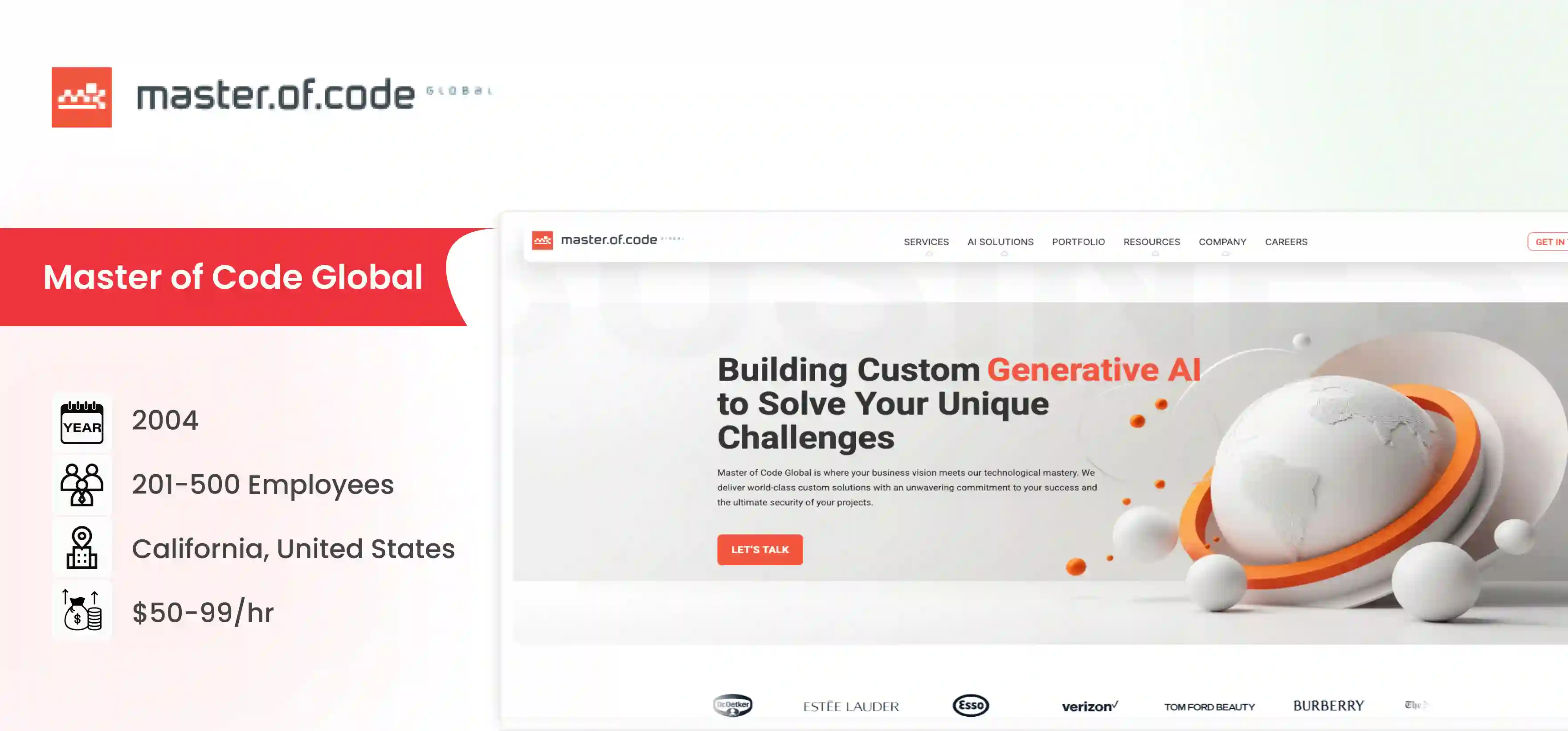
Master of Code
2004
201 - 500
California, United States
Conversational AI, generative AI, and enterprise chatbot development
E-Commerce and customer service leaders focused on hyper-personalized chatbots
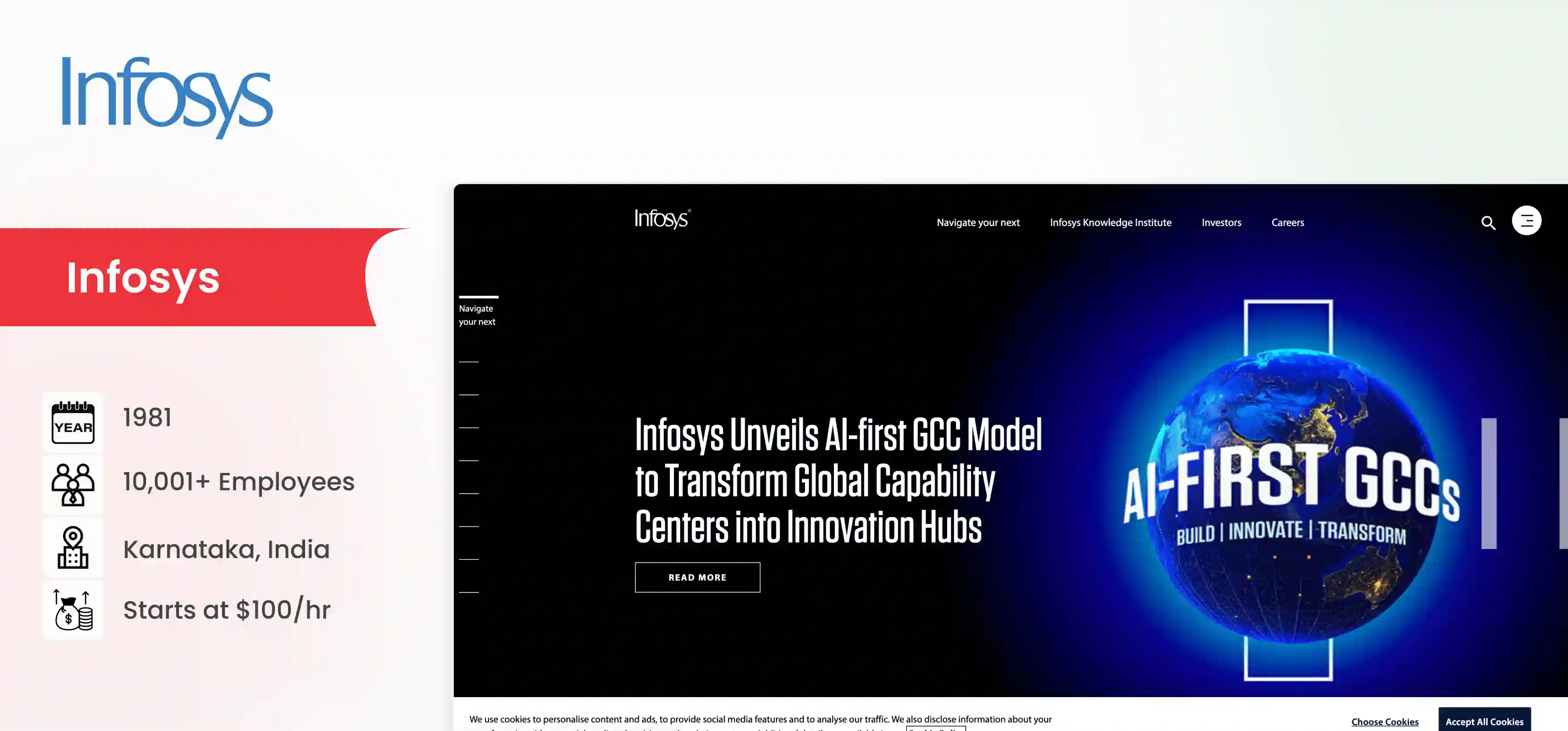
Infosys
1981
10,001+
Karnataka, India
Global consulting and AI platform capabilities
Large-scale AI democratization
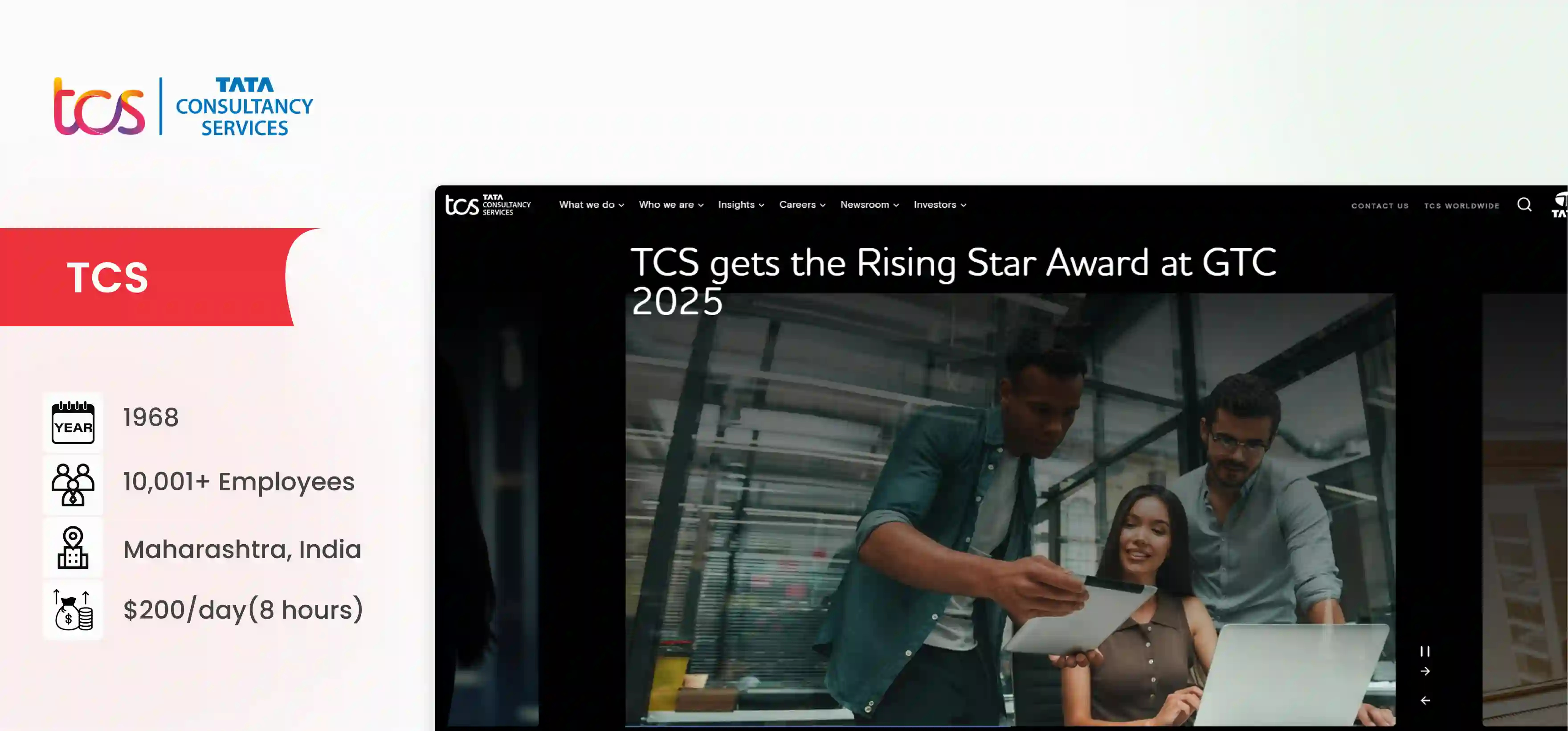
TCS
1968
10,001+
Maharashtra, India
Enterprise-grade AI with deep domain expertise and strong governance frameworks
Large enterprises requiring highly scalable, secure, and compliant AI agent systems
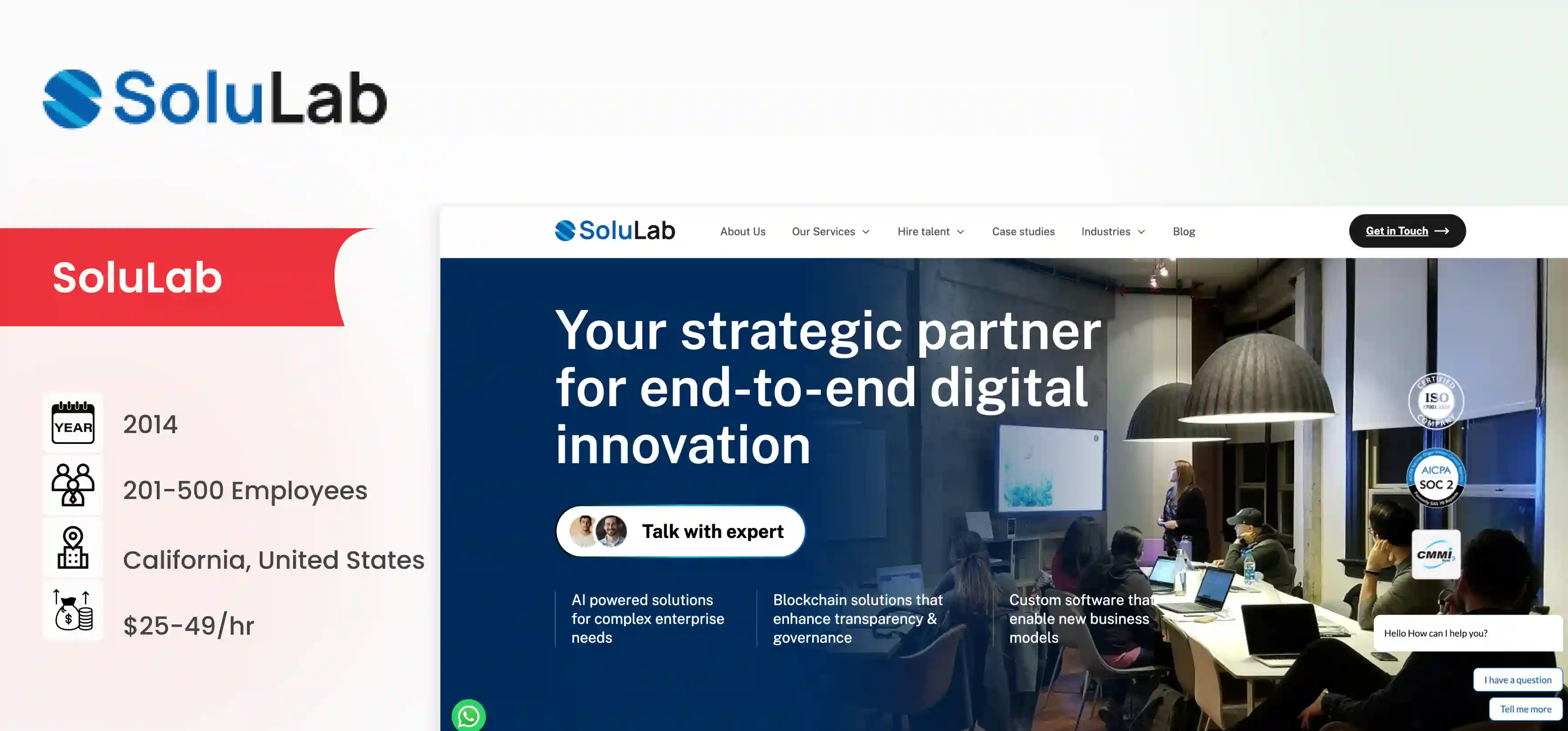
SoluLab
2014
201 - 500
California, United States
Generative AI and blockchain integration expertise
Startups and SMBs that need quick MVP development for chatbots
Azumo
2016
201 - 500
San Francisco, United States
Autonomous multi-agent systems with advanced orchestration, LLM-agnostic architecture, and strong MLOps
Workflow orchestration and real-time decision-making
Markovate
2015
51 - 200
Ontario, Canada
Strong expertise in generative AI, automation, and scalable product engineering
Startups and mid-sized enterprises
Appinventiv
2015
1,001 - 5,000
Uttar Pradesh, India
Enterprise-focused agentic AI with compliance-first design and scalable architecture
Enterprises needing secure, compliant, and scalable AI agents for decision automation
Top AI Agent Development Companies in 2026 (Expert-Reviewed)
How We Selected These Companies
We have listed the top 10 Agentic AIs development companies based on their global reach, number of employees, AI services provided by them, and pricing for those AI services. The factors we have considered are listed below.
Technical Expertise: We have prioritized AI agent development companies that have experience with LangGraph, CrewAI, or AutoGen. They include capabilities such as LLM integration and orchestration, memory and context management, and multi-agent architecture design.
Case Studies and portfolio: A strong portfolio shows the AI agent development companies' real capabilities. We have analyzed the AI agent development companies' ability to deliver projects similar to our use case, demonstrating business outcomes such as efficiency, cost savings, and automation impact.
Customization and Flexibility: We have ensured that the AI agent development companies offer tailored AI agents that align with the process. They should support both short-term MVPs and long-term scaling.
Integration and Scalability Capabilities: Since AI agents need to interact with many systems, integration is an important factor to be considered. We have assessed the company’s abilities API integration, experience in syncing with cloud infrastructure, and can scale up once demand increases.
Security and Compliance Standards: We have listed AI agent development companies that adhere to strong security standards, data encryption, access control, and secure deployment and monitoring processes.
The top AI agent development companies are listed below
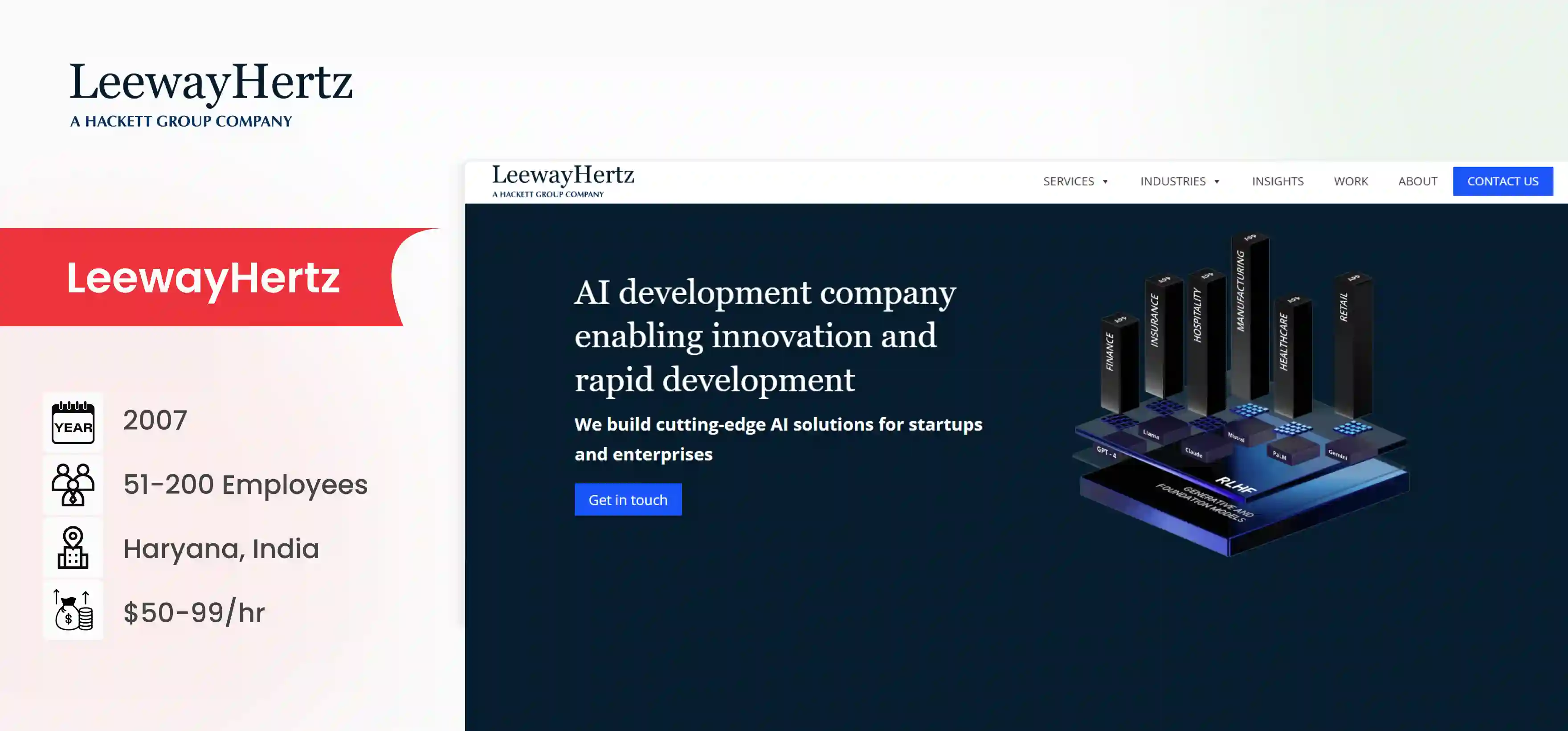
1. LeewayHertz
LeewayHertz is an AI agent development company that specializes in building AI agents, generative AI applications, and enterprise-grade automation systems. They deliver end-to-end AI agent development services for enterprises. Their expertise lies in multi-agent ecosystems that integrate seamlessly with existing workflows.
Key services of LeewayHertz:
LeewayHertz provides end-to-end development from initial strategy to AgentOps and scales effectively within existing corporate infrastructure to drive measurable ROI. Their consulting and strategy services include AI agents aligning with business goals and optimizing workflows.
They specialize in designing ecosystems using frameworks such as LangChain and CrewAI to execute complex, multi-step logic. It handles tasks such as research, automation, code generation, and decision-making across departments, including customer service.
LeewayHertz builds secure connectors that allow agents to interact with enterprise software, perform web research, and execute code to achieve specific goals.
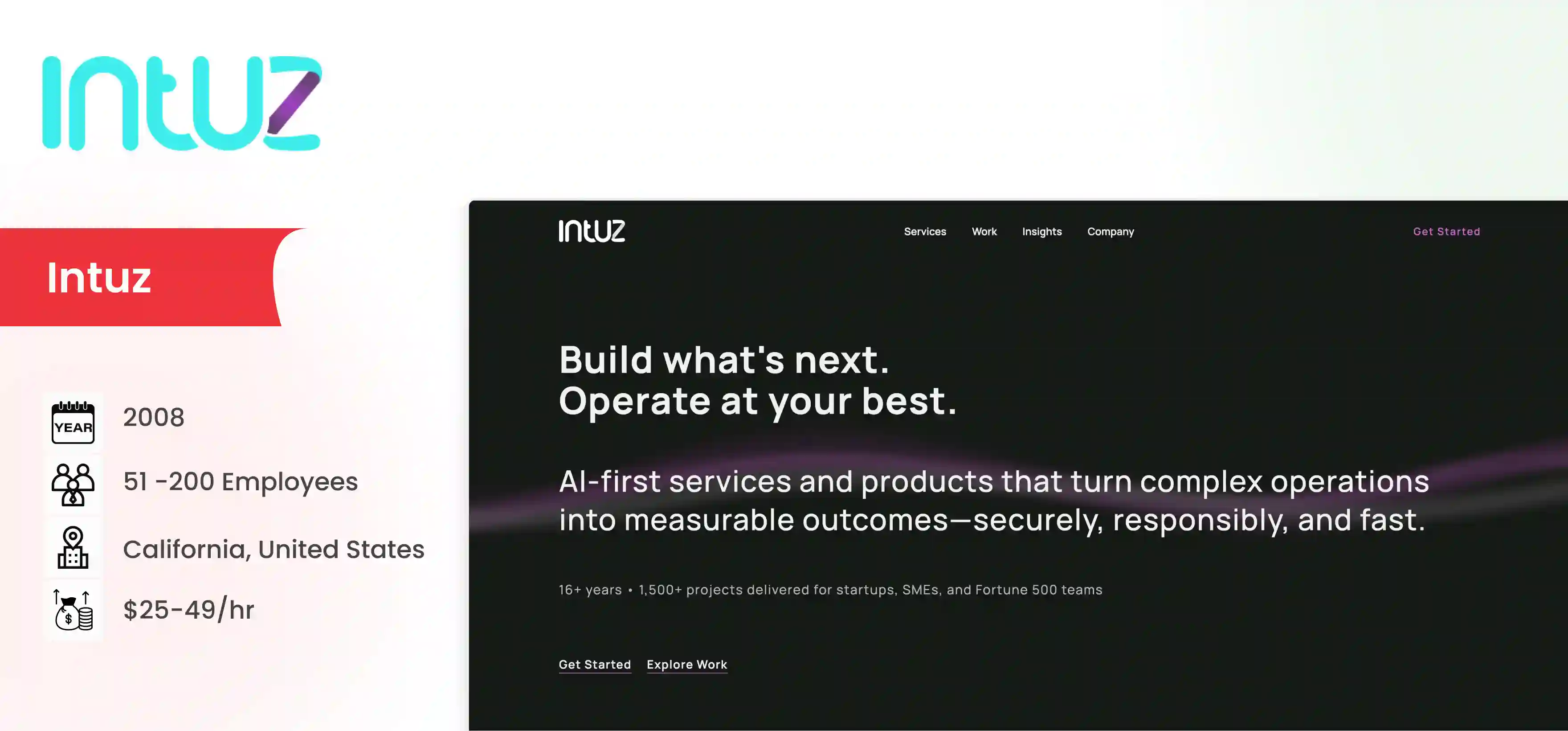
2. Intuz
Intuz is commonly described as a digital transformation company that is known for its rapid AI prototyping and custom agentic solutions for SMBs and enterprise teams. Their AI agent development services integrate LLMs, enterprise systems, and APIs to enable real-time decisions.
Key Services of Intuz
Intuz aims to provide end-to-end AI agent development services focused on transforming business operations through autonomous workflows. They provide AI strategy, consulting, and use case Identification by analyzing the business workflows and defining AI agents that can create the most impact.
They extend the services even after the launch to include continuous performance reviews, prompt tuning, and retraining with new data to prevent model drift.
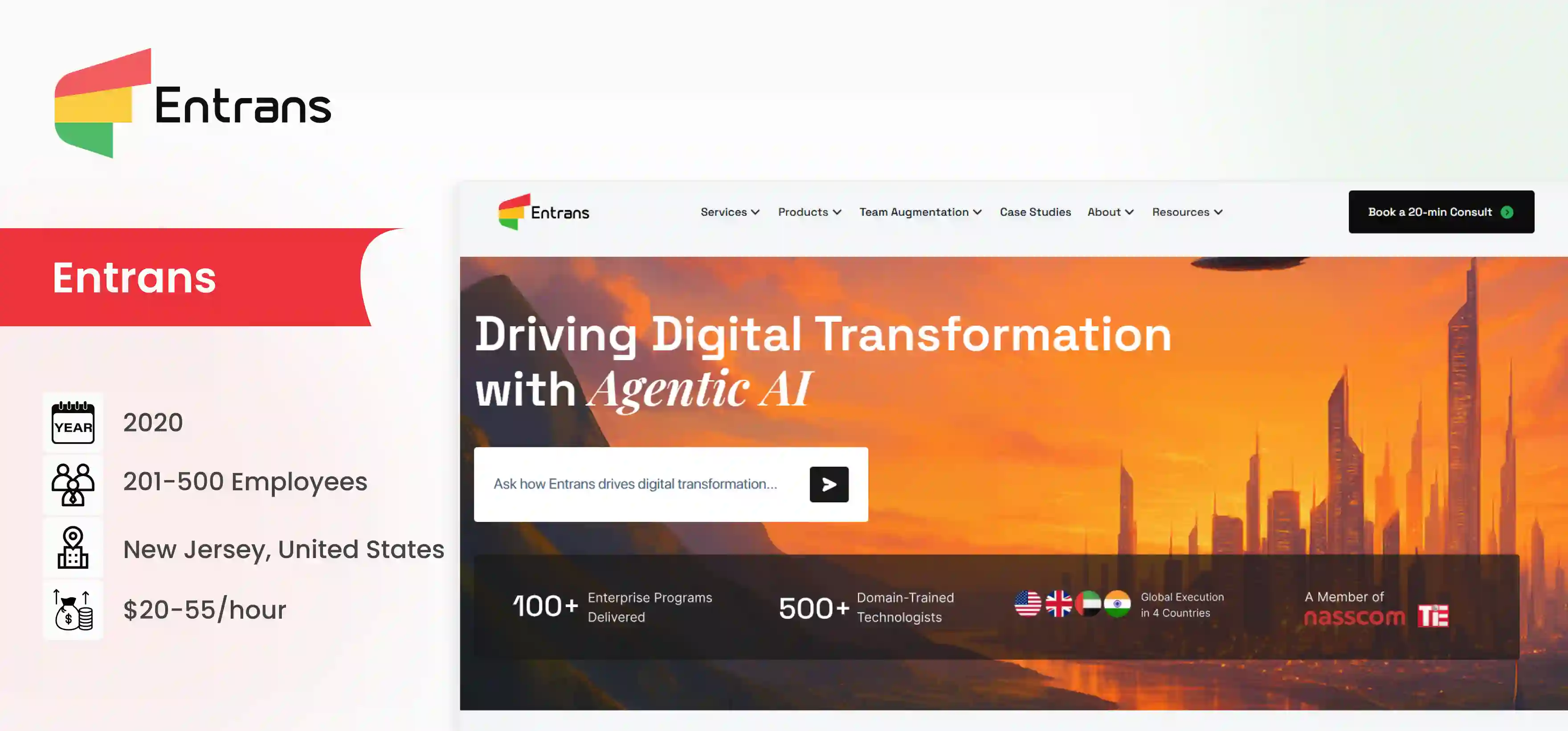
3. Entrans
Entrans is a global AI engineering and consulting company that specializes in Agentic AI development services. Our product team even built our own AI agent from scratch - Thunai.
Thunai turns our team’s knowledge into AI agents that act and respond instantly. We have handled big data projects for major market players. It was ranked the #1 product of the day on its launch by Product Hunt.
As an Agentic AI Development Company, Entrans provides AI solutions for automation and business transformation, including generative AI consulting, agentic AI consulting, integration, and developing customized solutions.
Key services of Entrans:
Entrans offers Custom Enterprise AI Agent Developmentby designing and deploying tailored AI agents that autonomously execute multi-step workflows across business functions such as operations, customer support, and IT.
Entrans builds custom AI agents that automate workflows, support real-time decision-making, and adapt to enterprise needs.
Generative AI services: Entrans offers custom Generative AI services from AI chatbots, text-to-image/video generations and processing, speech recognition, and synthesis.
Product engineering services: Entrans offers end-to-end services covering the entire product lifecycle. Its offerings include: Product ideation, UI/UX design, product testing, maintenance, and quality assurance.
Software testing: Entrans brings quality engineering across functional testing, regression testing, smoke/sanity testing, and AI-led automated testing for all edge-case scenarios.
Security and compliance: We embed advanced encryption and align with compliance standards, including GDPR and HIPAA.
Ongoing support: We provide post-launch support, bug fixes, enhancements, and reconfiguration with the solutions provided.
4. Master of Code Global
Master of Code Global is widely recognized as a premier service provider for high-end conversational design and customer experience (CX) strategy. It is distinguished by its product mindset that focuses on tangible business outcomes. With over 20 years of experience, they focus on building autonomous agents that integrate with CRM and ERPs.
Key Services of Master of Code Global
Master of Code Global helps businesses in identifying the high-impact use cases and guiding them to select the correct LLM and tech stack. Overall, they cover the entire lifecycle from auditing and planning to AgentOps, which includes continuous performance monitoring.
Their AI agent development services include designing and deploying autonomous agents from simple conversations to complex task execution. They include AI agents with CRM, ERP, and APIs, along with deployment, monitoring, and continuous optimization.
5. Infosys
Infosys is a leading software development firm that offers a complete suite of AI agent development services through its Infosys Topaz platform. Their services are oriented towards developing autonomous, goal-oriented systems that move beyond simple chatbots to systems that can handle multi-step business workflows.
Key Services of Infosys:
Infosys provides services through Agentic AI Foundry, which offers a catalog of horizontal and vertical agents to accelerate enterprise-wide scaling.
They develop a multi-agent ecosystem that utilizes domain orchestration to manage complex multi-step tasks across functions such as Finance and customer care.
Infosys utilizes autonomous agents to accelerate software delivery and modernize legacy systems by doing reverse engineering and creating cloud-ready environments.
TCS provides AI agent development services through its AI WisdomNext platform that sits above LLMs and agentic platforms. They specialize in Agentic Orchestration modeling business processes as dynamic ecosystems where agents interact and adapt based on business needs.
They partner with platforms such as GitLab to orchestrate AI agents across the whole software development lifecycle and help in refactoring legacy code, automating testing, and accelerating cloud-native deployments.
7. SoluLab
SoluLab is a globally recognized AI, Blockchain, and Web 3 development company. This dual expertise makes them a primary choice for enterprises seeking decentralized and highly secure autonomous agents.
Key Services of SoluLab:
SoluLab provides services that emphasize “startup-savvy productization,” which allows building smart products with rapid turnaround times. They mainly focus on end-to-end custom development that covers automation-focused and domain-specific use cases for both startups and established enterprises.
They integrate AI agents with enterprise systems such as CRMs, APIs, and databases. Their delivery timeline typically is from 3 to 10 months, ensuring that complex multi-functional agents are delivered within the necessary robustness for production use.
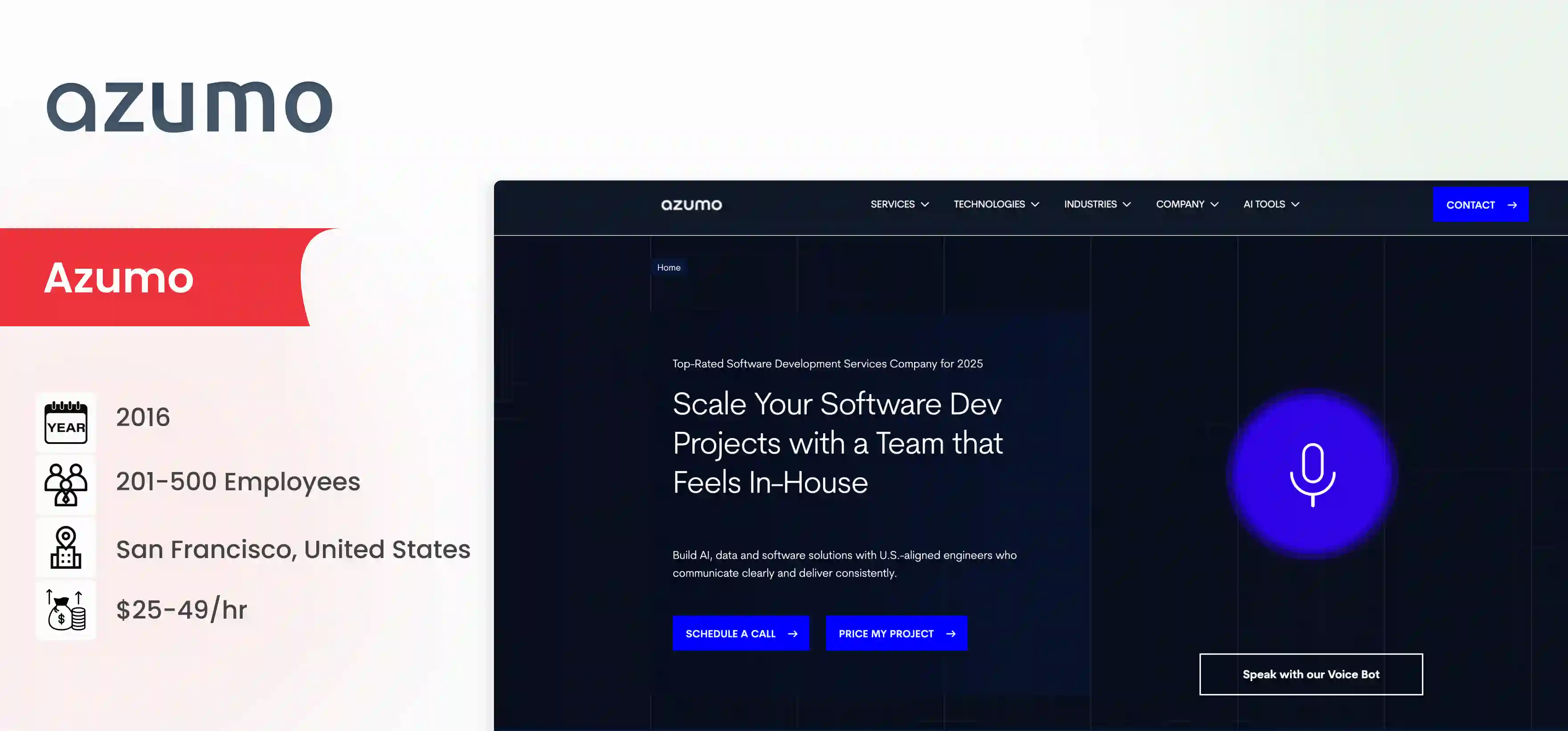
8. Azumo
Azumo is an award-winning Nearshore Software development company that specializes in AI, data engineering, cloud, and mobile solutions. With their senior technical team, they enable businesses to scale complex AI and machine learning projects with transparency and agility.
Key Services of Azumo
Azumo’s core part of service delivery involves the “Model Context Protocol,” which they use to standardize communication between agents and various backend systems such as Snowflake or Pinecone.
Azumo designs and builds intelligent AI agents and agentic systems tailored to business needs that enable automation, decision-making, and scalable AI-driven workflows across applications.
They seamlessly connect agents to CRMs and ERPs through secure APIs while maintaining SOC2 compliance. Their AI agent development services implement hard guardrails and audit trails to ensure autonomous actions remain secure and auditable within regulated industries.
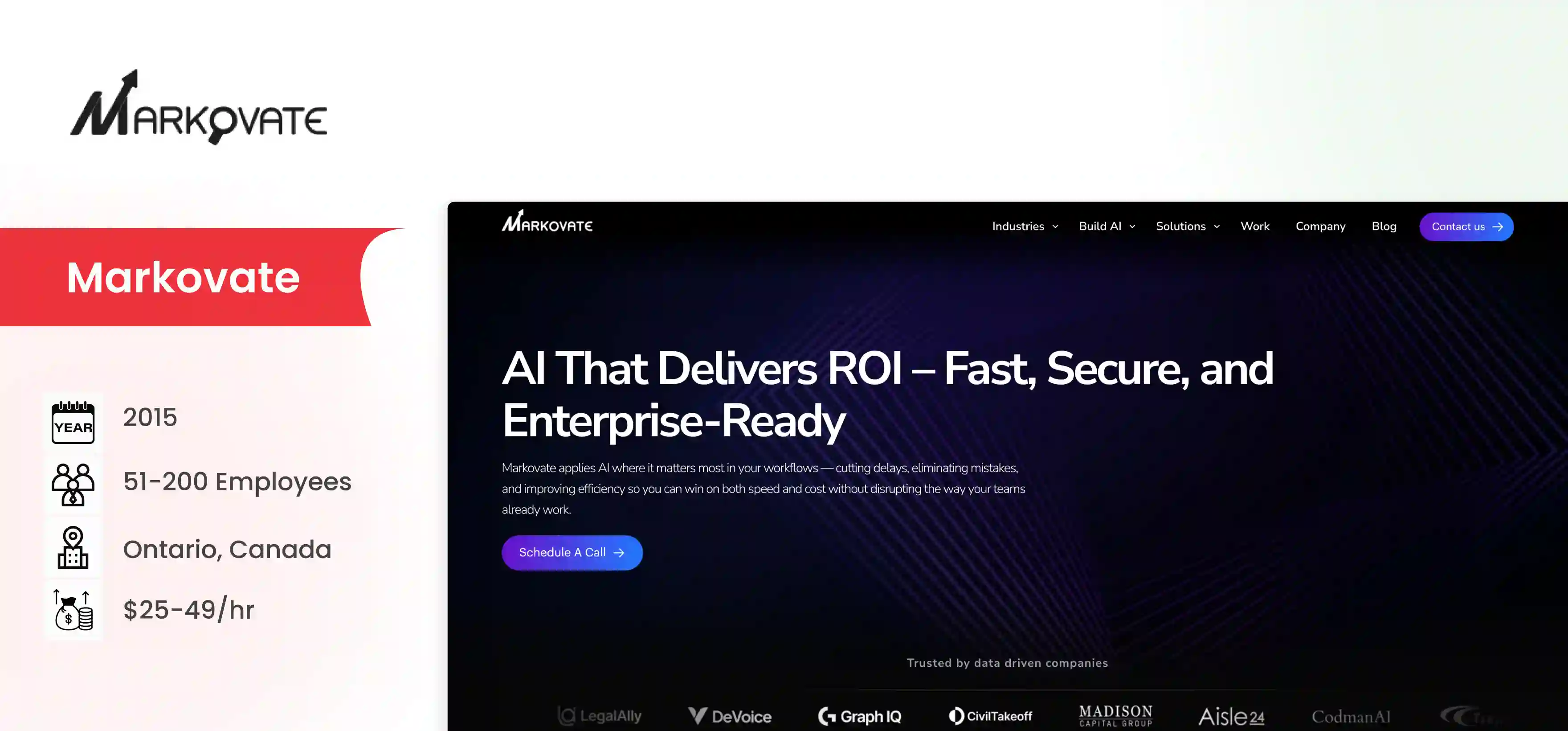
9. Markovate
Markovate specializes in transforming businesses through cutting-edge AI solutions. They focus on delivering scalable, ROI-driven solutions across industries such as manufacturing, healthcare, and fintech. By utilizing advanced frameworks and LLM integrations, they create intelligent systems that automate complex workflows.
Key Services of Markovate
Markovate designs and deploys goal-oriented agents that handle repetitive tasks such as lead qualification, order management, and real-time data analysis.
They develop specialized agents for high-stakes sectors such as AI medical, doing for healthcare, and CAD-to-BOM extraction.
Markovate creates scalable, self-learning AI ecosystems that integrate with enterprise tools such as CRM, analytics, etc. They produce services that are continuously adapting and optimizing performance as business needs evolve.
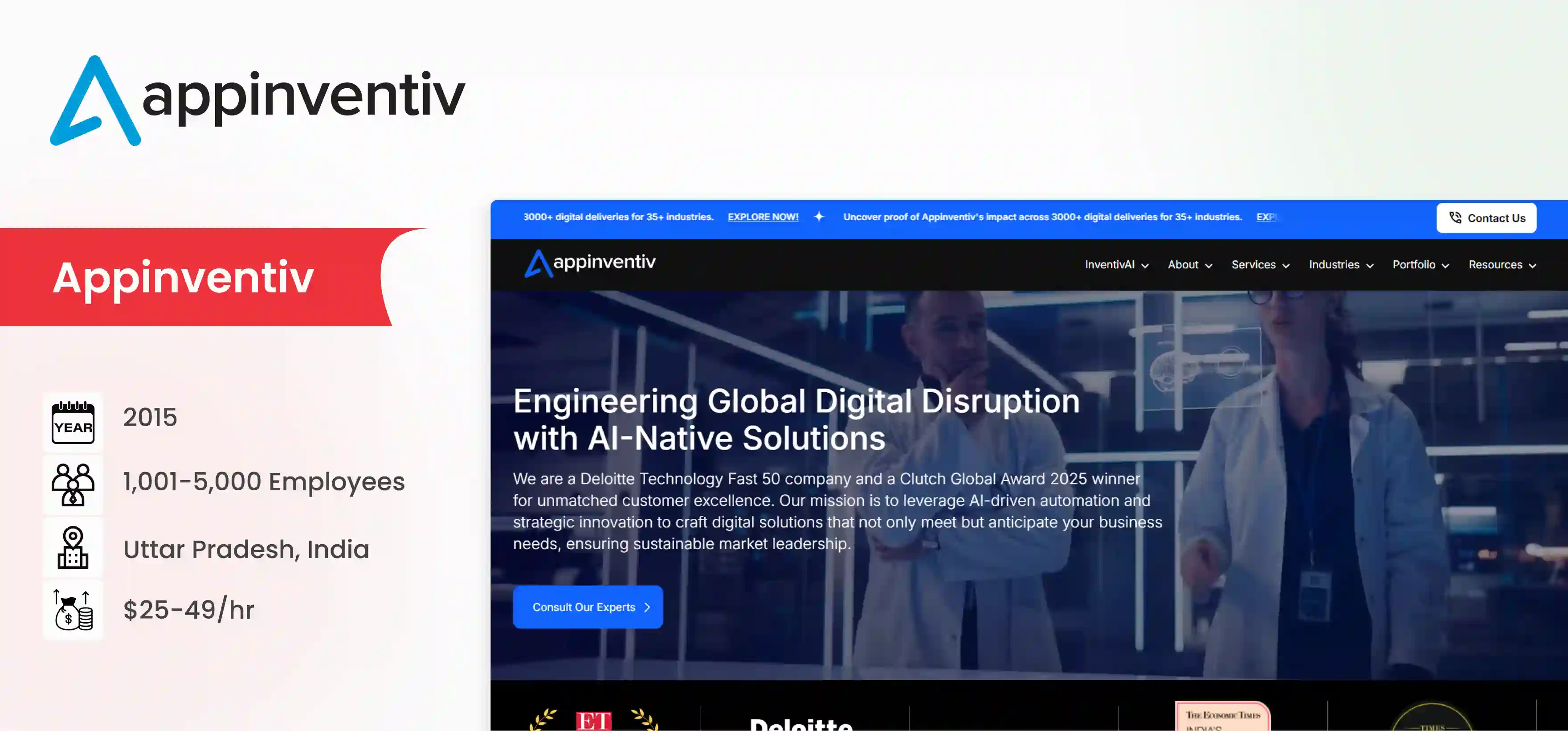
10. Appinventiv
Appinventv is recognized as a top-tier digital transformation partner that focuses on building “digital teammates” that can plan, reason, and adapt in real-time. Their services include the gap between strategy and production by integrating autonomous agents into secure, scalable, and compliant ecosystems.
Key Services of Appinventiv
Appinventiv builds enterprise-grade AI agents that are capable of reasoning, planning, and executing complex workflows autonomously. They identify high-value use cases through workflow mapping and automation scans, which help businesses decide between “Co-pilot” or a fully autonomous agent.
They also provide ongoing maintenance, including reinforcement learning and prompt engineering. This ensures agents remain accurate, reduce hallucinations, and scale securely within compliant-heavy industries.
Agentic AI Use Cases by Industry
The transition from chatbots to AI agents is redefining how industries handle multi-step workflows. The top use cases for Agentic AI across key sectors are discussed below.
Enterprise and Operations
Agentic AI streamlines complex business processes and acts as a digital orchestrator. The agents monitor inventory levels, identify system analogies, diagnose issues, and resolve incidents.
They can also help in the onboarding process and coordinate with HR and IT based on the new hire’s specific role. Agents also monitor global logistics data in real-time. If a delay is detected, the agent calculates the impact and proactively suggests rerouting or alternative suppliers.
Financial Services
When a suspicious transaction occurs, agents help in detecting fraud remediation. It can cross-reference the activity with the user’s travel history and can even temporarily freeze the account.
Banks and fintech companies make use of AI agents for answering customer inquiries, processing the requests, and giving personalized suggestions.
Healthcare
Agentic AI assists in analyzing the patient’s data, suggests diagnoses, and recommends treatment plans. They also help in tracking the health metrics and send reminders and alert providers in case of anomalies, improving patient outcomes.
Software Development
The “ Vibe Coding” era has evolved into “Agentic Engineering,” where agents handle the heavy lifting of the development lifecycle. AI agents monitor production environments for errors. When an issue is found, the agent creates a sandbox, reproduces the bug, writes a fix, and submits a pull request for review. They also help in modernizing the legacy code and mapping its functions, and rewriting those modules into cloud-native architectures.
Sales and Marketing
Agentic AI is used to identify potential leads, analyze behaviour, and qualify prospects based on predefined criteria. The AI agents deliver tailored content, recommendations, and communication across multiple channels to improve conversion rates.
Enterprise AI Agent Development: Special Considerations
Enterprise AI Agent Development goes beyond building functional automation. Unlike smaller deployments, enterprise environments demand scalability, reliability, and compliance.
The special considerations are
Ensure legacy systems and modern APIs are compatible and can seamlessly integrate with existing enterprise systems.
Ensure that role-based access controls are in place for agent actions.
Implement audit trails for agent decisions and actions.
Generic AI models are rarely sufficient for enterprise use cases. Train agents on domain-specific data.
They also need human oversight to ensure accuracy and accountability.
Open-Source Agentic AI Frameworks to Know
Agent AI frameworks have been grouped into distinct philosophies, such as Role-based, Graph-based, and conversational.
Framework
Core Philosophy
Best For
Technical Curve
CrewAI
Role-Based
Multi-agent role-based teams
Low
LangGraph
State-Machine
Complex workflows requiring precise state control
High
AutoGen
Conversational
Agents that talk to each other to solve problems
Medium
LlamaIndex
Data-Centric
Agents whose primary job is querying complex document sets
Low - Medium
Future Trends in Agentic AI Development
According to Gartner, Agentic AI is termed the number one strategic technology trend to shape the future. Agentic AI is rapidly evolving and marking several key trends.
Platformization of agentic AI: Major technology companies are looking forward to developing their own AI agents. This will show a shift towards foundation infrastructure and foster a broader ecosystem.
Multi-agent collaboration: The Future will see more of combined ecosystems of collaborative agents. Instead of relying on a single AI model, a network of agents will work together. Multi-agent orchestration is becoming the standard.
Specialization and verticalization: AI agents can be made more specific to industries and use cases. This includes agents in healthcare for diagnostics and triage in retail for personalized experiences.
Deeper integration: Agentic AI is deeply integrated with existing IT infrastructure and tools. This helps the agents to interact and utilize a wider range of resources in complex workflows.
Governance and security: This is a core pillar of Agentic AI development. Companies are focusing more on continuous auditing and creating transparent decision records by using algorithms.
Human-AI collaboration: AI will not completely replace humans; rather, it creates a collaboration ecosystem between them. AI agents automate tasks and analytical processes and reduce manual work. With a user-friendly interface and more natural language prompts, this collaboration can become very near.
Why Choose Entrans for AI Agent Development?
Choosing the right agentic AI partner for your business needs will open more opportunities. An agentic AI partner should reduce manual workloads and accelerate response times.
Thunai - an Agentic AI by Entrans is a perfect example of this. It acts as more than a tool and acts like a collaborative partner. Reports show that Thunai has resolved 61% of Level-1 support tickets autonomously and 99.9% accuracy in inbound call handling.
Which is exactly what a custom-built agentic AI can accomplish for your enterprise. Entrans handles product development, AI enterprise architecture, and builds CI/CD data pipelines from the ground up using a framework approach. Overall, it handles the end-to-end process, such as strategy, build, integration, QA, launch, and monitoring.
Want to know more about how we build enterprise AI agents? Book a consultation call to transform your workflow.
Entrans builds production AI agents end to end, from strategy through launch and monitoring.
Frequently Asked Questions
1. What is the best AI agent development company in 2026?
The best AI agent development company can be determined based on the use case, industry experience, scalability, and proven production deployments.
2. How much does AI agent development cost?
The cost for AI agent development depends on complexity, integrations, and scale. Typically, it may range from $25,000 for a basic MVP to over $300,000 for complex enterprise systems.
3. How do I develop an agentic AI system?
An agentic AI system can be developed by defining a use case, then by designing agent architecture, integrating LLMs, data pipelines, and tools. Use frameworks such as LangGraph or CrewAI to manage tool integrations and autonomous decision loops.
4. What are agentic AI development services?
Agentic AI development services include building autonomous agents that can make decisions, execute workflows, and integrate with enterprise systems. They also offer specialized services in orchestration frameworks, API integration, and continuous learning loops.
5. What is the difference between AI agent development and traditional AI development?
An AI agent differs from traditional AI and Gen AI. Traditional AI, such as chatbots, responds to prompts. Agentic AI is a combination of many Gen AIs, and it goes beyond Chatbots and Content Generators. In simpler terms, Agentic AI refers to AI that can take action independently.
6. How do I measure ROI from agentic AI development?
ROI is calculated by tracking operational labor savings, reduction in error rates, and speed of process completion. Successful projects show clear improvements in productivity, turnaround time, and operational scalability.
Hire AI Agent Developers From Entrans
The team behind Thunai, which resolves 61% of Level-1 tickets on its own.
20+ Years of Industry Experience
500+ Successful Projects
50+ Global Clients including Fortune 500s
100% On-Time Delivery
Thank you! Your submission has been received!
Oops! Something went wrong while submitting the form.
Free Project Consultation
Trusted by Enterprises & Startups
Top 1% Industry Experts
Flexible Contracts & Transparent Pricing
50+ Successful Enterprise Deployments
Arunachalam
Author
Arun S is co-founder and CIO of Entrans, with over 20 years of experience in IT innovation. He holds deep expertise in Agile/Scrum, product strategy, large-scale project delivery, and mobile applications. Arun has championed technical delivery for 100+ clients, delivered over 100 mobile apps, and mentored large, successful teams.
Related Blogs
Forward Deployed Engineer vs. Consultant vs. Professional Services
Compare a forward deployed engineer vs consultant vs professional services. Learn when to choose each model based on scope, execution, and production ownership.






-1.svg)