GCC vs. Outsourcing in 2026: Which Model Delivers Better ROI for Global Enterprises
GCC outsourcing services vs traditional outsourcing: compare ROI, costs, IP control, and speed across 3 and 5 years to find the right model for your enterprise.
GCC vs. Outsourcing in 2026: Which Model Delivers Better ROI for Global Enterprises
4 mins
July 5, 2026
Author
Kapildev Arulmozhi
TL;DR
Outsourcing wins on paper in Year One, but by Year Five a GCC delivers 35% to 50% in cost savings by cutting vendor margins and keeping all automation gains in-house. The longer you outsource, the more you pay for someone else's profit line.
Outsourcing vendors get paid for billable hours, not for innovation, so they have no reason to automate you forward. GCC teams built on your own data deliver up to 34% more measurable innovation and push release cycles to under 24 hours.
Pure captive GCCs take 18 to 36 months to set up with heavy capital going out before any output comes back. GCCaaS gets you fully functional in 3 to 6 months, with transparent pricing and full ownership once the center matures.
When a vendor underperforms and you try to leave, the transition alone costs six to eight months of lost engineering output. Then at renewal, they push margins up 10% to 20% knowing you have no real leverage to push back.
Overspending your budget on outsourcing contracts that keep ballooning at renewal?
Getting better output means hiring more, but can your vendor actually grow quality and not just headcount?
Running global delivery through traditional outsourcing is expensive, risky, and increasingly broken.
That is why forward-thinking enterprises are moving to GCC outsourcing services in 2026, and here is exactly how the ROI stacks up.
Table of Contents▾
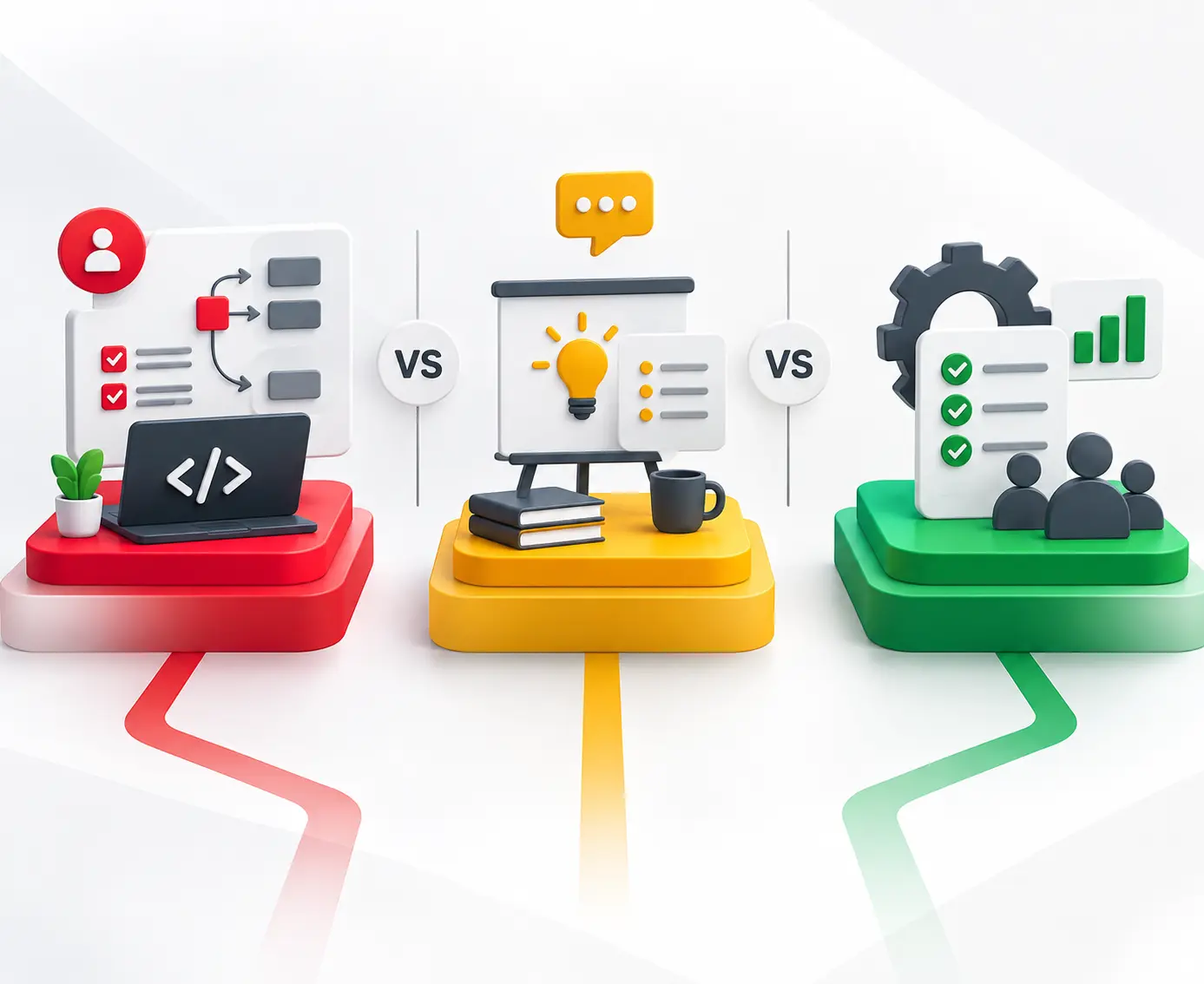
Defining the Three Models: Captive GCC, Traditional Outsourcing, GCC-as-a-Service
Before comparing ROI, you need to understand what you are actually choosing between. These are not variations of the same idea. They are distinctly different positions on how you build and own global delivery.
Traditional Outsourcing hands over execution of specific functions to a third-party vendor. The vendor owns the facilities, manages the talent, handles compliance, and operates within rigid SLAs. You are renting capacity, not building equity. Fast to get going, but you walk away with nothing when the contract ends.
Captive GCC is a fully owned offshore subsidiary. Your legal entity, your people, your IP. The center runs as a direct extension of headquarters with your culture built in from day one. Absolute control, but with a steep price: 18 to 36 months to get up and running, and heavy upfront capital before you see any output or ROI.
GCC-as-a-Service (GCCaaS) sits between the two. A specialised partner builds and runs the physical setup, handles payroll, real estate, and compliance, while you hold on to full ownership of the team, the roadmap, and the IP. The GCC outsourcing services model runs on a Build-Operate-Transfer (BOT) framework, meaning you can move the entire center into your own legal entity once it reaches maturity.
Book a Free Consultation
Share your details and our experts will reach out to discuss your goals.
GCC vs. Outsourcing: 8 Dimensions Compared
Choosing a global delivery model is not a cost-per-FTE calculation. This is a decision that shapes how much of your enterprise's future you actually own.
Control and Governance: Outsourcing means vendor-controlled execution, governed by rigid SLAs and expensive change requests. GCC outsourcing services on the hand you direct ownership of KPIs, OKRs, and engineering decisions with no renegotiations needed.
Talent Architecture: Vendors treat talent as interchangeable, cycling engineers across multiple client accounts. GCC employees build careers within your brand, averaging 4.2-year tenures with top performers staying on for over seven years.
Intellectual Property: Outsourcing brings real IP leakage risk through shared vendor platforms. GCCs keep sovereign data residency and Zero Trust security inside your own environment.
Cost Structure: Outsourcing looks affordable in Year One. GCC outsourcing services carry higher startup costs, but cut vendor margins entirely and put 35% to 50% in cost savings back on the table over five years.
Speed to Value: Outsourcing gets going in weeks for standardised tasks. Pure captive GCCs take 18 to 36 months. GCCaaS gets to functional readiness in 3 to 6 months.
Growth Capacity: Vendors grow headcount. GCC outsourcing services grow actual delivery depth, moving up from IT support into R&D, AI centers of excellence, and full product engineering.
Innovation Potential: Vendors are financially penalised for automating themselves out of billable hours. GCC outsourcing services are built to push AI experimentation forward, clear out technical debt, and own innovation output directly.
Operational Risk: Outsourcing claims shared risk but brings vendor dependency and compliance opacity. GCCaaS gives you full visibility while the partner takes on administrative and legal liabilities.
Why Outsourcing Alone No Longer Wins for High-Stakes Enterprise Work
Based on my experience as a COO, the quality drop is real.
Senior enterprise architects report taking over outsourced codebases that are badly broken. Basic architectural principles are missing. The code was built to look active rather than perform.
Rework and remediation costs run three to five times higher with external vendors than with in-house teams - that’s a fact that a lot of our clients bring up when being onboarded.
When enterprises try to move on from underperforming vendors, the transition eats up six to eight months of lost engineering output on average.
Economically, outsourcing vendors come in with low initial pricing to win the deal, then push margins back up hard at renewal. Typically 10% to 20% higher every cycle. You are not just paying for delivery. You are paying for their shareholders.
Outsourcing also brings systemic opacity. Vendors lock down their internal methods, which cuts off your ability to audit AI data supply chains, track operational numbers, or keep up the governance transparency modern boards are asking for. You cannot digitally transform what you do not directly control.
Why Pure Captives Are Slow, Capital-Heavy, and Risky
The long-term advantages of captive GCC outsourcing services are real and well-documented. But getting there is where enterprises run into serious damage.
Pure captive setup covers foreign entity incorporation, opaque local real estate markets, facility buildout from scratch, and local leadership hiring. All of that happens before a single line of productive output comes through. This process for GCC outsourcing services routinely takes 18 to 36 months. During that entire window, capital goes out with nothing coming back.
Boards are increasingly reluctant to sign off on heavy fixed asset purchases and long-term commercial leases in foreign jurisdictions. This is especially true when market conditions reward liquidity and flexible cost structures over large upfront spending.
Regulatory risk adds to the problem. Triggering a Permanent Establishment (PE) classification can happen through actions as routine as issuing laptops to offshore contractors. When that happens, your entire global revenue base can be pulled into local corporate taxation. The financial exposure is serious and often comes as a surprise.
Talent planning tends to backfire too. Without a recognised local brand, enterprises over-hire junior staff in Year One to show cost savings quickly. By Year Two, that choice creates a hard ceiling on delivery quality.
Expensive senior engineering hires get brought in to fix it, pushing real ROI further out. Industry reports call this the Missing Middle: middle managers burning out between headquarters expectations and local operational reality.
GCC-as-a-Service: The Build-Operate-Transfer Hybrid That Replaces Both
GCC-as-a-Service came about precisely because neither pure outsourcing nor pure captive fully solves the problem. Build-Operate-Transfer arrangements have gone from under 10% to approximately 40% of all new GCC outsourcing service setups in India. The model keeps winning because it works.
The financial setup for GCC outsourcing services is clearly different from outsourcing. Instead of opaque, marked-up hourly rates, GCCaaS runs on transparent cost-plus pricing.
You get full open-book visibility covering exact salaries, real estate costs, software licenses, and statutory benefits. The management fee typically comes in at 12% to 18% of operating costs. No hidden margins building up over time.
Once the center hits operational maturity, usually within 12 to 36 months, the enterprise exercises its contractual right to take over everything: physical assets, employment contracts, and talent.
Legally binding reverse non-solicit agreements stop the partner from pulling elite engineers out before handover. You built it using their setup. You own it completely.
For mid-market enterprises, Fractional GCC outsourcing service variations let multiple non-competing clients share premium office space and administrative overhead. Fully separated R&D teams stay in place. Fixed costs come down sharply without giving up team quality or exclusivity.
When Traditional Outsourcing Still Makes Sense
Outsourcing is not obsolete. The model has been misapplied. The most sophisticated enterprises in 2026 do not pick one model and stick with it. They run both deliberately, matching each one to the work it actually fits.
Outsourcing also works well as a low-risk way to test new ground. Before committing GCC outsourcing services or resources to a new geography or function, bring in an outsourced vendor to check out the market, test talent availability, and prove the concept.
Traditional outsourcing pays off when applied to highly transactional, commoditised, peripheral functions that have no connection to your competitive edge. These include:
Routine Level 1 IT helpdesk and ticket resolution
Standardised legacy payroll processing
Basic facility maintenance and monitoring
Seasonal customer service surges such as retail peaks, holiday spikes, and short-term campaign support
When a GCC Outsourcing Becomes A Win
GCC outsourcing services and GCCaaS stops being optional the moment the work touches competitive differentiation, proprietary data, or long-term revenue generation.
Real AI transformation cannot be carried out through disconnected outsourced teams.
Engineers need to know your legacy data architecture, your platform specifics, and your customer ecosystem in depth. Outsourced teams cycling between client accounts do not pick up that kind of knowledge. GCC teams do.
In IP-sensitive industries such as BFSI, Aerospace, Private Equity, and advanced Retail, the GCC outsourcing services model is the only structure that holds up.
Proprietary trading algorithms, financial models, supply chain intelligence, and customer datasets need to stay inside your corporate boundary. The GCC keeps them there. Outsourcing structurally cannot.
Talent density is what settles it. McKinsey's 10/30/50 model sets the GCC up as a talent headquarters for the entire enterprise, where 10% of global corporate leaders come out of the GCC. That is not a cost center.
That is a directional pillar. GCC outsourcing service teams running under this model cut release cycles to under 24 hours and put out up to 34% more measurable innovation than equivalent outsourced teams.
Cost Comparison: Total Cost of Ownership Over 3 and 5 Years
Outsourcing wins Year One. No setup CAPEX, no entity registration costs, no leadership hiring overhead. The cost-per-FTE looks good on a quarterly board deck.
Year Three is where the numbers turn. A well-managed GCC outsourcing services pulls ahead by 20% to 35% over traditional BPO models by the end of Year Three. That happens strictly by cutting vendor margins and keeping all automation gains in-house rather than passing them back to a vendor's profit line.
By Year Five, the gap is substantial: 35% to 50% in sustained cost savings compared to long-term outsourcing. Three compounding factors drive that number:
Vendor renegotiation costs, which go up 10% to 20% every contract renewal cycle, are completely removed
Mature GCCs in Tier-2 and Tier-3 cities lock in real estate and wage advantages that vendors rarely pass on to clients
All gains from internal AI deployment, automation, and process improvement stay with the enterprise, not the vendor
For procurement-specific operations, enterprises running outsourcing average 18% to 25% in savings over five years. GCC operations with AI-driven demand forecasting and autonomous processing regularly go past 30%. And they do it without paying a premium for the technology that makes those gains happen.
Operating Model Comparison: Governance, KPIs, IP and Data Security
The operational differences between outsourcing and GCC models or GCC outsourcing services go well beyond cost. They define how decisions get made, what gets measured, and how secure your most valuable assets actually are.
Governance: Outsourcing governance runs through vendor contracts and SLA compliance. Changing a technology stack or adjusting engineering standards means going through formal renegotiation. That process is slow, expensive, and out of step with how fast businesses need to move.
KPIs: Outsourcing gets measured in effort metrics: cost-per-FTE, hours billed, ticket resolution time. These numbers track vendor activity, not enterprise value. Modern GCC outsourcing services have performance scorecards that track business impact through deployment frequency, AI automation coverage, revenue contribution, customer NPS, and time-to-market.
IP and Data Security: Outsourcing pushes sensitive workflows through multi-tenant vendor networks. That multiplies attack surfaces and opens up compliance gaps around data residency laws. GCC outsourcing services run native Zero Trust architectures directly within the corporate network perimeter.
Decision Framework: 7 Questions to Know Which Model to Choose
Stop comparing models in the abstract. Work through these seven questions about your specific situation. The right model becomes clear.
What is the primary intent of the operation? Carrying out routine, non-differentiating work at the lowest cost? Outsourcing. Building lasting institutional depth and an AI-led innovation center? GCC outsourcing services, captive or managed.
How sensitive is the IP and data? Proprietary algorithms, LLM training data, or strict data residency rules such as GDPR or HIPAA? You cannot take on the knowledge spillover risk that outsourcing brings. GCC only.
What is the required speed-to-value? Need capacity up and running in weeks? Outsourcing. Want full operational control without the 18-to-36-month setup of a pure captive? GCCaaS gets to functional readiness in 3 to 6 months.
What is the CAPEX tolerance? Your CFO wants a variable OPEX with full operational control? GCCaaS with transparent cost-plus pricing is the only model that delivers both at the same time.
Are we trying out a concept or building a permanent footprint? Short-term market validation or seasonal elasticity? Outsource and pull out cleanly. Permanent capability that acts as a true headquarters extension? Build a GCC.
What is the long-term talent plan? You need specialists who have built up deep knowledge of your platform and internal culture over years, not vendor-assigned generalists rotating through accounts. The direct-hire model of a GCC is the only way to get there.
Who carries geopolitical and administrative risk? No internal bandwidth to deal with PE risk, local labor law, and foreign compliance? GCCaaS partners take on those liabilities during setup while you hold on to full operational control.
How Entrans GCC-as-a-Service Removes the Trade-offs
Entrans Technologies built its GCCaaS model specifically to sort out the tension that forces enterprises into choosing between speed and control.
Entrans takes care of entity setup, A-grade Zero Trust real estate procurement, payroll structures, and labor law compliance. You own the product roadmap, the engineering culture, and the IP completely, without waiting for operational maturity to arrive.
In a recent deployment for a Fortune 500 BFSI enterprise, Entrans stood up a fully operational GCC with over 300 specialised FTEs in nine months. That center achieved 3x faster release cycles, cut customer service handling time by 25%, and put out over 20,000 hours of annual savings through intelligent automation.
Want to see how Entrans can help you with GCC outsourcing services? Book a free consultation call!
Entrans sets up your GCC, handles compliance, and hands over full ownership when you are ready.
FAQs: GCCs vs. Outsourcing
1. What is the main difference between traditional outsourcing and a GCC?
Outsourcing contracts a third-party vendor to run specific functions using their own facilities and talent pool. A GCC, whether captive or managed, is a dedicated facility that acts as a direct extension of your enterprise. Primary functions are carried out with IP and team direction under your own leadership.
2. How does GCC-as-a-Service differ from a traditional captive GCC?
A captive GCC requires you to independently handle foreign incorporation, real estate, and full legal compliance. That typically takes 18 to 36 months and calls for significant CAPEX. GCCaaS brings in an experienced local partner to compress setup to 6 to 12 months and converts fixed CAPEX into variable OPEX. You keep total IP and operational control throughout.
3. Does outsourcing actually cost less than a GCC?
In Year One, yes. Over three to five years, no. A well-managed GCC outsourcing services delivers 35% to 50% in sustained cost savings compared to long-term outsourcing by cutting vendor margins and keeping all productivity gains in-house.
4. What is the Build-Operate-Transfer (BOT) model?
A specialised partner builds and runs the center through the high-risk setup phase. Once the center hits operational maturity, typically 1 to 3 years, the enterprise exercises a contractual option to take over full ownership of assets, operations, and the entire talent pool into its own legal entity.
5. Why are enterprises moving away from outsourcing for AI and product engineering?
Outsourcing vendors get paid for billable hours, not for innovation. Real AI work requires deep knowledge of your proprietary data and the freedom to try things out without triggering vendor change requests. GCC outsourcing services protect the IP and keep the workforce pointed at driving enterprise value rather than hitting vendor utilisation targets.
Hire GCC Engineers in Weeks, Not Months
Dedicated teams, transparent pricing, and Zero Trust infrastructure from day one.
20+ Years of Industry Experience
500+ Successful Projects
50+ Global Clients including Fortune 500s
100% On-Time Delivery
Thank you! Your submission has been received!
Oops! Something went wrong while submitting the form.
Free Project Consultation
Trusted by Enterprises & Startups
Top 1% Industry Experts
Flexible Contracts & Transparent Pricing
50+ Successful Enterprise Deployments
Kapildev Arulmozhi
Author
Kapil is the Co-founder and CMO of Entrans, bringing over 20 years of experience in SaaS sales and related industries. He is responsible for creating and overseeing the revenue-driving systems at Entrans. Having collaborated extensively with tech leaders and teams, Kapil possesses a keen understanding of the decision criteria and ROI-justifiable initiatives essential for business growth.
Related Blogs
Forward Deployed Engineer vs. Consultant vs. Professional Services
Compare a forward deployed engineer vs consultant vs professional services. Learn when to choose each model based on scope, execution, and production ownership.







-1.svg)