Agentic Unconference 2026 - September 19, Chennai
View Event →




Invoices existed across PDFs, scanned documents, and structured records with no standardized extraction mechanism. Traditional rule-based systems could not accurately interpret this variation.

Finance teams were manually comparing invoice fields against PO and GRN records to catch mismatches in quantities, pricing, and supplier details. This process was slow, error-prone, and created downstream delays in payment approvals and financial reporting.


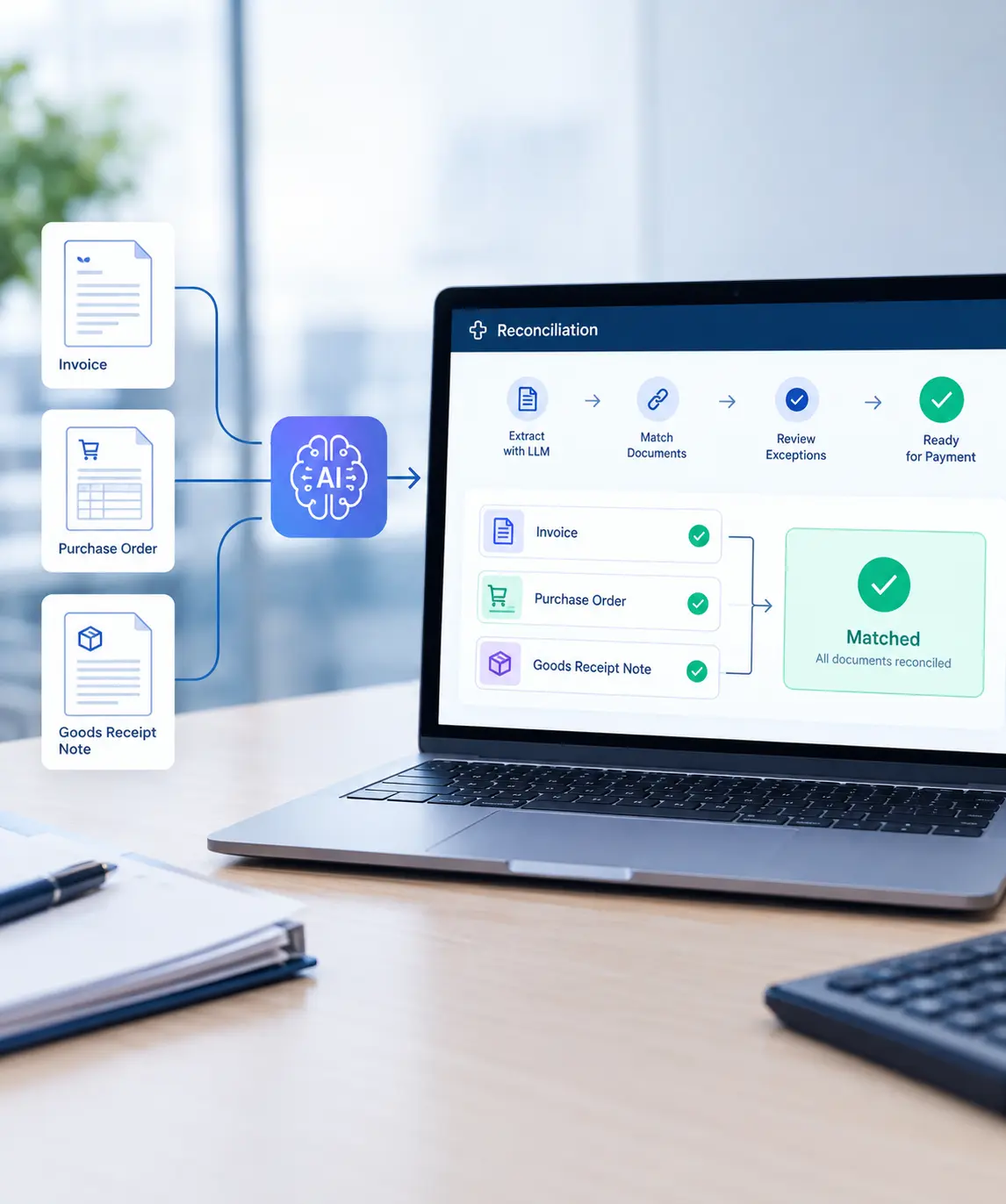
LLM functions via AWS Bedrock were connected to extract key fields, including invoice numbers, supplier details, quantities, and pricing, from PDFs, scanned documents, and structured records.

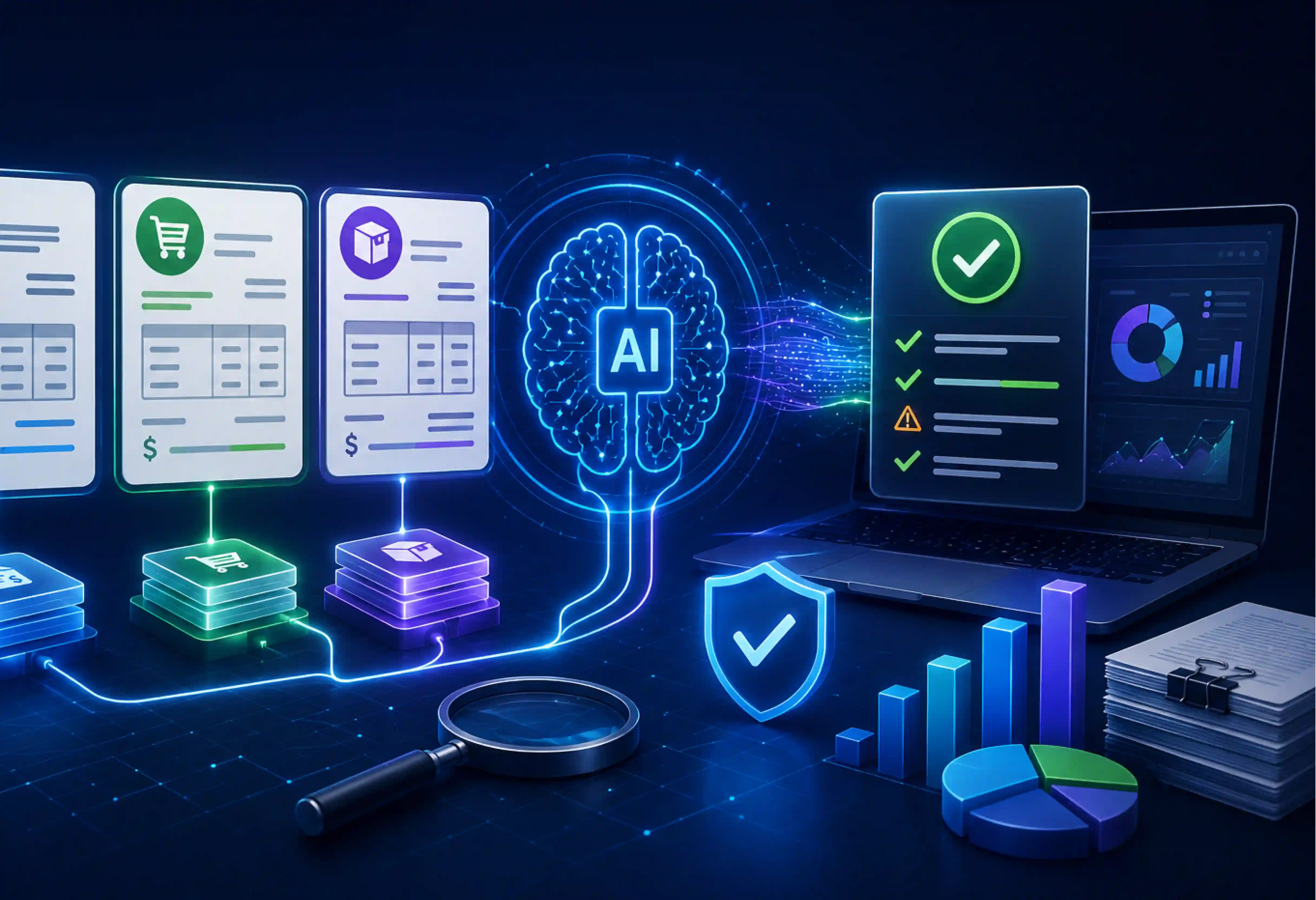
Extracted invoice data was automatically compared against corresponding Purchase Orders and Goods Receipt Notes to validate transaction accuracy across procurement records.

The platform identified quantity differences, pricing inconsistencies, missing line items, and incorrect supplier information, flagging them directly for finance team review.

MongoDB was used for flexible document storage while PostgreSQL handled structured transactional data, supporting efficient validation across both data layers.

A Flask-based application managed document ingestion, validation pipelines, and reporting, giving finance teams a centralized interface for end-to-end reconciliation management.


80% Reduction in Manual Reconciliation Effort by automating invoice extraction, PO matching, and GRN validation, freeing finance teams to attend only to flagged discrepancies.

Multi-Format Document Coverage achieved across PDFs, scanned documents, and structured records through LLM-powered extraction via AWS Bedrock with consistent field-level accuracy.

2X Faster Payment Processing supported by automated discrepancy detection and faster approval workflows, reducing delays caused by manual verification across procurement cycles.