Build an agentic AI governance framework for banking before deployment: autonomy tiers, agent registries, guardrails, and kill switches that pass audits.

Agentic Unconference 2026 - September 19, Chennai
View Event →





Modern banking is moving towards autonomous AI agents that can think and take actions. This shift changes everything. Traditional AI models only predicted customer churn, but agentic AI in banking is autonomously moving funds and approving credit lines. Relying on outdated checkbox governance is precisely why promising pilots stall out before production. To safely bridge this trust gap, banks must establish a proactive agentic AI governance framework for banking that moves past static filters.
In this article, we will explain the practical pre-deployment blueprint required to manage agentic AI risk management and get your AI agents production-ready.
AI agents are changing how organizations automate work. Governing AI agents is more like managing an employee. The main shift happened from static outputs to dynamic action, which changes the rules of risk and oversight. AI agents can plan, make decisions, call external tools, and complete multi-step tasks. This introduces governance challenges that can go beyond conventional model risk management.
Traditional model governance focuses on data lineage, bias detection, and predictable outputs. Agent governance, however, must regulate behavior. Because agents can autonomously browse the web, access databases, and use external APIs, they don’t just generate text. Managing them requires runtime monitoring to catch unpredictable emergent behaviors before they cause harm. As a result, governance must cover not only model accuracy but also permissions, decision boundaries, and operational safeguards.
As traditional models of governance deal with the validation, monitoring of performance, testing of bias, and documentation of models, governance in the case of AI agents needs to concentrate on the action that the agent is programmed to do, the tools that the agent is capable of using, approval processes from humans, and how each action is tracked.
Agents are not individual models; they are an entire decision-making system. Therefore, good governance involves all the models, prompts, tool integrations, memory, workflows, and logging involved. Companies that approach agents in the same way as other models are likely to have governance gaps that will be easy to spot by regulators and auditors.
Agentic AI has generated significant interest across industries, with organizations piloting agents for customer service, operations, compliance, and software development. Yet many of these pilots fail to progress into production. The challenge is rarely the AI model itself. It is the lack of enterprise-ready engineering, governance, and operational controls. Most of the AI projects fail before deployment for two major reasons.
During the pilot phase, an AI agent works in a controlled environment with proper inputs and determined outputs. But agents use dynamic reasoning to decide how to accomplish a goal. In production, this can lead to logic mistakes, API chaining failures, or runaway costs. Recover from failures and operate reliably at scale. Without these capabilities, promising pilots remain isolated experiments.
Giving an AI model access to view data is relatively safe; giving an agent the autonomy to act on that data is a massive liability risk. Production readiness requires foolproof security boundaries by ensuring the agent won’t accidentally delete records. Even unauthorized financial transactions can also happen.
This clearly implies permission to be managed, human oversight needed, audit logs, policy enforcement, and continuous monitoring are essential before production deployment. Security, compliance, and risk teams also require evidence that agents behave consistently and remain within their boundaries.
AI agent governance highlights the importance of treating production readiness as a design requirement. Agentic AI programs establish governance, observability, testing, evaluation, and operational controls alongside agent development. By engineering these foundations early, organizations can move beyond successful pilots and deploy AI agents with confidence.
To move safely from pilot to production phase, enterprises need a rigid agentic AI governance framework for banking that defines what an agent can do and access before it ever touches the real-world data.
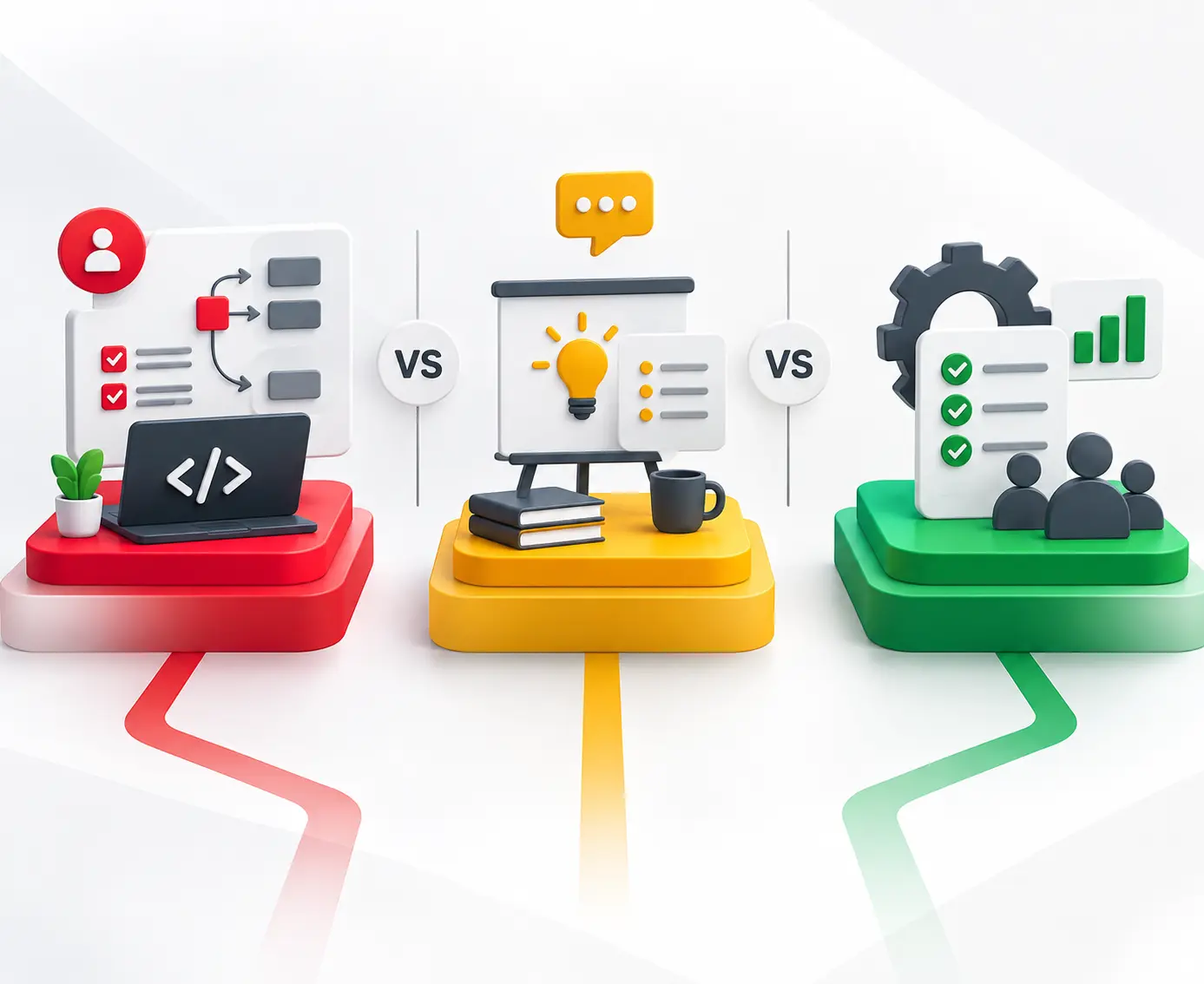
Not all the AI agents carry the same amount of risk. The first step is to categorize them based on their degree of autonomy. An agent that drafts recommendations requires different oversight than one that can approve transactions or update production systems. Classifying the agents can help in applying the right level of validation, approval process, monitoring, and human oversight before moving to deployment.
For example, tier-1 denotes an advisory agent that simply suggests email drafts require minimal oversight. A Tier-3 autonomous agent that actively executes financial transactions or alters database records requires maximum security.
One cannot govern what one cannot see. A centralized agent registry acts as your organization's single source of truth, listing every active agent, its business owner, the underlying models it uses, and its intended purpose — the agent-layer equivalent of the AI model inventory regulators already expect. A registry acts as a kind of ledge that ensures full visibility, prevents “shadow AI” duplicates, and makes lifecycle management and compliance auditing much simpler.
Agents should have their own distinct digital identity. Apply the principle of least privilege by scoping specific permissions and limiting exactly which tools and APIs the agent can call. If an agent only needs to read a calendar, ensure it doesn’t have the write-access permissions to delete events.
The final step is to set up hard operational boundaries. This means establishing human-in-the-loop checkpoints for high-risk decisions, such as client proposals and real-time validation guardrails to block rogue outputs. In addition, establish guardrails that restrict prohibited actions, sensitive data access, and operational boundaries.
Every agent should also include a kill switch that allows administrators to immediately suspend or disable its activities if unexpected behavior occurs. They help ensure AI agents remain safe, auditable, and aligned with organizational governance requirements.
As organizations move beyond single AI agents, they increasingly deploy multiple agents that collaborate to complete complex business processes. On improving scalability and automation, it also introduces new governance challenges. As enterprises move past isolated AI bots, the next frontier is managing multi-agent systems - environments where specialized autonomous agents collaborate, pass tasks to one another, and solve complex workflows.
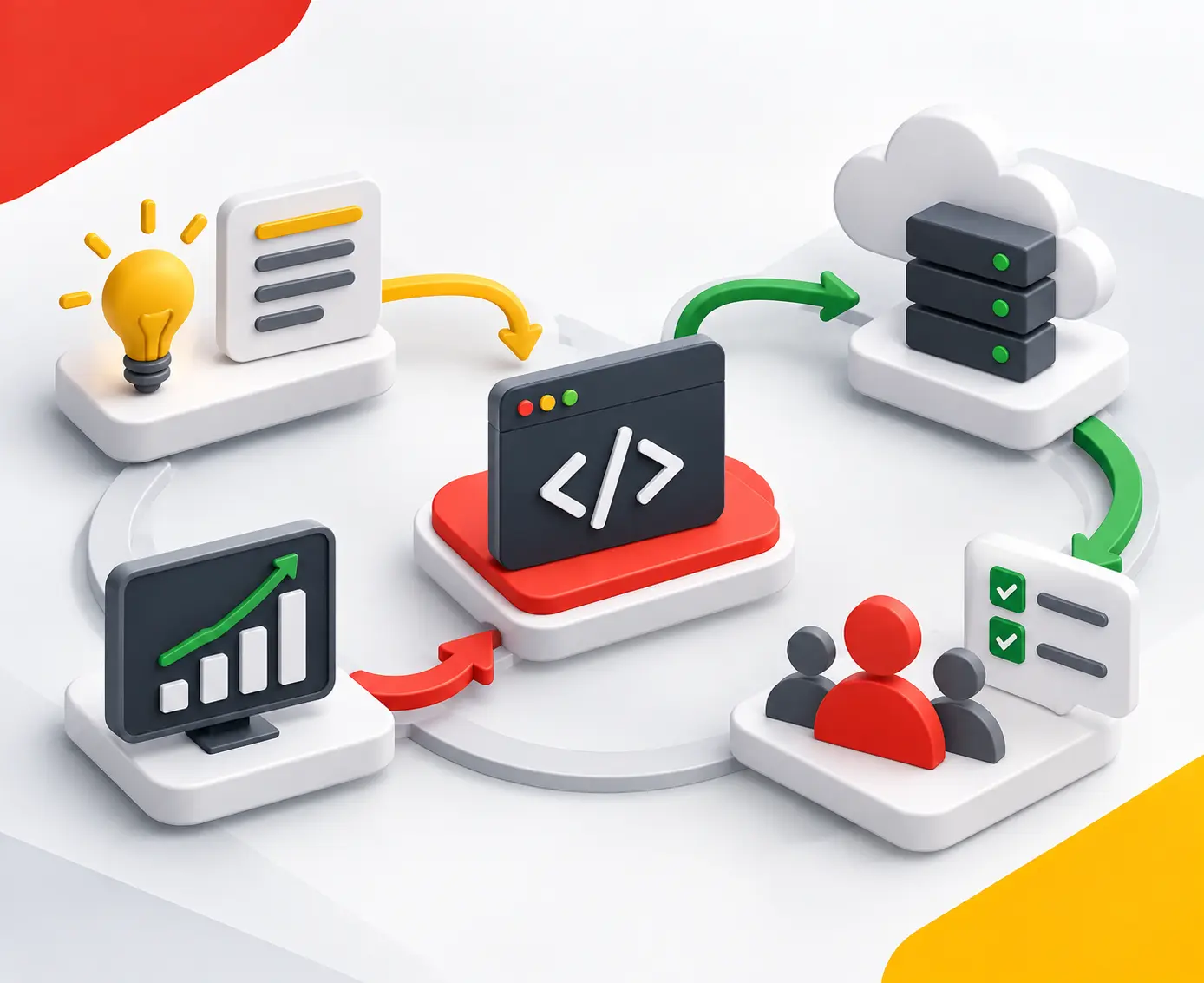
Effective governance starts with understanding the process of how agents interact. Organizations should establish clear roles for every agent, communication roles, and document how decisions flow across the system. Shared memory, tool usage, data access, and task handoffs should all be monitored to prevent unintended actions or cascading failures.
Every action taken by the agent should be logged with complete traceability. Audit trails should capture which agent initiated a task, what information it accessed, which tools it used, and how the outcome was reached. Through continuous monitoring, detect unexpected behavior, policy violations, or operational drift before they become business risks.
Multi-agent governance cannot rely on a single firewall. It requires a layered approach:
At Entrans, we specialize in architecting secure, resilient Agentic AI systems designed for the modern enterprise. We help organizations design, deploy, and scale multi-agent ecosystems with robust governance frameworks built from day one.
To bring these managed agent workflows to life, we utilize Thunai.ai - an advanced AI platform that serves as the ultimate orchestrator.
As AI agents are increasing their popularity, governance must be built into the architecture rather than added after deployment. A reference architecture provides a structured approach for managing security, compliance, observability, and operational control across the whole agent lifecycle. A standardized reference architecture ensures that every agent operates within strict enterprise boundaries, protecting data privacy and system integrity.
A robust agent governance architecture splits responsibilities into three distinct conceptual layers:
Each AI agent should have a defined identity, authenticated access, and role-based permissions. Access to enterprise data, APIs, and external tools should ensure that agents perform only the actions that are authorized to execute.
A good AI agent governance framework will require central policy enforcement, runtime guards, and monitoring. All actions, from prompts to decisions and results of tool invocations, must be logged to immutable audit logs. Such features help to trace everything, simplify compliance, and quickly investigate any unexpected actions.
At Entrans, we check your production readiness through the end-to-end Entrans Platform. We integrate cutting-edge agent orchestration with enterprise-grade Machine Learning Operations (MLOps) pipelines to automate continuous testing, behavioral monitoring, and version control. Whether modernizing existing AI systems or building new agentic workflows, we provide the engineering expertise needed to deploy governed AI at enterprise scale.
Ready to ensure your AI infrastructure is secure, predictable, and fully compliant. Book a consultation call to discuss the Architecture Review.
Before pushing an autonomous AI agent into production, teams must ensure they follow an agentic AI governance framework for banking, with proper safety nets, permission boundaries, and audit trails firmly in place.
Use the checklist below to evaluate if your agent is genuinely production-ready:
Banks require an agentic approach to governing AI in the context of banking, involving rigid levels of autonomy, central agent registration, and restricted system access rights. In this regard, governance should address the following issues: agent identification, risk classification, constraints, human supervision, monitoring, and auditability.
An agent registry is a centralized ledger listing every active agent, its business owner, underlying model, and system access. Banks need it to eliminate "shadow AI," track token costs, and provide an audit trail for compliance teams.
Banks should classify agents from low-risk advisory systems to high-risk autonomous transactional tools. This tiering allows compliance teams to apply heavy security controls to risky operations without slowing down simpler systems.
Runtime controls include policy enforcement, role-based access, guardrails, monitoring, audit logging, and automated alerts. They should include real-time filters that mask sensitive PII and intercept prompt injections before execution.
A kill switch is an emergency mechanism that instantly revokes an agent’s digital identity and access token. It can be triggered manually or automatically when policy violations, security threats, or abnormal behavior are detected.
Human-in-the-loop checkpoints need human review and approval before an AI agent performs high-risk actions. This adds accountability and reduces operational and regulatory risk.


-1.svg)