Discover the key benefits of Global Capability Centers, including cost savings, talent access, AI operations, and how different GCC models drive growth.

Agentic Unconference 2026 - September 19, Chennai
View Event →





Understanding why Global Capability Centers are good is necessary for companies that want to stay ahead in world business.
While these centers used to be simple back-office units - they’re now major growth engines for big global companies!
How big is this change? Well, the sector is worth about 64.6 billion USD right now and EVEN employs over 1.9 million people across more than 1,700 centers.
Getting to know the benefits of GCCs and setting them up earlier on is a smart move that pays off. And, here’s what the the advantages of using GCCs looks like:
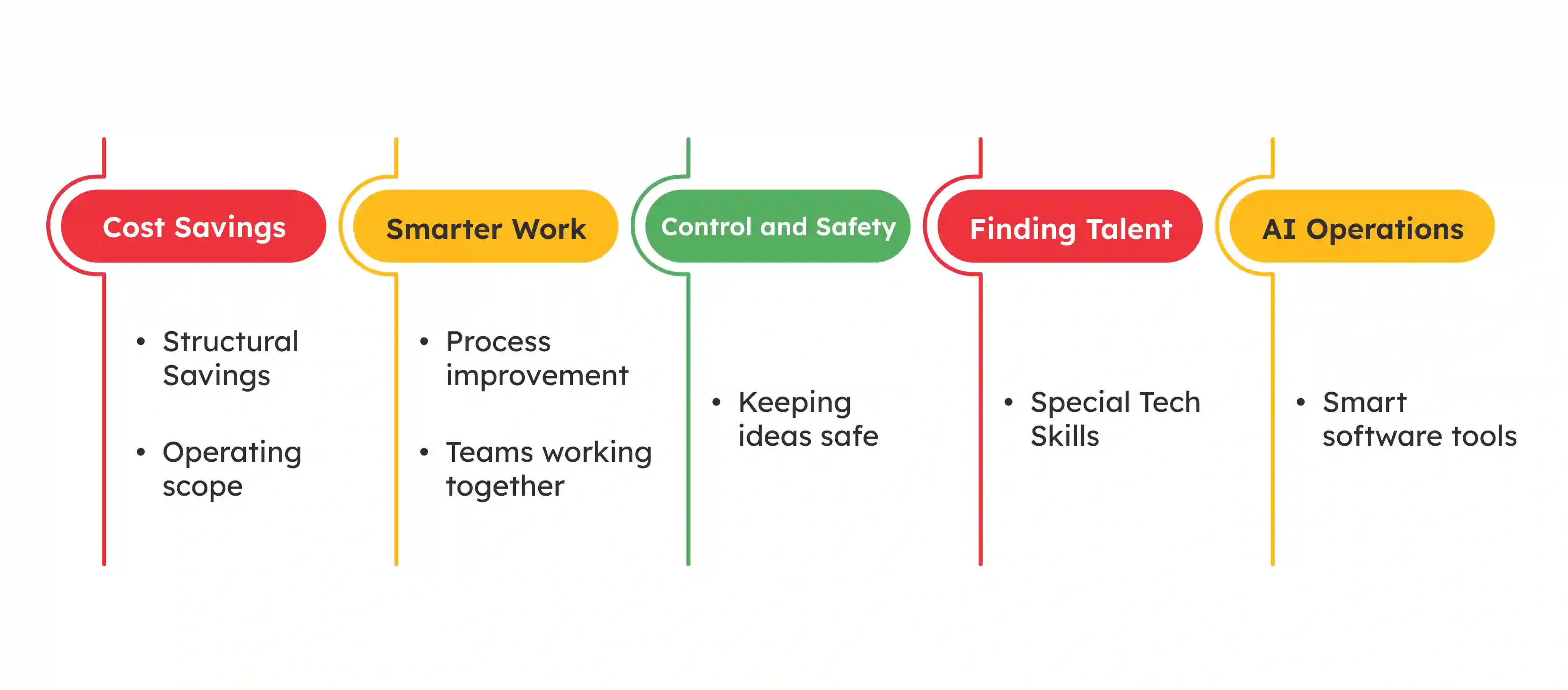
Saving money is the first benefit of the GCC process. It’s important for building a base that lasts a long time. This benefit with GCCs, involves more than just paying lower wages. It’s more about creating long-term savings with how the business runs.
With this, global companies with GCCs, save money by putting offices and shared services in one place.
Running a GCC usually saves 40 to 70 percent compared to doing the same work in Western countries.
Cost is the base but doing smarter work is a major part of the modern GCC. This means using the center to change how work gets done instead of just finishing tasks. It looks at skills rather than just the number of people.
Also GCCs are special because they put different teams like sales and support in the same building. This benefit with GCCs is that everyone sees the full path of the customer.
With methods like fixing workflows this model drives new ideas that are often hard to do in main offices that act separately.
Owning your delivery center gives you necessary control over your ideas and rules. This benefit with GCCs allows for full ownership to make sure that special codes and business plans stay safe inside the company.
By doing this, you create a safety advantage that lies in the GCC model.
Finding good workers is a main reason to grow. This benefit in GCCs is that it helps win the fight for talent in rich countries.
It makes sure the company can find young workers who know science and tech. It helps avoid the problem of not having enough workers in the West.
Setting up operations is the final changing step. Here the GCC uses smart AI tools to build the work engine itself.
It starts using AI to make code and write papers not just to give services. This step connects the center to the newest digital changes.
The BFSI model helps with fast trading math and following rules. This type of GCC work functions best when moving from back office tasks to checking risks.
To get correct results these centers target updating banking systems and finding fraud. JPMorgan and Wells Fargo have their biggest global offices outside the US in India using this model for size.
The ER and D model works well for hard tasks like testing planes and designing chips.
What this model does is help design new products like cleaner fuel for planes. For this, finding tech talent is necessary for success in your GCC process.
Boeing and Airbus use this model to drive global engineering ideas.
Retail GCCs are often used for managing supply chains and checking what customers feel.
The benefit of this Global Capability Center is that it functions well when making digital copies of supply chains to predict issues and supply bottlenecks before they happen.
Checking for stock changes and buyer habits can improve correctness in your global plan. Target and Walmart use this type of GCC structure to maintain their dominant position in the market using big data analytics.
Car centers are flexible places that handle math for self-driving cars. This type of GCC model in your work functions well when looking at real driving data from global fleets.
This makes sure safety rules match the math and improves results. The benefit of this type of Global Capability Center would be companies like Mercedes-Benz using this type of GCC to build self-driving tools and other innovative features for their cars that would otherwise be extremely expensive on-shore.
Healthcare GCCs are necessary for checking patient data to guess how treatments will work and creating scenarios for various adverse reactions.
However, even with this, they must stick to data privacy laws. Choosing the right AI models for medical tests is necessary but staying compliant with HIPAA and GDPR is even more so.
Industrial GCCs are helpful for guessing when machines need fixing by using data sensors.
The benefits of this Global Capability Center can be useful in your work process when machines are complex and cost a lot.
While using this model you need to make sure that your sensor data matches the math to get correct results. One helpful example of this is how engineering teams improve factory lines.
Cybersecurity models are good for putting in safe codes that computers cannot break. This fits a safety plan to the data instead of just a wall around it.
Choosing the right safety codes avoids data leaks and keeps the company safe. While using this method avoid risks where thieves steal data now to open it later by using new safety tools.
A lot of companies use these GCC centers to stop billions of cyber attacks every year.
Big cities like Bengaluru and Hyderabad are used to create large groups of talent. They are a perfect fit for high-level plans and leadership jobs. The benefit of this Global Capability Center is that it’s useful when you need quick access to a mature startup world.
Keep in mind that high costs for buildings and people leaving jobs at rates of 20 to 25 percent can hurt the budget.
The Tier-2 model is often used to save money and stay stable. It focuses on cities like Kochi and Jaipur. It is most useful for work needing fewer people leaving 12 to 15 percent and long loyalty from workers.
When using Tier-2 hubs make sure that the internet and travel links meet your global needs. New hubs like Ahmedabad give 15 to 30 percent lower running costs compared to big cities.
The Hub-and-Spoke model mixes the best of both worlds. It makes it easier to grow work without losing oversight. This is best for GCC processes where you need new ideas in a big city and scale in smaller cities.
When applying this model start the Hub for leadership and the Spoke for operations. This is how leading firms balance creating idea hubs with the lowest costs.
The Private Limited Company structure is widely used for growth and investment. It functions well with large setups. The benefit of this Global Capability Center is that it protects the owners from losing more than they put in.
When using this structure pay attention to the rules like audits but enjoy the trust of a Global Standard.
Limited Liability Partnerships are a simple option for service jobs. They are best for cases where the setup is small. It requires fewer strict rules than a Pvt Ltd.
To get the best benefits for these Global Capability Centers use this for small offices where using outside money is not a goal.
Future GCCs are moving toward a Service-as-a-Product model. Here they charge the parent company based on results.
This can be useful when you want to match goals and treat the GCC as its own business unit.
How so? Well while using this model consider shifting from paying for costs to paying for results. The benefits of these Global Capability Centers or models is that they help the company run its GCC with its own money responsibility.
Reverse innovation is a plan often used to create products for new markets that are later sent to the West.
To get the most of the benefits of this type of Global Capability Center, using local limits create solutions that work everywhere. When using this model utilize the price needs of the local market to drive efficient engineering.
Entrans has worked with many global companies and has the skill to handle legal setup finding talent and starting work from the beginning.
Want to start a GCC but are worried about rules?
Well we make them simple so you can use compliant frameworks and AI operations! This way you can make sure that your GCC process stays ahead and is updated fast.
From legal papers and picking offices to hiring leaders we can handle projects using industry experts and keep everything private.
Want to know more about the benefits of Global Capability Centers and how to set one up? Why not book a free consultation call with our GCC experts?

The main difference is who owns it and the plan. Unlike outsourcing where work goes to outside groups like TCS or Infosys a GCC keeps full ownership and ideas inside the parent company. This makes sure there is better control and connection with global goals.
The legal setup step involves choosing between a Private Limited Company Pvt Ltd or a Limited Liability Partnership LLP. This choice changes taxes and safety and the ability to get money. Over 90 percent of GCCs choose the Pvt Ltd structure for its growth size.
Intellectual arbitrage means the ability of a GCC to give value beyond saving money by using talent for new ideas and changing processes. It allows the GCC to act as a main engine for the company creating owned skills and improving the customer path through teams that sit together.
The Hub-and-Spoke model simplifies growth by allowing companies to keep high-level jobs in a big city Hub like Bengaluru while moving scale work to a smaller city Spoke like Jaipur. This balances access to top talent with the cost benefits and stability of smaller cities.
Steps in the GCC setup process include defining the plan where the scope is decided followed by picking a place between big and small cities.
Next is making the company legal and tax papers and then finding talent. The final step is starting work including IT systems and checking rules.
AI plays a base role in the modern AI-Native GCC by doing work steps on its own and writing code. Agentic AI allows software tools to do many tasks alone while other AI helps start development allowing smaller teams to make a big impact.
In a GCC model running costs are typically 40 to 70 percent lower than in Western markets. These savings come from lower costs for buildings and fair salaries. A normal center of 300 to 400 employees runs at a cost of just 3 to 5 million USD a year.
The frozen middle refers to the lack of mid-level leaders with 8 to 15 years of experience who can connect the HQ plan with local work. This group often struggles to shift from doing tasks to owning the plan creating a slow point in the firm.
GCC setup in the retail sector often centers on managing supply chains and building online sales platforms. Companies like Target and Tesco use these centers to build digital copies of their supply chains helping them guess problems and manage stock in real-time.
Setting up in a Tier-2 city gives advantages like 15 to 30 percent lower running costs and much lower rates of people leaving 12 to 15 percent. Cities like Vadodara and Coimbatore give a stable workforce that views the GCC as a long-term career goal.

-1.svg)