Enterprise AI agent development services explained: frameworks, autonomy levels, governance, integration and real cost controls that work.

Agentic Unconference 2026 - September 19, Chennai
View Event →


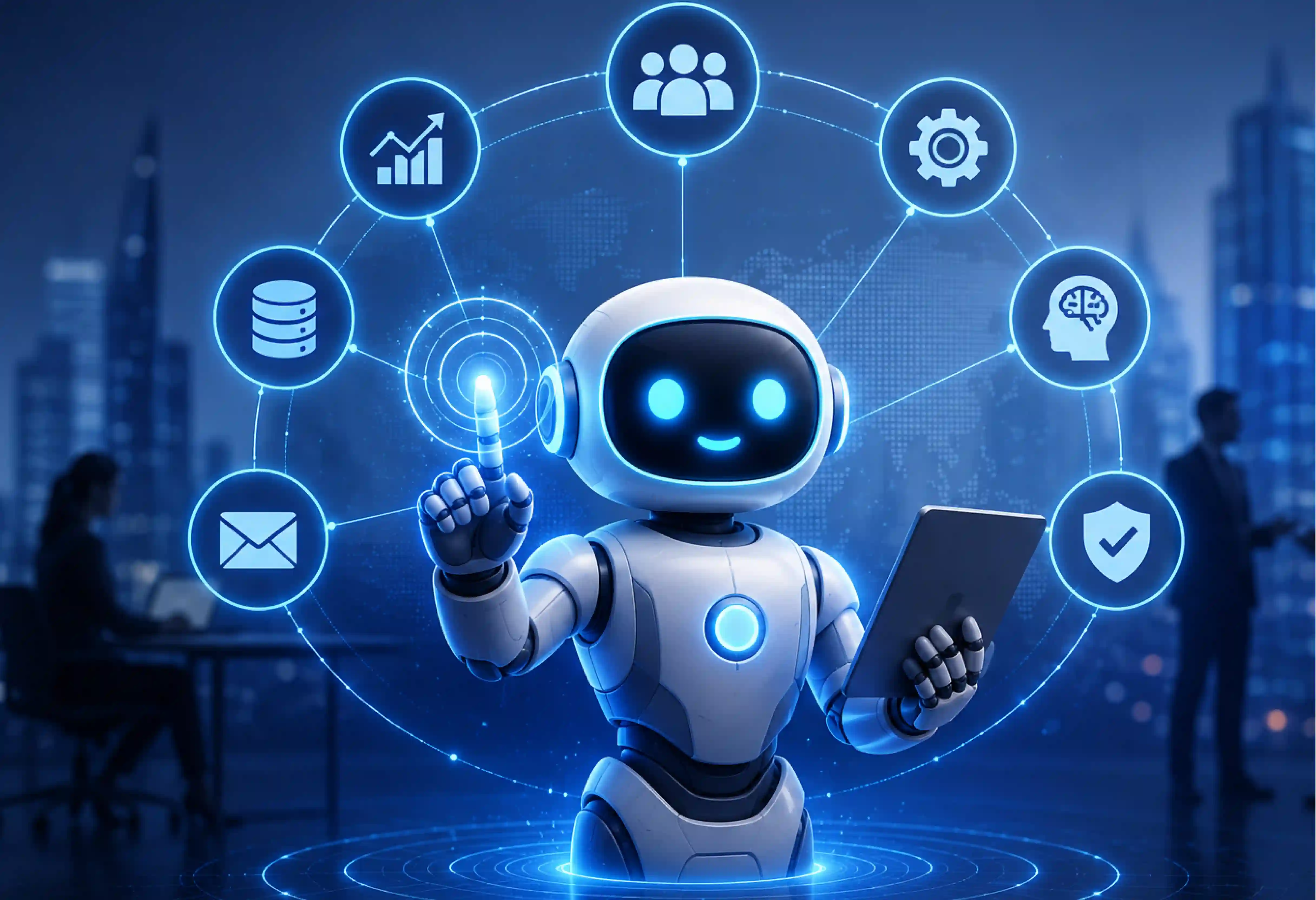


Do you still use your AI as a chatbot? In today’s digital landscape, an AI agent should be considered as a productive employee. Enterprise AI agent development services are needed to transform static organizations into autonomous powerhouses. These services cover strategy, design, integration, and deployment of AI agents across business workflows. AI agents have covered most advantages, such as faster decisions, lower costs, and scalable execution.
In this blog, we will discuss what enterprise AI agents are, their architectures, frameworks, and ways to choose a suitable partner that can connect your tools, automate workflows, and make real-time decisions.
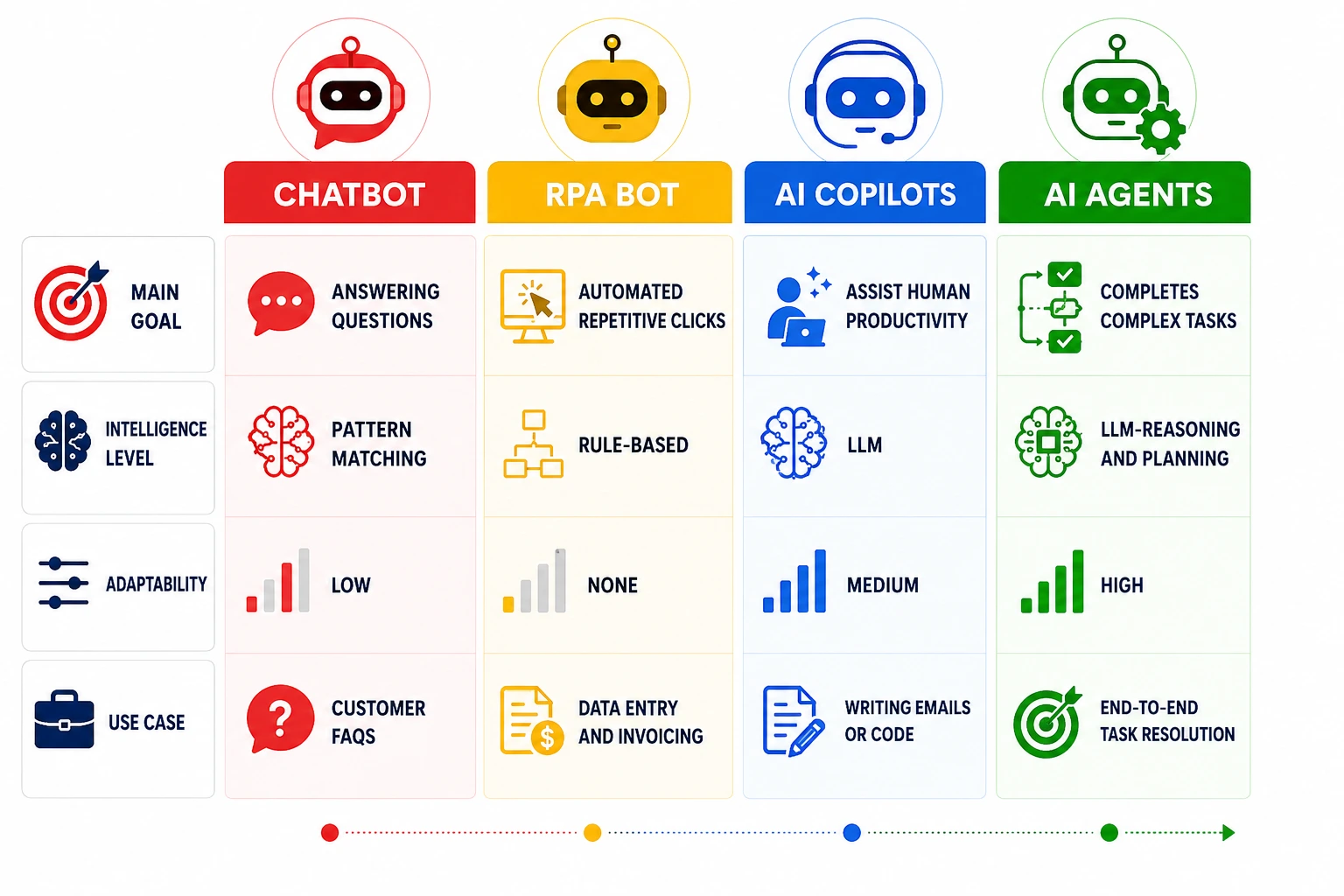
Enterprise AI agents are the next evolution in business automation. It uses Large Language Models (LLMs) to reason through tasks, plan its own workflows, and execute them. Enterprise AI agents represent this shift by bringing autonomy, reasoning, and system-level execution into business.
Chatbots are designed to answer questions based on a fixed knowledge base. Enterprise AI agents actually perform tasks, but they go beyond interaction. For example, it can even book a flight or update the database. Choosing the best AI agents' UI design patterns can help by aligning front-end layouts with these complex backend functionalities.
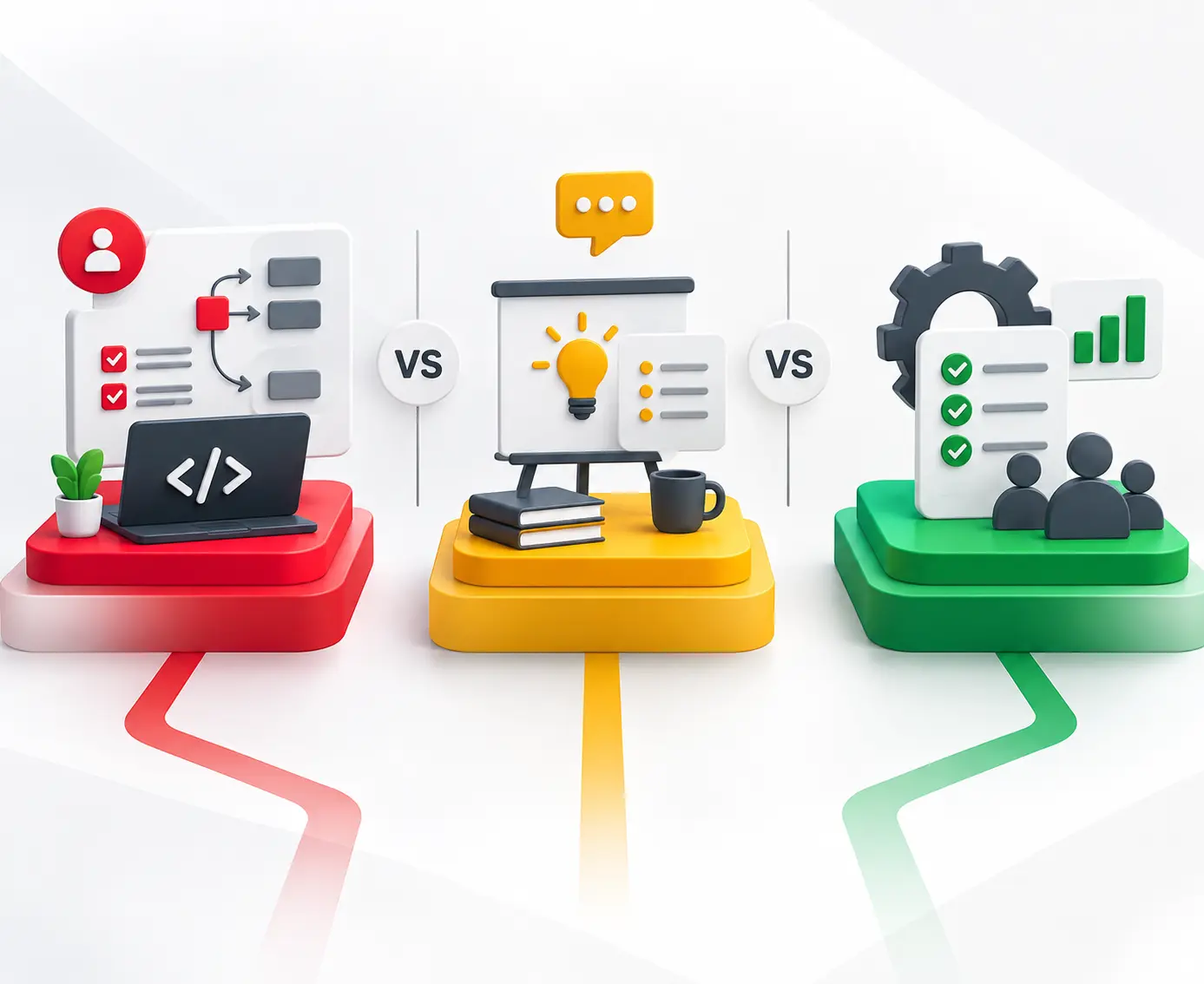
Robotic Process Automation (RPA) is excellent for repetitive, rule-based tasks. They are efficient but rigid. But it breaks if a user interface changes or an unexpected variable appears. Autonomous agents handle unstructured data and can adapt their plans, making them far more resilient than traditional bots.
Copilots offer suggestions or can complete small sub-tasks while the human remains the primary driver. They can assist humans by generating suggestions, content, or insights. But enterprise AI agents handle multi-step execution and require human final approval.
Robotic Process Automation (RPA) has served as the “digital hands” of the enterprise for a decade, but with certain limitations, AI is leading the stage.
RPA bots depend heavily on screen elements and predefined selectors. They are programmed to click specific coordinates or follow static HTML paths. If a small UI element is changed, we need to reconfigure.
RPA replays predefined steps. Autonomous agents understand context, make decisions, and execute tasks dynamically.
RPA scales linearly as the number of tasks increases, and it increases the number of bot licenses. It requires more human developers to write scripts. Agents minimize the need for both maintenance and manual oversight. Building an RPA bot for a complex process can take months of mapping. It significantly reduces the Total Cost of Ownership (TCO). With less dependency on rigid scripting, agent workflows can be deployed and updated more quickly. Deploying tailored generative AI development services can be improved by integrating these dynamic reasoning capabilities into core workflows.
AI agents have helped in many domains. Some of them are
AI agents have resolved tickets end-to-end by analyzing issues, answering queries, and taking action. This has reduced support costs and response times.
AI agents process invoices, detect anomalies, and handle reconciliations with minimum human input.
AI agents help in the onboarding process to query resolution, and agents streamline employee operations across multiple platforms.
Enterprises have shifted from RPA due to the following reasons
Enterprises adopting AI agents don’t jump straight to full autonomy. They help organizations balance control, risk, and value as they scale intelligent workflows. This proprietary framework provides a roadmap for enterprise adoption. It reduces risk, improves trust, and ensures organizations don’t over-automate too soon.
In the initial stage, the agent functions primarily as a sophisticated assistant under constant human guidance. This is referred to as the Human-in-the-Loop (HITL) model. Use it when
This is an intermediate stage where multi-step workflows are independent but still allow human intervention when needed. It handles 80 to 90% of workflows but stops when it encounters an exception. When to consider semi-autonomous workflows
At the peak of continuum, agents operate with High Autonomy that manages end-to-end processes without manual intervention. Oversight shifts from real-time monitoring to synchronous auditing. Use fully autonomous agents in the scenarios below
The shift from simple chatbots to autonomous agentic systems has standardized a few orchestration frameworks. They enable multi-step reasoning, tool usage, memory, and collaboration between agents.
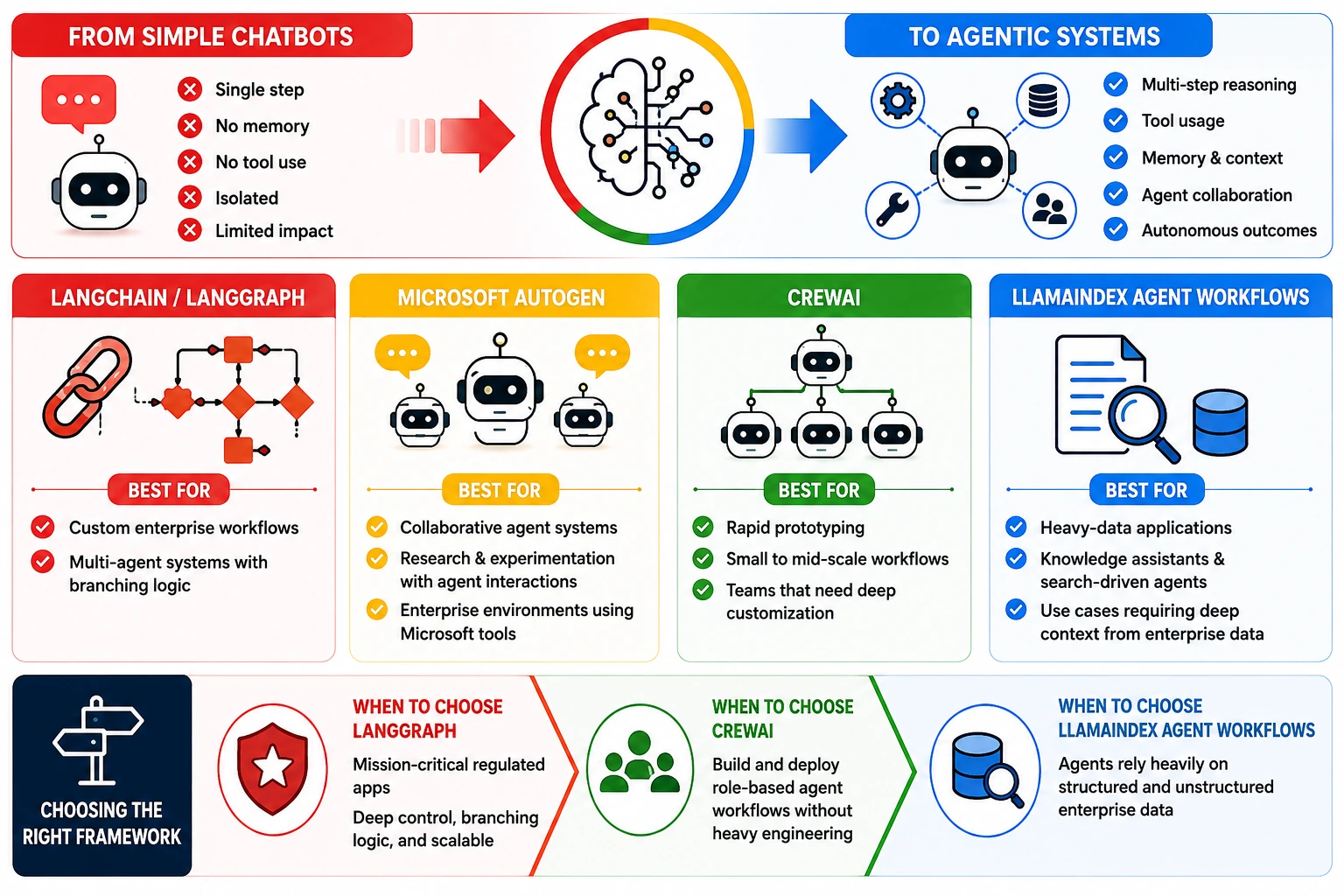
It is one of the most widely adopted frameworks for production-grade agents. Powered by LLM, it extends its support to stateful, multi-step workflows.
Autogen has evolved into a robust framework for systems where agents interact with each other to solve the problem. IT supports diverse conversation patterns, including hierarchical, joint, and broadcast models.
CrewAI has gained massive traction by moving away from abstract code structures and towards a human-centric organization model. It is easier to define teams of agents working together.
LlamaIndex remains the standard for Retrieval-Augmented Generation (RAG). But its agentic capabilities have expanded significantly to handle complex data reasoning.
Choosing the right framework depends on control, flexibility, and scalability.
Single Agent model moves towards Multi-Agent Orchestration. By breaking tasks, organizations can achieve higher accuracy, better cost management, and superior scalability.
Multi-Agent systems offer advantages such as
The various orchestration models are as follows
Hierarchical Orchestration Agents are structured in layers with higher-level agents. When they receive an initial user request, it is cut into smaller tasks and delegated to subordinate agents.
In this architecture, there is no central head. All agents are operated as equals, collaborating directly without a central controller.
This is a hybrid model where a supervisor agent assigns tasks and monitors worker agents.
For Multi-agent systems to function, they need a standardized way to share data and state. Two primary functions have merged as “Connective tissue of agentic systems.
Direct communication between agents, enabling coordination, negotiation, and task delegation in real time.
A structured protocol that standardizes how agents access tools, data, and context by ensuring consistency and interoperability across systems.
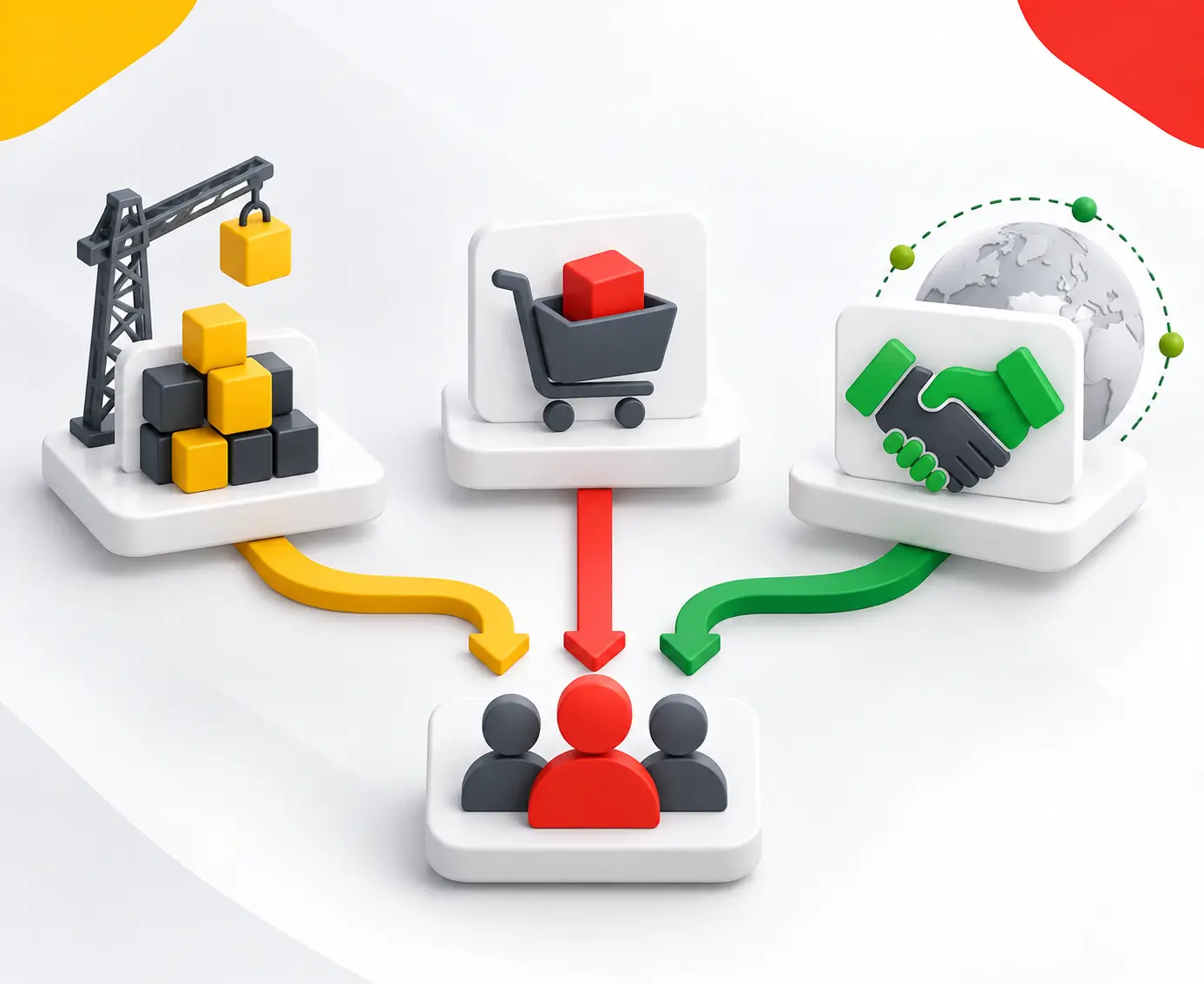
Enterprise AI agents development services have transitioned from experimental pilots to core operational infrastructure. These agents possess the autonomy to “reason” through multi-step workflows and act by integrating directly with enterprise systems such as ERP, CRM, and EHRs. Each industry has unique workflows, compliance requirements, and data complexity.
Banking, Financial services, and Insurance are reshaped by AI agents by improving accuracy, compliance, and speed. Agents do customer documentation and produce the complete audit records that agentic AI governance in banking demands, reducing onboarding time by up to 90%. Agents monitor transaction streams in real-time, detecting behavioral anomalies. Agents extract data, validate, and apply risk models to multi-day manual loan approvals into hours.
Healthcare workflows are complex, so AI-driven automation can be easily done. Agents ingest clinical documentation, cross-reference payer policies and packages, managing the entire status-check lifecycle. Systems adjudicate straightforward claims and route complex exceptions, which enables agents to learn from outcomes and reduce future manual reviews.
Manufacturing moves from static automation to autonomous production environments that adapt to real-time disruptions. AI agents improve operational efficiency and resilience across production and supply chains. Agents forecast demand, inventory, and coordinate logistics across suppliers and distributors.
Retail enterprises use AI agents to enhance customer experience and optimize pricing strategies. Agents analyze demand, competition, and inventory to adjust pricing in real time. They automate return approvals, logistics coordination, and refund processing by reducing operational overhead.
Internal “Role Agents” act as digital employees to streamline internal enterprise functions. Agents monitor systems, resolve incidents, and automate service requests across infrastructure. AI agents help HR in onboarding, employee queries, and policy compliance with minimal manual intervention. They also help in invoice processing, expense validation, and financial reporting with improved accuracy.
Autonomous AI agents introduce new risks. Without proper governance, they can make unintended decisions, access sensitive systems, or generate uncontrolled costs. So by abiding by the governance framework, they ensure safety, transparency,y and within defined boundaries.
AI agents make decisions dynamically. This requires enterprises to implement controls that enforce accountability, limit risk, and ensure compliance with internal policies and external regulations.
First, one must set the limit for the agent. Without strict boundaries, an autonomous agent might inadvertently delete a database or send an unauthorized external email. Every agent should operate against a strict “Action Allowlist”. This explicitly defines which API endpoints, databases, or software tools the agent is permitted to touch. Every action is validated before execution to prevent unauthorized or risky operations.
The agent's actions, decisions,s and system interactions must be logged for traceability and compliance. Every action taken by an agent must be logged with a timestamp. If an error occurs, teams can perform root cause analysis.
In a multi-agent ecosystem, not all agents are created equal. Each agent should be treated as a unique Service Principal with its own identity. By applying RBAC, you ensure that an agent can only access the specific data silos (e.g., a specific SharePoint folder or a specific SQL table) required for its role. If an agent is compromised or malfunctions, the damage is contained within its specific permission set.
Set token and API usage limits for each agent to prevent runaway costs. So once an agent hits its limit, it is automatically paused. Advanced systems can route simple tasks to cheaper models (like GPT-4o-mini) while reserving expensive, high-reasoning models (like o1) for complex problem-solving, optimizing the total cost of ownership (TCO).
Agents should hand off to humans when confidence is low, risk is high, or exceptions occur. If the actions seem to be critical, then they require human validation before execution. Ensure smooth transitions between automated and manual processes without disrupting workflows.
To move beyond simple chat, agents require a sophisticated integration architecture that enables them to read, write, and reason across thousands of disparate applications.
AI agents interact with software using Tool Calling (or Function Calling). Here, a model identifies the need for external data and generates a structured request (JSON) to trigger a specific function.
Agents invoke predefined functions or APIs based on intent, enabling structured and reliable execution.
Agents choose the right tool at runtime based on context, improving flexibility across workflows.
Multiple tools are invoked in sequence to complete multi-step tasks (e.g., fetch data → validate → update system).
Design tools with clear schemas, validation layers, and error handling to ensure safe execution.
Model Context Protocol (MCP) has emerged as the standard for AI integration, ending the era of bespoke, one-off connectors. With thousands of enterprise apps, managing individual integrations becomes complex and unscalable. MCP servers act as centralized gateways, exposing standardized connectors to multiple systems—reducing duplication and simplifying integration.
Enterprise platforms require structured and secure integration approaches.
It utilizes Agent scripts to define explicit workflows by ensuring mission-critical updates happen in the correct order.
Integration patterns often focus on event-based triggers. AI agents often focus on ent-based triggers. In this use case, the AI agent responds to tickets based on priority and proposes a fix directly within the platform. Leveraging an agentic AI framework integration can be helped when synchronizing data across these multiple platforms smoothly.
Agentic AI systems provide more significant business value. Cost needs to be controlled, and LLM usage is to be monitored. Optimizing the cost is no longer about choosing a cheaper provider, but it requires a multi-layered architectural approach to ensure every token generated provides maximum business value.
By using small models or a one-size-fits-all model, cost can be controlled. Try to use smaller models for routine tasks such as classification, extraction, or formatting. Routine tasks like data formatting, summarization, or simple classification are routed to "small" models (e.g., GPT-4o-mini or Gemini 1.5 Flash), which can be up to 50x cheaper than flagship models.
Agentic workflows are often repetitive, with agents frequently retrieving the same documentation or calling the same tools. Cache responses for repeated queries or similar inputs to avoid redundant computation. At the application layer, agents can store the results of previous expensive computations or tool outputs in a local database. If the same sub-task arises again, the agent retrieves the memoized answer instead of re-engineering it with LLM.
Batch multiple inputs into a single model call instead of processing tasks individually. Major providers offer a “Batch” endpoint that processes requests within 24 hours at a 50% discount compared to real-time pricing. Agents are programmed to queue “low-urgency” tasks into a batch bucket by executing them when compute costs are lowest.
Prompt Compression involves programmatically stripping away “noisy” or redundant information before it reaches the LLM. Shorten prompts by removing unnecessary instructions, redundancy, and verbose context. Use templates, variables, and compact formats to reduce token usage.
Deciding whether to use a managed API (like OpenAI or Anthropic) or self-host an open-source model (like Llama 3 or Mistral) is a matter of volume and hardware. Managed API offers zero maintenance, instant scaling, and access to top-tier reasoning. Self-hosted offers fixed cost, total data privacy, and no rate limits.
Transitioning from a conceptual AI experiment to a production-grade autonomous system requires a disciplined approach. Our approach ensures every agentic workflow is safe, scalable, and delivers measurable results. Partnering with a provider of enterprise AI development services is needed to transform static organizations into autonomous powerhouses. These services cover strategy, design, integration, and deployment of AI agents across business workflows.
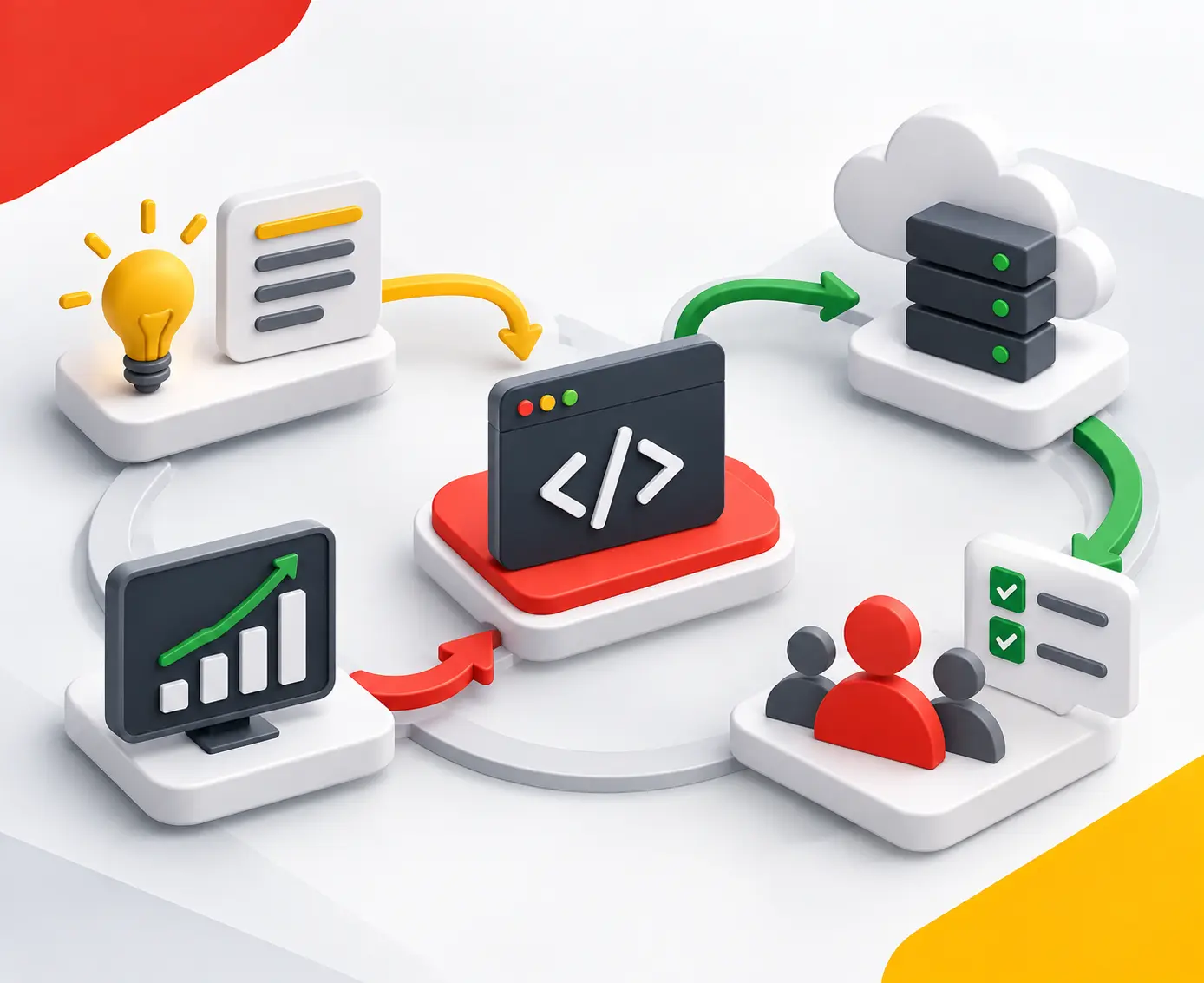
First, one should start by identifying where an agent provides the most value compared to traditional automation, such as RPA. We audit existing business processes to find “high-reasoning tasks that are bottlenecked by manual intervention. Identify high-impact, automation-ready workflows. Map workflows to autonomy levels (supervised, semi-autonomous, fully autonomous). A prioritized roadmap of use cases with clear business value and defined autonomy boundaries.
After the use cases are defined, the next step is designing the technical foundation. We carefully select the framework and choose between LangGraph for high-precision state management, CrewAI for role-based multi-agent teams, or LlamaIndex for data-heavy retrieval tasks. We architect the communication patterns, determining if the system requires a hierarchical "Manager" agent or a peer-to-peer mesh network. Then map the connections to enterprise systems like Salesforce, SAP, or ServiceNow using MCP (Model Context Protocol) for standard tool calling.
During the build phase, we move beyond simple prompting into rigorous agentic engineering. We develop the brain “LLM reasoning”, “tools” (API connectors), and “memory” (state management). We run thousands of automated tests to measure the agent's success rate, grounding, and safety against "golden datasets". The outcome is a production-ready agent system that is tested, reliable, and compliant.
We deploy the agent into a controlled production environment to gather real-world performance data.
Validated proof of value with measurable ROI and reduced deployment risk.
After successful pilots, the focus shifts to scaling and continuous optimization.
A continuously improving, enterprise-scale agent ecosystem delivering sustained value.
Choosing the best Enterprise AI development partner is a strategic decision that can define the success of your AI initiatives. Look out for the specialized workflows provided by top enterprise AI development companies for your needs to ensure your project scales effectively. The following factors impact the selection criteria.
An Enterprise AI Agent Development partner must demonstrate deep proficiency in specific orchestration frameworks that drive agentic behaviour. They should possess experts in LangGraph, CrewAI, and LlamaIndex for a data-heavy retrieval workflow. Choosing the framework is equally important, as it directly impacts the performance, scalability, and maintenance of your AI agents.
Choose an enterprise AI agent development partner who has a proven history of architecting coordinated multi-agent systems. Look for their experience in building Hierarchical or Supervisor + Worker patterns, where agents critique and validate the work. Review their portfolio, case studies, and industry focus to confirm they understand large-scale systems.
Security and governance are critical features when deploying autonomous systems in production. Look for an enterprise AI agent development partner who has built-in guardrails, audit logging, and explainability. They should also provide Role-based access control (RBAC) and security practices. A strong governance framework ensures safety, accountability, and regulatory compliance.
Consider an enterprise AI agent development partner who has experience integrating AI into existing enterprise systems such as CRMs, ERPs, and ITSM platforms. Their AI agent developers should have the ability to handle legacy systems and custom internal tools. Selecting premier enterprise AI development services can be improved when evaluating vendors with deep technical integration expertise.
The transition from chatbots to agentic systems is the defining shift of this decade. Enterprise AI agent development transforms static data into active results, allowing your business to move at the speed of thought. Partnering with Entrans will give a measurable ROI and strict governance. With our proprietary 5-phase delivery model and deep integration experience, we mitigate risk while maximizing output. With platforms like Thunai.ai and Infisign.ai, plus 6,000+ integrations, Entrans enables secure, production-ready deployments.
Want to know more about how we transform operations and build autonomous ecosystems? Book a consultation call with us!
An Enterprise AI agent is an autonomous software system that can think, reason, and act over complex data, make decisions, and execute multi-step tasks with minimum human intervention. Unlike traditional models, these agents operate within organizational guardrails to integrate with enterprise APIs to perform “real work” like processing orders or managing compliance.
AI agents use LLM-based reasoning to adapt to unstructured data and handle unpredictable scenarios. They are basically goal-driven and autonomous, whereas Chatbots handle conversation, and RPA bots follow rigid, rule-based scripts. RPA requires every single click to be pre-programmed.
Most commonly used frameworks by the developers are Langchain, CrewAI, or Microsoft’s AutoGen for heavy, multi-agent systems. Organizations also use custom orchestration layers, APIs, and LLM integrations for scalable deployments.
The cost of building an enterprise AI agent depends on complexity, autonomy level, regulatory compliance, integrations, and data requirements. A basic PoC (Proof of Concept) typically costs between $15,000 and $35,000, production-grade enterprise agent ranges from $80,000 to over $300,000.
Yes. Enterprise AI agents can integrate with platforms like Salesforce, ServiceNow, and SAP via APIs and middleware. They help in triggering actions such as updating a CRM record or opening a ServiceNow ticket automatically based on real-time triggers.
AI agents' output cannot be 100% accurate; we need “human-in-the-Loop” (HITL) oversight. It is safe when strict governance layers are enforced for data encryption and auditability in most industries, such as finance and healthcare. Security measures include data encryption, access controls, audit trails, and model monitoring.
The time taken to build an AI agent is 4 to 8 weeks, while enterprise-grade solutions may take 3 to 6 months. Typically, the time taken depends on the complexity, number of external systems, integrations, data readiness, and testing requirements.


-1.svg)