EV Infrastructure
Firmware and Protocol Engineering
Modernizing DC Fast Chargers With OCPP 1.6 to 2.0.1 Migration
A leading North American EV charging network provider needed to upgrade their DC fast chargers to the latest OCPP 2.0.1 standard to remain competitive and unlock advanced fleet management capabilities. Outdated protocol was blocking product roadmap progress and delaying go-to-market timelines. A complete end-to-end migration service was delivered to manage the full technical transition and guide the chargers through official certification.
Talk To Our Architect
Challenge
Solution
The Outcome
The Challenge
The manufacturer needed to resolve technical and certification barriers that were stalling their next-generation product launch.

Complex System Migration

Upgrading from OCPP 1.6 to 2.0.1 required a full system rebuild, not a simple firmware update. The process demanded deep protocol expertise and significant engineering resources that stretched the internal team's capacity.

Challenging Certification Hurdles

Achieving official OCPP 2.0.1 certification is a stringent, time-consuming process. Any failure risked indefinitely halting the product launch and ceding ground to faster-moving competitors.

The Solution
We delivered a complete OCPP migration service that managed every layer of the transition, acting as a dedicated development partner from protocol execution to certification readiness.

Pre-Certification Testing

A thorough testing environment was built to simulate official certification scenarios, identifying and resolving issues before the formal process began.

Firmware Development

Complex firmware was written and validated end-to-end to confirm OCPP 2.0.1 worked correctly with the manufacturer's existing hardware architecture.

System and Protocol Development

All backend system changes required to support the new protocol were handled directly, covering device modelling, transaction handling, and security profile configuration.

Hardware and Software Alignment

Our team worked across both the hardware and software layers to confirm the upgraded protocol functioned correctly across the full range of DC fast charger models in production.

Go-to-Market Acceleration

The service was structured as a complete turnkey solution, freeing the manufacturer's internal team to stay focused on production and commercial rollout

The Outcome
The manufacturer successfully launched fully certified, next-generation DC fast chargers ahead of competing products, clearing the development bottleneck that had threatened their roadmap. The structured migration path cut internal engineering costs significantly and built a repeatable process for future protocol upgrades.

Reduced time-to-certification by 12+ months compared to a typical internal OCPP 2.0.1 migration.

100% Certification Success with official OCPP 2.0.1 compliance achieved for the full range of high-powered DC fast chargers.

Reduced Engineering Overhead by offloading firmware development, system integration, and certification preparation to a dedicated external team.


We have been working with Entrans for the last two years and they have played a key role in building our solution. Their expertise and professionalism were evident throughout the development cycle, and we were very pleased with the final product. They have shown enormous skill and vast domain knowledge and their IT expertise is reliable and trustworthy. We would recommend Entrans for anyone looking for quality IT services, delivered in a professional manner
Nikolay Prokopiev
Chief Executive Officer
Related Case studies
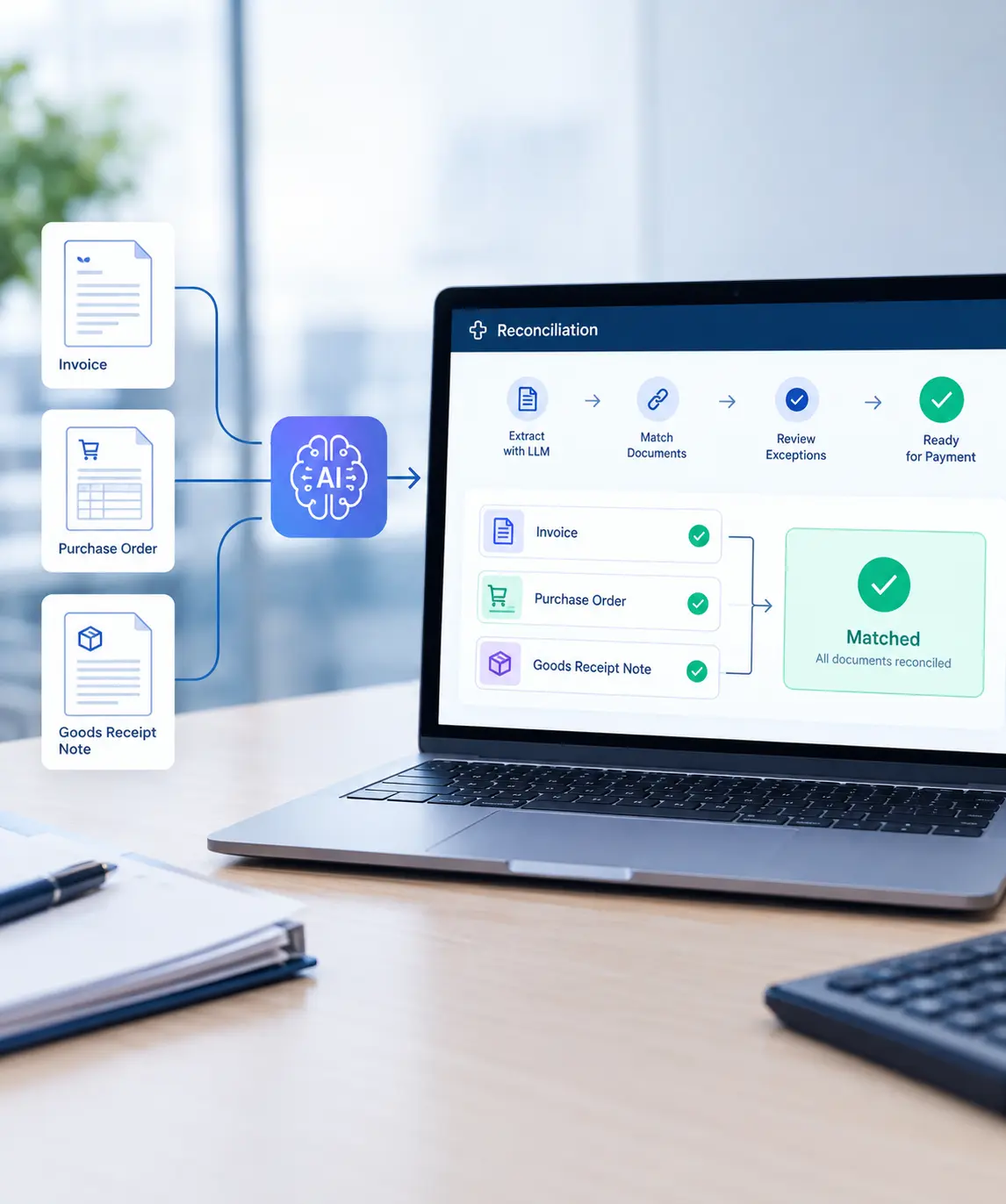
Engineering an AI-Powered Platform for Invoice and GRN Reconciliation
A procurement-focused enterprise struggled with time-consuming and error-prone manual reconciliation across Invoices, Purchase Orders, and Goods Receipt Notes spanning multiple formats and data sources. To resolve this, an AI-powered reconciliation platform was built using LLMs, multi-database architecture, and automated validation workflows, compressing reconciliation cycles and improving financial accuracy.
Engineering a Cyber Threat Intelligence Platform From Distributed Blockchain Data
A blockchain-powered ecommerce enterprise struggled to consolidate accurate threat data from multiple open-source attack intelligence APIs without an in-house development team. This left threat signals unactioned and security operations without visibility. A full-stack cyber threat intelligence platform was built to centralize data ingestion, automate processing, and deliver real-time monitoring across all sources.
Load More
Link copied to clipboard !!