AI strategy development for enterprises: the six pillars, the failure modes that stall pilots, and a 12-month roadmap to production scale.

Agentic Unconference 2026 - September 19, Chennai
View Event →


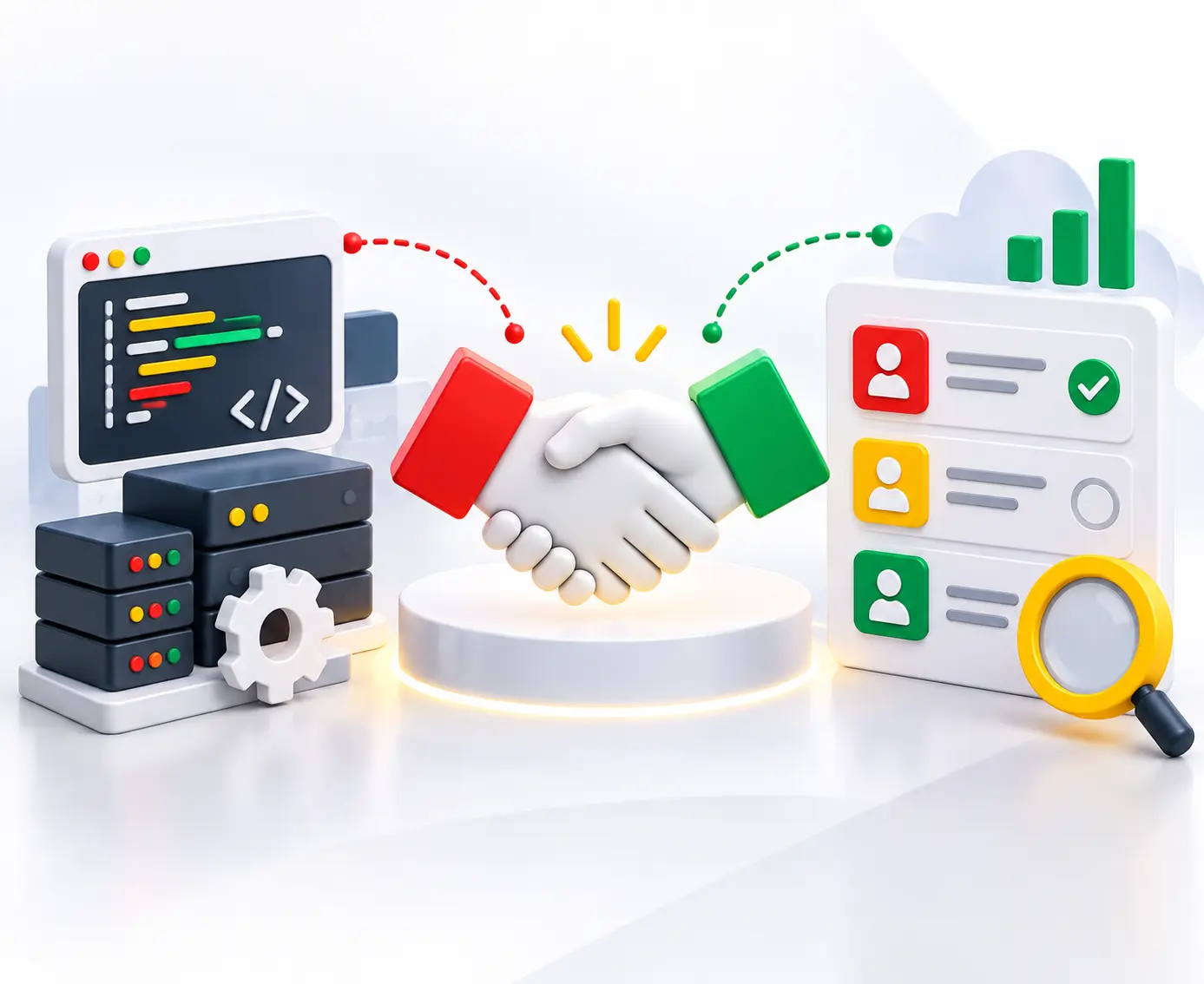
AI strategy is a survival requirement. But it may fail due to poor alignment, and not poor technology. Effective strategy development bridges the gap between high-level ambition and technical execution. AI Strategy development for enterprises provides the blueprint for turning ambition into measurable business outcomes. By this roadmap, companies can move from proof of concept to enterprise transformation.
In this blog, we will see how AI strategy development for enterprises is important in bringing in the long-term competitive advantage.
Industry is currently facing a sobering reality: almost 95% of AI pilots fail to reach production. In 2026, enterprise AI strategy is no longer about experimenting with isolated machine learning models. It is about designing, governing, and scaling autonomous AI agents. Organizations looking to deploy these advanced systems can help by adopting specialized enterprise AI development services to ensure smooth architectural integration.
Traditional frameworks focused on model development and infrastructure. They assumed AI was a static prediction engine. That assumption no longer holds. Old AI strategies are model-centric and lack MLOps pipelines, model training, and tuning. Nowadays, modern enterprise AI strategies are multi-agent orchestrated, retrieval-augmented generation (RAG). need human-in-the-loop approvals.
Organizations have been using AI to build chatbots, recommendation engines, and forecasting models, but not all the AI models are integrated into day-to-day operations. Some common reasons for failure are
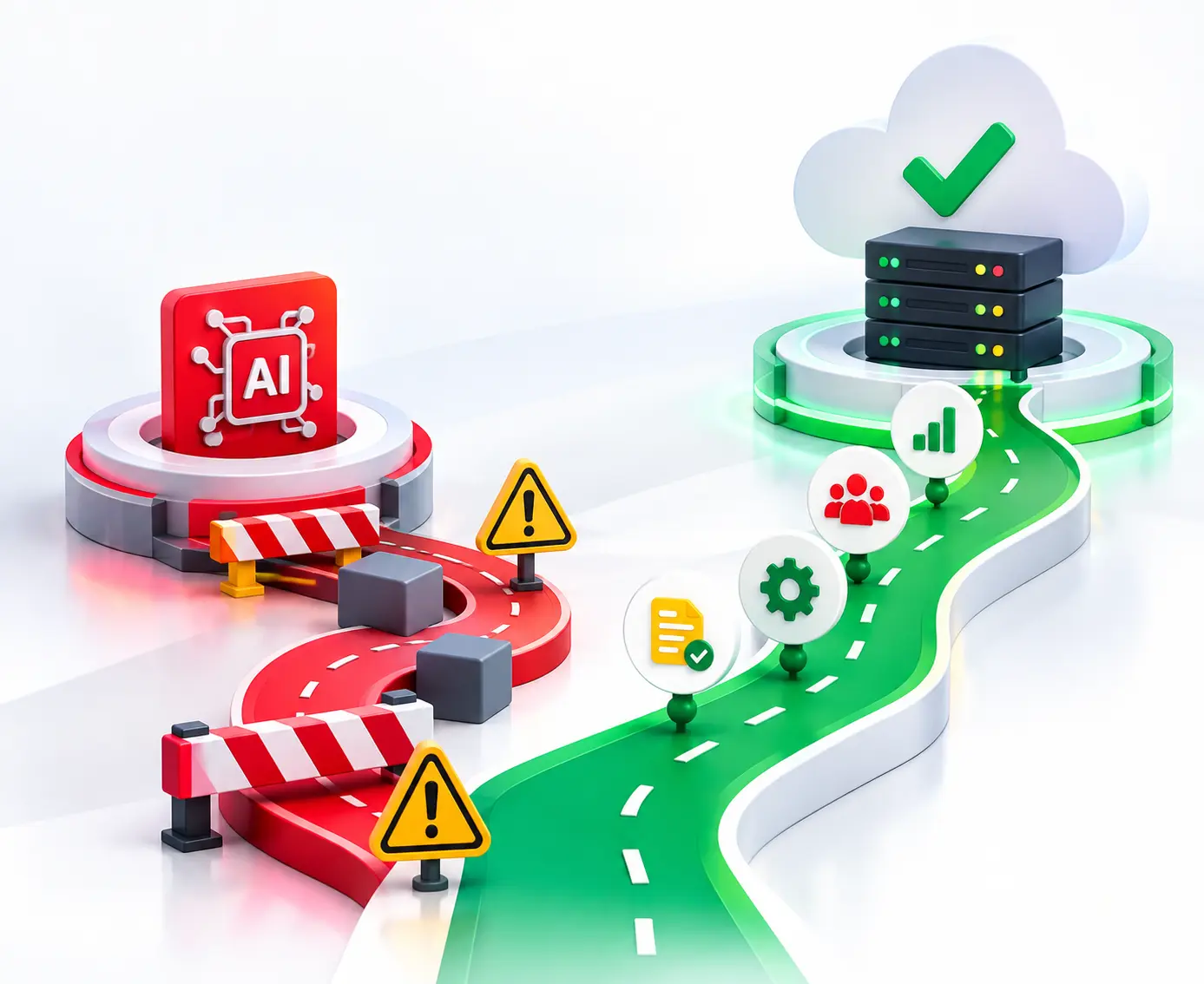
The most common reason AI projects fail is 'Pilot Purgatory,' which states that none of the AI projects reach production. Companies often treat AI as a series of science experiments rather than a product lifecycle. Without a clear path to scale and defined success metrics from day one, these projects consume resources and attention only to be abandoned when the initial excitement fades.
To avoid it, define KPIs before development begins, assign accountable business owners, and design for production by following a roadmap.
Many enterprises suffer from "bottom-up sprawl," where different departments independently purchase or build their own AI tools. This leads to a fragmented ecosystem with redundant costs, incompatible tech stacks, and no centralized oversight. Marketing may use many models, but this decentralization increases costs, creates governance gaps, and makes enterprise-wide scaling difficult.
AI systems hugely depend on data. Poor data quality, fragmented sources, inconsistent definitions, and inaccessible knowledge repositories undermine model performance and user trust. To avoid it, assess data readiness early, use clean and structured critical datasets, and implement metadata and lineage controls.
Governance is often treated as an afterthought or a compliance hurdle. But when autonomous agents are used, security ethics and bias mitigation must be integrated into the development process. When governance is followed in the last stage, and it possesses many errors, then the project is likely to get shut down before launch.
A fatal mistake is the lack of a disciplined framework for deciding whether to build a solution in-house, buy a vendor product, or partner for expertise. Organizations often make inconsistent sourcing decisions. Some teams build custom solutions for commodity capabilities, while others buy rigid tools for strategic differentiators. Identifying the top enterprise AI development companies can help in the planning phase.

Enterprise AI initiatives often fail because organizations focus on models and tools before they build the foundations required to scale. The companies creating measurable value from AI take a different approach: they treat AI as a strategic operating capability rather than a series of disconnected experiments. Success is no longer about who has the best model, but who has the most resilient system.
Every AI should begin with business priorities, not technology enthusiasm. A modern strategy treats AI as a portfolio of investments that balances low-risk “quick wins” with high-impact. The most effective strategies identify where AI can reduce costs, improve productivity, strengthen decision-making, or mitigate risk. Organizations start building a use-case portfolio ranked by business value and implementation feasibility.
Before drafting a roadmap, run an AI readiness assessment to see whether the organization is prepared to scale AI. Check whether it satisfies the 25-question AI readiness Assessment.
This assessment becomes a practical lead magnet and a strategic baseline for decision-making.
AI systems depend on an AI-ready data infrastructure that is accessible, trustworthy, and governed. A modern foundation requires more than just storage; it requires Data Liquidity, the ability for agents to access, interpret, and act on information across silos.
Evaluate each opportunity across five dimensions
Enterprise AI architecture has shifted from 'chatbots' to 'Agentic Frameworks'. Traditional architectures were designed for single-model interactions. Modern systems support agents that reason, call tools, orchestrate workflows, and collaborate with humans. The deployment of these ecosystems can be improved by leveraging agentic AI for enterprise to design resilient, multi-agent frameworks.
Use the Decision matrix table to allocate engineering resources.
Agentic frameworks change platform decisions because they require long-term memory (Vector DBs) and tool-use capabilities (API integrations). A reference architecture now includes an Orchestration layer that sits between LLM and enterprise data.
Agentic framework requires capabilities such as tool orchestration, memory and context management, and multi-agent coordination, human approvals with monitoring and observability.
A typical architecture includes:
Enterprise evaluates connectors, APIs, data virtualization, and event-driven integration patterns to connect the AI systems.
As AI moves from 'suggesting' to 'acting,' the stakes for governance have never been higher, which is why an AI risk management framework matters. Governance is essential to scale AI.
Establish a cross-functional charter including legal, IT, security, compliance, risk, and business stakeholders.
Categorize the AI tasks based on their risks, such as low, medium, and high.
Define the policies required for bias, fairness, explainability, human oversight, transparency, and accountability.
Ensure that every agent adheres to the EU AI Act, ISO 42001, sector-specific regulations, and US NIST frameworks.
Employees must understand the AI transformation and trust it.
Conduct foundation education programs for executives, managers, and frontline users.
Transition developers into AI Orchestrators and end-users into AI supervisors. Engineering efficiency within these teams can be helped by examining how AI code assistants impact enterprise development during daily workflows.
Move from centralized IT control to a Federated Model where departments own their AI agents within central guardrails.
Modern enterprises treat AI as an Operating system for the entire business. AI outcomes should be measured to scale effectively.
Track technical metrics alongside business metrics that prove AI ROI (hours saved, customer satisfaction). Metrics should be tracked by productivity gains, quality improvement, financial impact, and risk reduction.
Choose a governance model that balances enterprise standards with business-unit autonomy.
Real-time visibility into how much value agentic workflow is contributing to the bottom line.
Enterprise AI success rarely happens through isolated pilots or one-off experiments. The gap between successful AI leaders and those stuck in pilot purgatory is defined by a clear roadmap. Below is a 12-month enterprise AI roadmap structured in quarterly milestones.
The first quarter focuses mainly on strategic clarity and assessing organizational readiness.
Assess your current tech stack against an AI readiness assessment checklist. Check whether you are using legacy silos or an AI-ready “Data Lakehouse”?.
Establish and follow ethical guidelines and compliance protocols before a single line of code is written.
Assign accountable business and technology leaders to drive the initiative.
The second quarter translates strategy into technical and operational foundations.
Clean and structure the data needed for your AI. In AI, “garbage in, garbage out” is the ultimate project killer.
Deploy 1 to 2 small-scale pilots. Split the tasks and launch them one at a time, such as an internal AI knowledge base for HR or an automated invoice processing tool.
Set up your MLOps (Machine Learning Operations) environment to handle model monitoring and deployment automation.
Build one to three high-priority use cases with production-grade controls.
This quarter focuses on operationalizing pilots and driving adoption.
Measure your Q2 pilots against the KPIs set in Q1. If a pilot fails to show value, pivot or kill it now.
Move beyond departmental silos. Integrate AI into core ERP or CRM systems to allow for automated decision-making.
Start by providing company-wide training. Make employees understand that AI assists them rather than replacing them.
The final quarter focuses on expanding successful use cases and embedding AI into the enterprise operation model.
Replicate proven patterns across additional departments and workflows.
Standardize best practices, reusable components, and governance.
Entrans builds an engine that drives it by ensuring legacy systems are transitioned to intelligent automation that is ROI-focused. With our execution-focused methodology, we help enterprises move from AI experimentation to measurable business outcomes.
Want to know more about how to deliver measurable results faster with lower risk? Book a consultation call with us.

Enterprise AI strategy is a comprehensive roadmap that identifies, prioritizes, and aligns artificial intelligence use cases with core business objectives. It ensures data, technology, and talent work together rather than isolated, uncoordinated projects.
To build an AI strategy for large enterprises, start by identifying high-impact business use cases and evaluating your data infrastructure’s ability to support them. Develop a roadmap covering architecture. Governance, implementation, and change management.
To build an AI strategy development for enterprises, it may take 4 to 12 weeks. Typically, it depends on organizational size and complexity. AI strategy development includes discovery, readiness assessment, prioritization of use cases, and creating a roadmap.
AI readiness assessment includes evaluating data quality, technical infrastructure, security, governance, skill sets, and organizational maturity. It also reviews current security protocols and ethical frameworks to ensure the organization can handle AI deployment responsibly.
Choose the “Build” option when AI capabilities are core to your competitive advantage, and choose “Buy” for standard use cases, speed, and specialized expertise. The choice depends on budget, timelines, and the uniqueness of the specific AI applications to your business.
Common mistakes include launching an AI project without proper business problems, failing to clean and centralize data first. Many organizations also fail by launching pilots without a plan to scale successfully.

-1.svg)