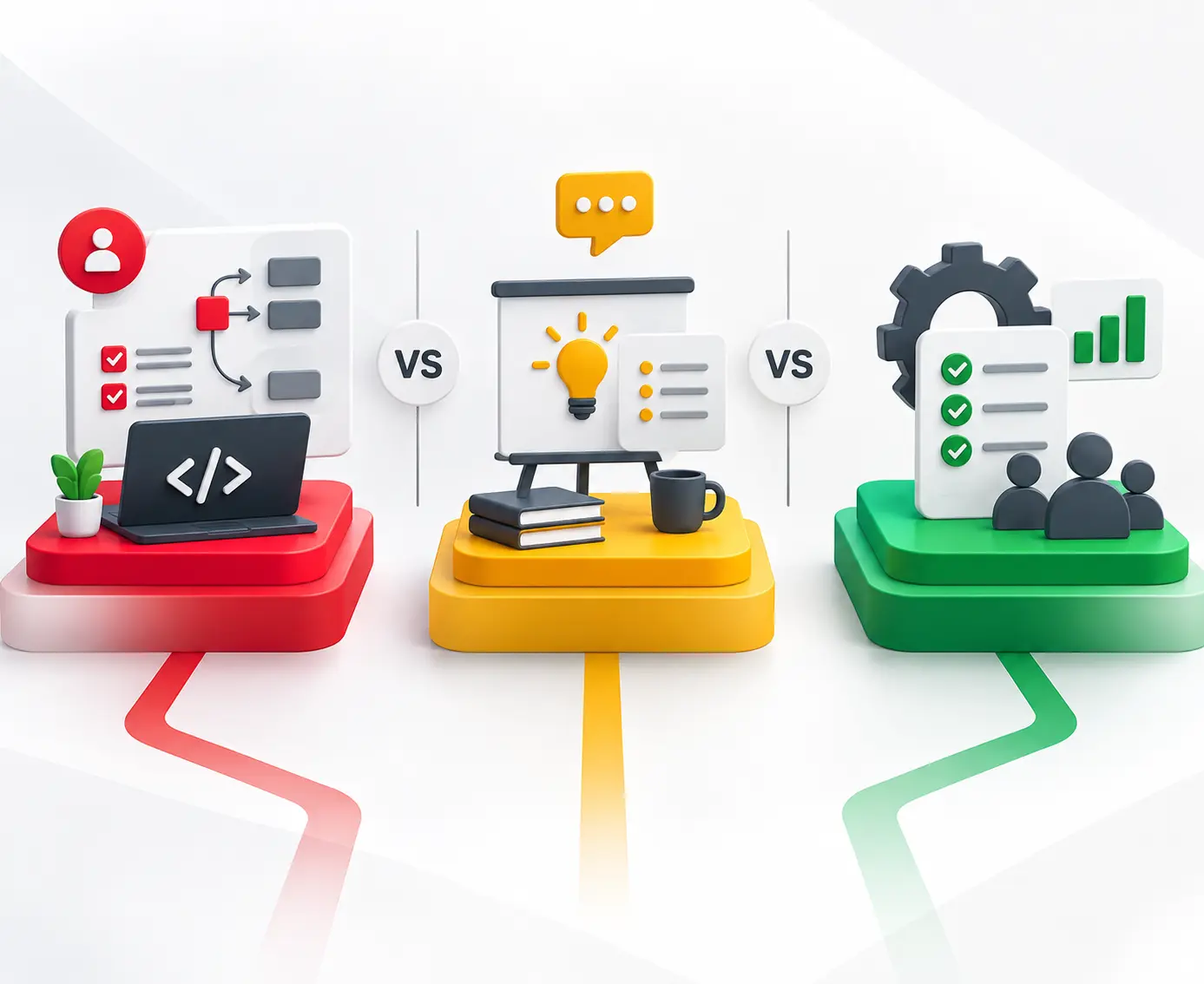
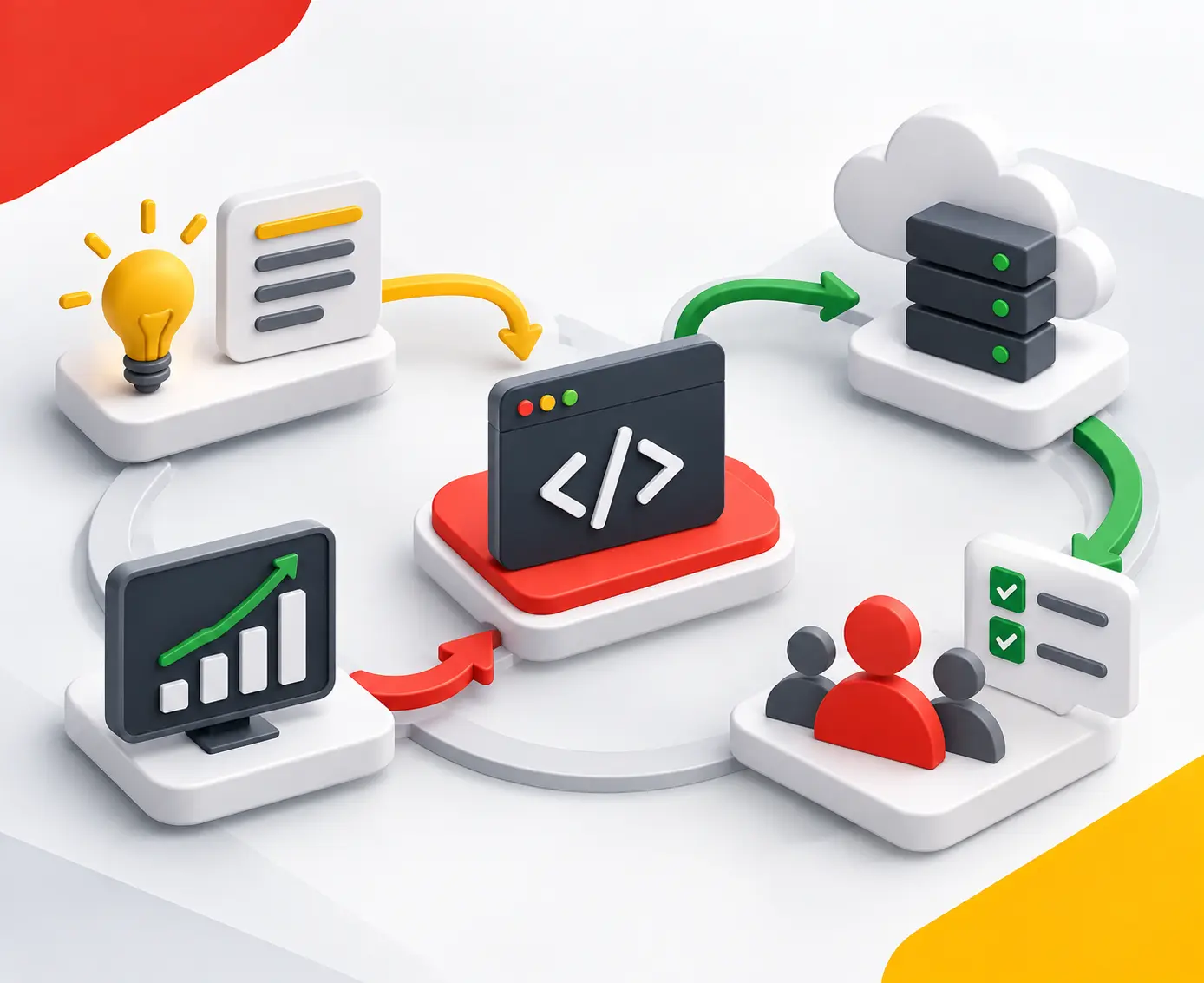
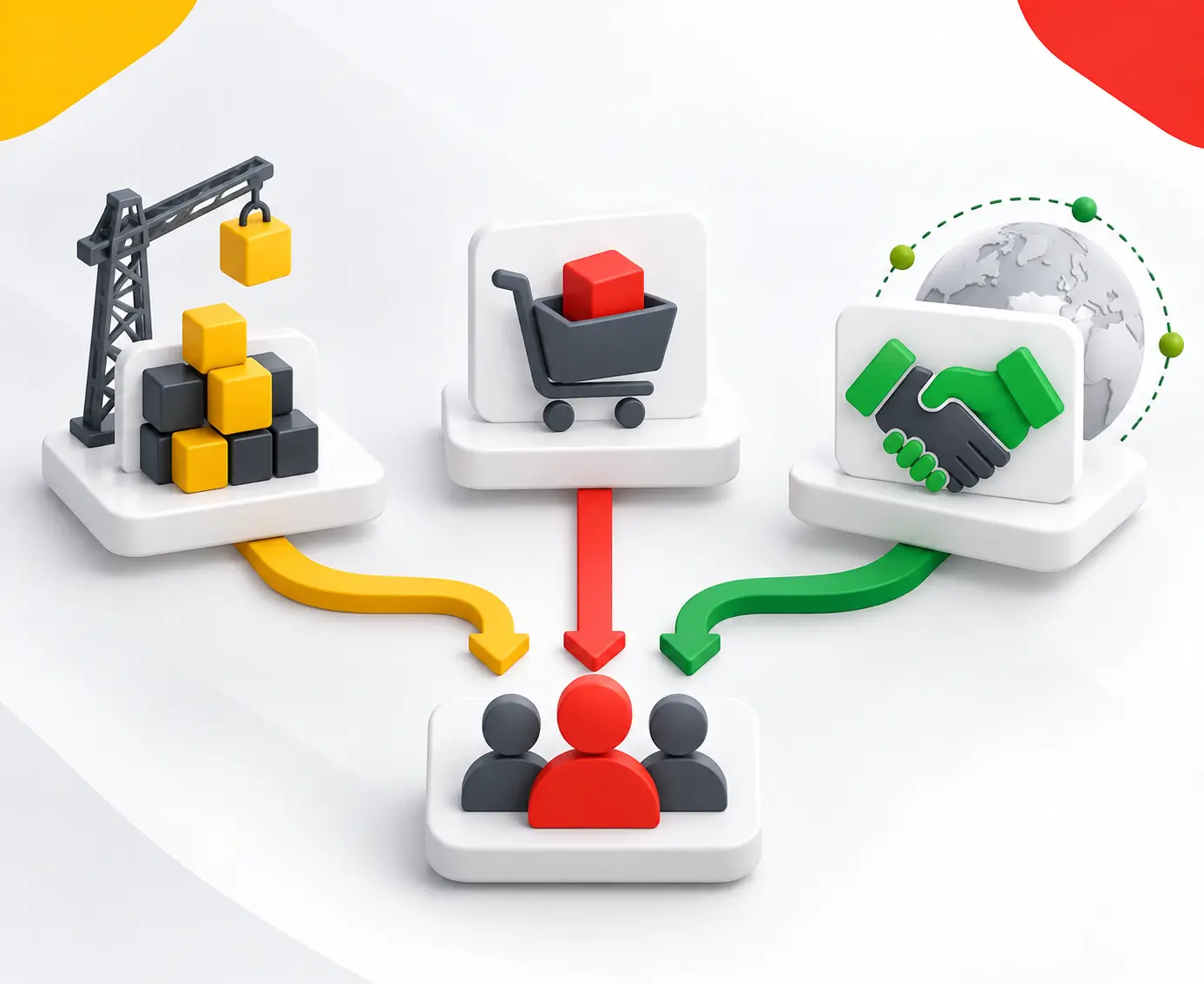
In 2026, legacy systems have started eating up 80% of your budget. To survive, we must migrate the legacy systems to modern AI-driven workflows. AI transforms static, rule-based systems into adaptive workflows. A successful AI migration requires a structured approach. Following proven best practices to migrate ensures data readiness, seamless integration, and measurable ROI.
This post will enlighten you on how following best practices for migrating legacy processes to AI-driven workflows makes a strategic business advantage.
What Are Legacy Processes in Enterprise Systems
Legacy processes in Enterprise systems refer to outdated workflows, methods, and operational practices built around old technologies and infrastructure. They mainly rely on manual steps, rigid rules, or siloed systems.
They lack scalability, innovation, and are open to security risks. The disadvantages we obtain from holding on to legacy systems are increasing maintenance costs, hindering automation, and slowing down the growth of the organization.
What Are AI-Driven Workflows and How They Differ from Automation
AI-driven workflows are an end-to-end business process that uses Artificial intelligence to handle tasks requiring judgment, pattern recognition, or data interpretation.
They use machine learning, natural language processing, and predictive analysis to manage and optimize business processes. AI-Driven workflows are data-driven and can change accordingly, whereas automation is rule-based and static.
AI-Driven workflows can process unstructured data, but automation requires structured data. AI-driven workflows deliver intelligence, and automation delivers consistency and requires manual updates. AI for legacy system modernization is ideal for complex, data-intensive, and dynamic processes.
Why Enterprises Are Migrating Legacy Processes to AI-Driven Workflows
Legacy processes are considered one of the barriers to digital transformation. Enterprises are thinking of migrating from legacy processes to AI-driven workflows to get proactive, intelligent operations. The following reasons are
- Limitations of legacy systems: Legacy processes are rigid and static, and often struggle to meet business demands. It doesn’t foster innovative skills. They lack real-time visibility and require high maintenance.
- Enhanced Efficiency and Cost Reduction: AI automates tedious tasks, they reduce manual effort needed. This, in turn, reduces the cost. AI-driven workflows tend to speed up the processes and cut maintenance costs associated with aging systems.
- Data-Driven Decision making: AI-driven legacy modernization services can analyze large volumes of both structured and unstructured data in real time. This allows enterprises to gain actionable insights, predict outcomes, and make decisions that legacy processes do not support.
- Security and Compliance: Digital modernization strategies scan for vulnerabilities, detect threats in real-time, and automate compliance checks, significantly hardening security and adherence to regulations.
- User Experience (UX): Migrating legacy processes with AI makes systems more user-friendly and gives an enhanced user experience. They also provide tailored experiences through personalization.
Key Challenges in Migrating Legacy Processes to AI-Driven Workflows
AI-driven legacy modernization services will give successful results only when all the challenges are correctly identified and rectified.
- Data quality: Data silos, poor quality, and unstructured formats hinder AI training and integration, leading to fragmented insights and delays.
- Technical complexity: Integrating AI solutions with outdated architectures and applications can be technically challenging. Limited APIs and compatibility issues slow down migration and increase implementation effort.
- Skill set gaps: AI is often considered as a threat rather than a tool, as it could replace humans. The real challenge is in handling the proper change management and upskilling of staff.
- Security and risk factors: AI-driven workflow must meet enterprise security and regulatory requirements. We should modernize legacy systems using AI by ensuring data privacy, model transparency, and ongoing governance. But all this will add complexity to the migration process.
- Cost and ROI: AI migration needs data preparation, AI engineers, and technology investment.
Key Best Practices for Migrating Legacy Processes to AI-Driven Workflows
The best practices for migrating legacy processes to AI-driven workflows are as follows
- Assessment and planning: This is the first step, which gives a complete AI transformation roadmap for enterprises. Audit legacy processes to map dependencies and data flows. This step will help in identifying bottlenecks and structuring existing data. It is necessary to improve data quality as AI implementation depends on data quality. Prioritize high-impact processes before starting AI migration.
- Phased rollout: Start with pilot projects by migrating non-critical processes to validate AI models and minimize disruptions. Use a strangler pattern or hybrid approaches to gradually replace legacy components.
- Data and Technical preparation: Choose the right AI techniques based on process complexity and data type. Perform data profiling, cleansing, and standardization. This ensures the input for AI models is accurate and reliable.
- Usage of AI: Utilize Generative AI tools to scan and analyze legacy codebases. Uncover hidden business rules that should be preserved in the new workflow.
- Human-in-the-Loop (HITL) framework: After that, maintain human oversight for AI decisions to ensure accuracy and compliance. It is useful in critical processes.
- Train users: Offer training sessions to staff to know more about AI implementation. They will foster trust in getting automated data-driven insights.
- Monitoring and Optimization: After successful AI migration, monitor the system, identify the areas for optimization and improvement. Get feedback from clients and make corrections. Keep a check for security and performance improvement.
- Governance and Risk Mitigation: Take a backup and maintain the document. Establish rollback plans. Do automated testing and continuous monitoring to handle failures during cutover phases.
AI-Driven Workflow Migration vs Traditional Automation
Both Traditional and AI-driven workflow migration are streamlining business process operations, but with different perspectives. The differentiation below gives a clear view.
|
S.NO
|
AI-Driven Workflow Migration
|
Traditional Automation
|
| 1 |
Their core approach is to use AI models to learn, adapt, and make context-aware decisions
|
Their core approach is using predefined rules and scripts
|
| 2 |
They focus on context and decision-making for complex processes.
|
They focus mainly on consistency and speed for repetitive tasks.
|
| 3 |
They can handle unstructured data such as emails, PDFs, images, and voice
|
They require only structured data such as databases and CSVs.
|
| 4 |
They can scale up for both volume and complex tasks
|
They can scale up for a large volume of data, but struggle with complex workloads.
|
| 5 |
AI-driven automation can handle complex exceptions
|
Traditional automation fails when predefined rules are broken
|
| 6 |
They need higher costs for initial setup and require lower long-term effort.
|
Initial setup is easier to implement but requires long-term maintenance.
|
| 7 |
They are mostly used in dynamic, data-intensive, and complex workflows.
|
They are mainly used in cases of simple, repetitive, and stable tasks.
|
Industry Examples of AI-Driven Workflow Migration
AI is being replaced in core legacy functions that have been in use for decades. Some of the places where AI is used are
- Banking: Banks have used AI for processing loan applications. In this way, they have reduced the approval process with an AI-driven underwriting engine. AI is also used to prevent fraudulent activities and has helped in customer onboarding. With minimal manual intervention, AI has improved risk assessment.
- Manufacturing: Manufacturers migrate legacy production and supply chain processes to AI-driven workflows for demand forecasting, predictive maintenance, and quality control. AI migration has enabled autonomous production scheduling. Notable examples were Unilever and BMW, which have migrated from fragmented, paper-based maintenance and supply chain logs.
- Healthcare: Manual effort needed in maintaining patient records and billing has been reduced after adopting AI-powered revenue cycle management. Agentic AI agents read clinical documentation via NLP before submission of insurance claims. For example, Pfizer and major hospital networks have migrated to automated clinical note generation.
- Retail: Retailers have used AI to modernize inventory management, pricing, and order fulfillment workflows. AI-driven systems respond in real time to demand changes. This has shown a significant reduction in costs and improved customer experience. Big retail giants such as Walmart and Ocado have moved from spreadsheet-based demand forecasting.
- Telecommunications: Telecom companies adopt AI-driven workflows to enhance network operations, customer support, and billing processes. This improves service reliability and enables faster resolution within legacy environments.
When Legacy Processes Should Not Be Migrated to AI
Every Legacy process does not fit for AI migration. The things to be checked out before planning for migration are
- Poor data quality: AI results will be accurate only when the data fed is of good quality. If legacy processes are supported by poor, incomplete, or unstructured data with no improvement plan, AI migration fails there.
- Hardware constraints: Some legacy processes are tied to specific hardware or physical infrastructure. They can’t be digitized.
- High-risk scenarios: In case of mission-critical systems with undocumented dependencies, fragile architecture, or irreplaceable data, AI migration will not work out.
- Budget limitations: Some organizations may lack a budget, and AI experts don’t consider AI migration in that case.
- Cost: If the legacy systems seem to be cost-effective, stable, and compliant for core operations. It is advised not to proceed with migration. For low-volume or non-strategic processes where AI integration will yield minimal ROI, they will not give expected results.
- Organizational gaps: Refrain from migrating legacy systems when there are skill set gaps, insufficient change management, or governance does not exist to handle AI’s adaptability demands and ongoing model maintenance.
How Entrans Enables AI-Powered Legacy Process Modernization
Entrans enables AI-powered legacy modernization by transforming monolithic systems into scalable AI-ready ecosystems. By integrating proprietary Agentic AI frameworks, we don’t just automate tasks but also embed decision-making into re-engineered workflows. The best practices for migrating legacy processes to AI-driven workflows, which are followed by Entrans, are
- Assessing legacy environments and redesigning workflows for AI-driven execution.
- By using ML and automation, we have ensured minimal disruption and achieved measurable business outcomes.
- Reduces manual efforts while improving speed, accuracy, and agility.
- Strictly adhering to industry best practices and security protocols.
By implementing all these, we have helped enterprises to improve efficiency and smarter decision-making, and be future-ready.
Want to learn more about how we use AI-driven insights and modernize legacy systems?. Book a consultation call.




-1.svg)