Learns, Adapts, Improves: Delivering unparalleled performance through continuous knowledge acquisition.

Agentic Unconference 2026 - September 19, Chennai
View Event →




Generative AI refers to a subset of artificial intelligence focused on creating new data similar to existing data. Unlike traditional AI systems that recognize patterns or make decisions, generative AI can produce content, such as text, images, music, or even complex models.
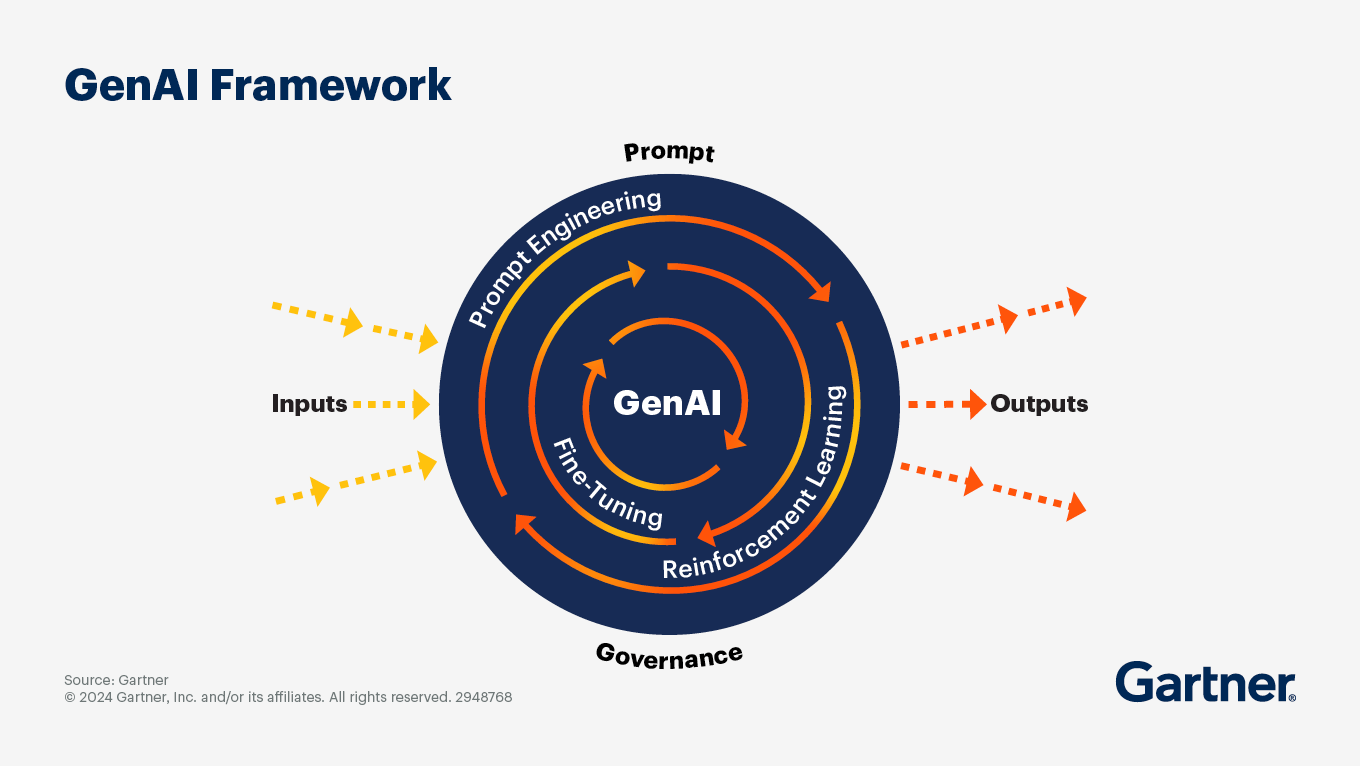
Generative AI relies on advanced models to create data, including Generative Adversarial Networks (GANs), Variational Autoencoders (VAEs), and Neural Language Models (NLMs). These systems learn from data to generate outputs that mimic human creativity.
Generative AI and Discriminative AI serve different purposes. While discriminative models classify data and make decisions, generative models focus on creating new data.
Understanding this distinction helps in choosing the right approach for specific tasks.
RNNs and Long Short-Term Memory (LSTM) networks were the first steps in building AI systems capable of processing sequences, such as text and speech.
GANs revolutionized generative AI by enabling systems to produce hyper-realistic images, videos, and other content. This innovation significantly impacted industries like design, entertainment, and e-commerce.
Generative AI went from experimental to essential in the 2020s, thanks to rapid improvements in computing and groundbreaking models like ChatGPT, Gemini, and Llama.
These technologies are changing industries by supercharging both productivity and creativity, bringing AI into everyday tasks in ways we couldn’t have imagined before.
ChatGPT has transformed how businesses interact with customers and manage content. This makes it more than just a chatbot—it’s more like a tool capable of creating personalized marketing campaigns, drafting complex reports in seconds, and automating processes across departments.
Understanding and mimicking human conversation, helps companies save time and connect more authentically with their audiences.
Gemini has redefined contextual understanding, making it a game-changer for industry-specific solutions.
Whether it’s helping doctors diagnose diseases faster or enabling architects to create sustainable designs, Gemini’s ability to process nuanced information has set a new standard for AI tools. It’s particularly valuable in handling complex, specialized tasks that demand deep insights.
Llama has made collaborative innovation more accessible than ever. By prioritizing open-source principles, it empowers researchers and developers to push the boundaries of AI.
This generative AI framework creates breakthroughs in areas like climate modeling, educational tools, and social impact initiatives. However, it also raises new questions about ethical data use and licensing, making it a catalyst for important industry conversations.
SaaS platforms now harness generative AI to revolutionize how businesses operate. By automating repetitive processes, improving customer interactions, and crafting tailored solutions, generative AI empowers companies to save time and innovate faster. It enhances the adaptability of SaaS tools, making them smarter and more intuitive for users.
Generative AI is transforming healthcare by accelerating drug discovery, refining medical imaging, and enhancing patient diagnosis accuracy.
It cuts down the time and cost involved in clinical trials and provides tools that empower doctors with precise, data-driven insights. This technology also opens doors for personalized treatment plans tailored to individual patient needs.
Generative AI is redefining content creation by enabling the rapid production of articles, videos, images, and audio.
Creators can scale their projects with ease, using AI to brainstorm ideas, draft high-quality material, and automate repetitive tasks. While AI speeds up the creative process, human oversight ensures the content remains accurate and unbiased.
Marketing has embraced generative AI to craft campaigns that feel personal, analyze customer behavior, and predict future market trends.
AI helps create engaging advertisements, simulate potential scenarios, and uncover opportunities that drive success. It empowers marketers to make data-informed decisions and stay ahead in competitive landscapes.
Generative AI is reshaping media and entertainment by streamlining production processes and offering new creative possibilities.
From generating realistic special effects to composing original music, AI tools are pushing the boundaries of what creators can achieve. While boosting efficiency, these innovations also prompt discussions around ethical use and intellectual property.
Modern AI platforms allow enterprises to fine-tune pre-trained models to align with niche use cases.
More importantly, they support multi-modal frameworks capable of processing varied data types—text, images, and even structured data—enabling cross-functional workflows and deeper insights.
How so? These models leverage transfer learning techniques to optimize performance for specific domains, offering scalability while maintaining operational consistency across diverse applications.
Transitioning to more energy-conscious models involves optimizing algorithms and adopting hardware accelerators designed for specific workloads. These approaches reduce computational overhead and improve processing efficiency.
Additionally, edge computing frameworks are increasingly utilized to process data locally, minimizing reliance on energy-intensive cloud systems. By consolidating these techniques, enterprises can achieve sustainable AI deployment without compromising model performance or scalability, ensuring a balance between innovation and environmental responsibility. What this will do is:
Since robotic systems and equipment often operate with distinct protocols, aligning generative AI capabilities across these systems can be complex due to varied operational frameworks. By incorporating generative AI, you can synchronize task execution and refine autonomous operations.
More importantly, generative AI can predict system behaviors and optimize robotic workflows, reducing downtime and improving precision in real-world applications
Using AI with robotics can revolutionize industries like manufacturing, logistics, and healthcare.
Since generative AI relies on vast datasets, addressing gaps in existing information can be challenging due to the variability of available data. By using AI-generated synthetic datasets, models can simulate realistic scenarios that fill these voids effectively.
AI can and will be used more to fill gaps in data, creating realistic models for simulations and decision-making.

Entrans offers expertise in generative AI, helping businesses unlock its potential while addressing challenges.
Generative AI can be used to improve your existing framework, automating even the most mundane tasks.
Generative AI is a game-changer, and staying ahead requires continuous learning, innovation, and ethical implementation. By embracing this technology thoughtfully, businesses can shape the future of their industries.
Want to know more about this? Reach out to our AI team for a free call!

-1.svg)