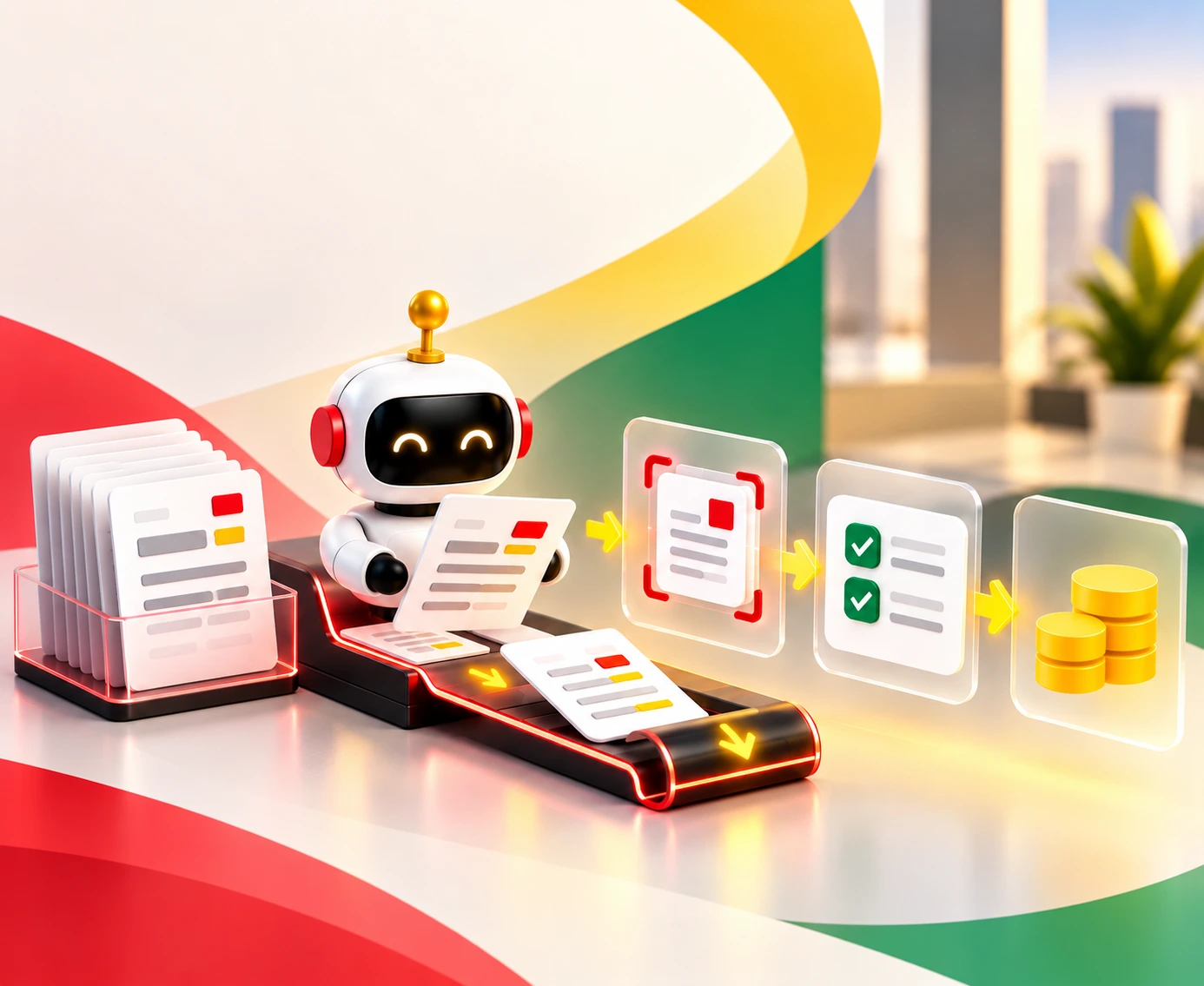
Legacy code reverse engineering with AI: extract hidden business rules, map dependencies, and turn undocumented systems into a modernization blueprint.

Agentic Unconference 2026 - September 19, Chennai
View Event →


Why does nobody on the team want to touch that one legacy codebase?
The one engineer who really understood it left for a new job months ago.
So now a black box sits in the middle of everything, still running payroll, or claims, or order routing, and nobody wants to be the person who pokes it and finds out what falls over.
Legacy code reverse engineering is the real starting point behind almost every modernization effort.
Here's how it plays out in legacy code modernization from start to finish.
Legacy code reverse engineering means going through a system or codebase that already exists, its database, everything it plugs into. And doing this until you can say plainly what it does, why it does it, and what breaks the second you touch the codebase.
What you want at the end is a clear, provable picture of the thing. Something current. Something you can lean on to maintain it, move it, or swap it out without knocking over the business sitting on top.
Plenty of people write legacy code reverse engineering off as a documentation exercise. Honestly, it's closer to detective work.
Reverse-engineering an entire legacy codebase costs real time and attention. Most teams don't take it Legacy code reverse engineering just because they feel like it.
What tends to happen instead: a handful of signals pile up, and one day the project has basically already kicked off, budget or no budget.
Once those signals show up, here's what a properly run AI reverse engineering legacy code pass actually hands back.
AI reads through modules, stored procedures, and scripts the way a senior engineer would, then spells out what each one does and what calls it, in language plain enough for a business analyst to follow along.
Thoughtworks put real numbers on this. One proof of concept dropped the time to reverse-engineer a 10,000-line COBOL module from six weeks down to two. That's a 66 percent cut, and across a full program it adds up to hundreds of engineer-years.
The essential parts of code are buried in old conditionals and status codes nobody ever explained.
AI can follow a nested IF or a MERGE statement back to the rule it's really encoding. Take a status code of C.
Turns out that flags a completed transaction tied to a 48-hour SLA. AI writes that down as a requirement you can actually review, rather than leaving it locked up in a snippet only the machine understands.
AI reads through source files, config, and schemas and turns them into maps you can read: C4 diagrams, entity-relationship diagrams, full cross-system integration pictures.
Database teams lean on this to track how a front-end call threads through an API and into a stored procedure.
Circular dependencies and tight coupling that a human would scroll right past in ten thousand lines of T-SQL? They surface.
The same pass that documents a system also flags what's actually unused and what's quietly dangerous.
Worth remembering why that matters: AI-written code brings its own baggage. Testing across 100-plus large language models found 45 percent of
AI-generated code slipped in an OWASP Top 10 vulnerability, and on Java the failure rate climbed as high as 72 percent. Go at an old system with that same rigor and you catch both flavors of risk in a single sweep.
Every finding gets written down as living documentation instead of a wiki page nobody updates again.
And each one links straight back to the file, query, or schema it came from.
One case study moved a legacy ATM system off COBOL and onto Go. The Reversa framework spat out 517 traceable claims about how the system behaves plus 53 test scenarios, all pulled straight from the source. That's exactly the footing you want before you go anywhere near a cutover.
Pasting code into a general-purpose chatbot falls apart fast at this scale.
Which means for companies to build a good system, without legacy code reverse engineering, you get made-up dependencies and summaries that look finished and aren't.
The frameworks that hold up- AWS Transform, Sahaj AI, the open-source Reversa project- mostly follow the same five steps.
Before anyone touches a line, get clear on what you're actually after. Integration readiness? Faster onboarding? Less technical debt? A clean spec so you can walk off the platform for good?
Pick one.
Most teams start narrow, with a single critical journey like loan origination or order routing, prove the output holds up, and only then roll the same process out across everything else.
Legacy code is never in one tidy place. Repos, databases, scheduled jobs, scripts nobody has opened in years.
Teams gather all of it into what practitioners call a simulated monorepo, one stitched-together view built for the AI's context window.
From there, something like Thoughtworks' CodeConcise breaks the code into Abstract Syntax Trees and loads them into a graph database, so an agent can follow one change in a tiny utility all the way out to the screen a user clicks on.
With the map in hand, specialized agents settle in for legacy code reverse engineering. They trace control flow. They pull apart a 2,000-line stored procedure nobody else will go near. They pin down the dynamic SQL that legacy systems love to stitch together from strings at runtime.
Those same agents can query system views like sys.sql_expression_dependencies and dig out cross-database links that plain static analysis would sail right past.
Code shows you how a system behaves. The reasoning behind it rarely makes it into the source. So this step stays human-led, full stop, because AI is more than happy to make up business intent that sounds right and isn't.
The pattern goes like this. AI drafts the guess, the rule, the state machine, the permission boundary. Then domain experts sign off on it or set it straight.
And when the source is off-limits altogether, teams fall back on black-box reverse engineering, turning AI agents loose on the UI while they watch the database shift underneath, building the logic back up from the outside in.
All of it gets pulled together into one traceable blueprint. Architecture diagrams, a requirement tree, acceptance criteria, a compliance map, every claim wired back to the exact file or query behind it.
Platforms like Zaptoline take legacy code reverse engineering a step further and churn out as many as 83 structured fields per requirement, then push the whole set over to Jira, Linear, or a plain document format. That way your engineers and your downstream AI coding agents all build from one spec nobody can argue with.
The blueprint feeds the next decision, not the finish line. Run it through a 7 Rs assessment for each system: retain, retire, rehost, replatform, repurchase, refactor, or rebuild.
Reverse engineering tells you exactly where a system stands today. Forward engineering is what gets the business where it's actually trying to go.
Entrans runs legacy code reverse engineering and modernization as one connected engagement, not a documentation project handed off and forgotten.
Legacy code shouldn't be the reason your team is afraid to ship.
Book a free call with our modernization architects to see how you can future-proof your systems

Going into a system that already exists until you can say what it does, why it does it, and what breaks when you change it, especially when the docs are gone or plain wrong. AI takes what used to be slow, manual code archaeology and turns it into a structured process that ends with a spec you can actually modernize from.
AI reads across the whole repo, sums up each module in words you can follow, maps out the dependencies and data flow, flags the dead code, and drafts documentation while it goes. Agentic pipelines run all of that over hundreds of files at once. Engineers and subject-matter experts still check it over before anybody leans on the result.
Yes. Working off the interface, the database schema, and the network traffic, AI can piece together a working spec of what the system does, and black-box experiments have borne that out. Confidence is lower than when it has the source, so treat the output as a first draft that still needs an expert to look it over.
Fine for a first pass. Not something to trust with your eyes closed. AI will happily hand you a summary that reads as right and is quietly wrong. Treat every rule it pulls out as a hypothesis, then check it against your characterization tests and the people who actually know the business before it goes anywhere near production.
Reverse engineering works out what a system already does. Forward engineering builds the new one from a validated spec of that behavior. Every real modernization program does both, in that order. Understand first. Rebuild second.
The part that matters isn't paperwork about old code. What you're really after is a validated, future-state business spec, the rules, workflows, and data model the new system has to carry out, and the contract your engineering team builds against.
Yes. Going over systems you already own is normal practice, not a security risk on its own. Run it in a sandbox, keep a human signing off on every AI claim, and treat any security issue that turns up as a head start rather than a liability. Finding it during discovery beats finding it once it's live, and it's far cheaper.

-1.svg)