Looking for the best LLM development company? Compare their services, technical expertise, pricing, and experience to find the right partner in 2026.

Agentic Unconference 2026 - September 19, Chennai
View Event →




Language models are changing the ways companies handle information, serve clients, and even develop software. Nonetheless, using AI technologies to generate business value requires more than just access to state-of-the-art solutions.
Choosing the right LLM development partner is very important here. They bridge this gap by customizing models, building robust RAG pipelines, and deploying autonomous agentic workflows tailored to your operational needs.
This blog discovers the top 10 LLM development companies that help you unlock competitive advantages through tailored AI solutions.
LLM development is the process of building, customizing, and training large language models to handle specific text and data tasks to generate human-like text. includes not only training the model, but also integrating it with business data, as well as developing an application like an AI Chatbot.
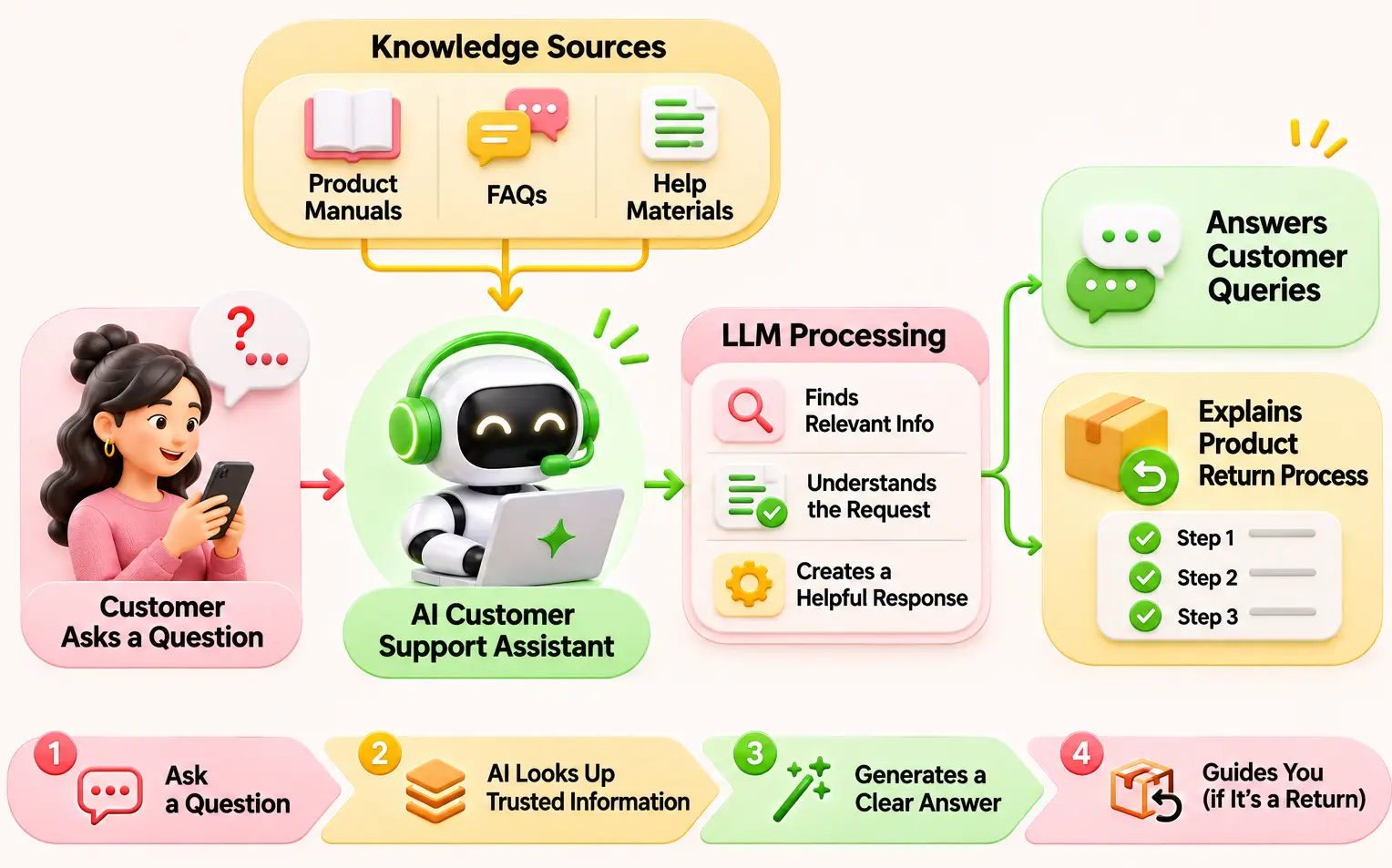
Below is an example of LLM development where an AI Customer Support Assistant responds to customer queries.
An LLM development company must have an appropriate team that has the required technical expertise and experience in developing AI solutions in business environments. For this purpose, we took into consideration certain factors that can be used to identify LLM development firms and their experience.
Each company's years in operation, number of employees, location, and experience working with enterprises were taken into consideration. We showed a preference for experienced LLM development companies with more than 50 employees and experience in developing AI and software.
We analyzed the breadth of LLM development services that each company provides. These services included LLM consulting, LLM development, LLM fine-tuning, RAG development, LLM application development, and LLM integration. The companies that have knowledge and expertise at different stages of LLM projects received more attention.
We examined each LLM development company's familiarity with leading language models, AI frameworks, enterprise data, and application development, as well as its ability to develop customized AI applications.
Top companies perform organized discovery, allowing companies to make assessments for build-versus-buy decisions, deal with stringent privacy requirements, and plan a long-term roadmap. We have considered LLM development companies that provide proper LLM Consulting Services.
We verified Clutch pricing for publicly listed services, minimum project requirements, and customer reviews. This information is useful for LLM development companies to compare the cost of services and their experience.
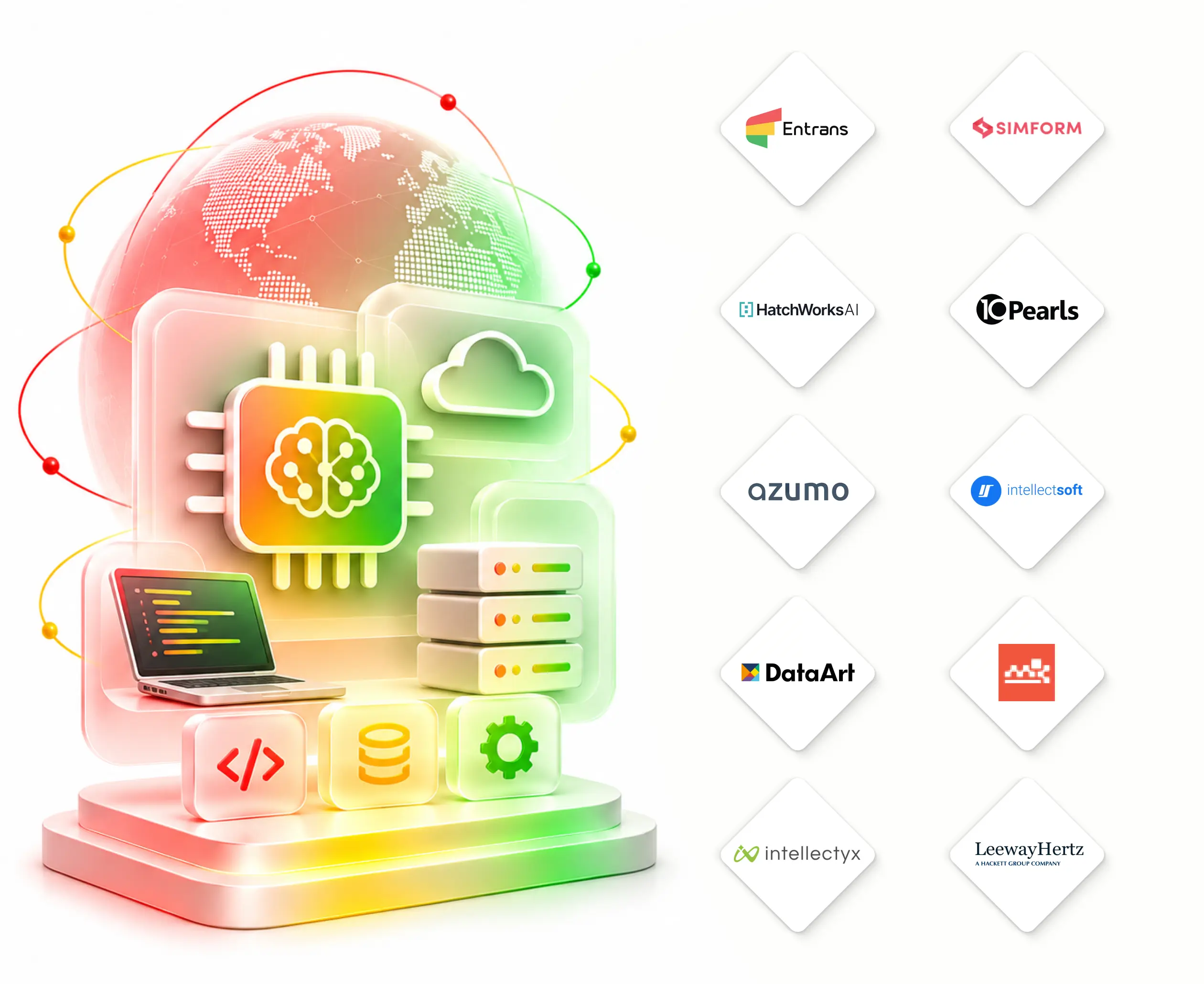
The following is a list of the top 10 LLM development service providers and the ways through which they provide their services, which qualifies them for being categorized as LLM development service providers. They are consulting firms, custom software service providers, and engineering delivery partners, not foundational model vendors.
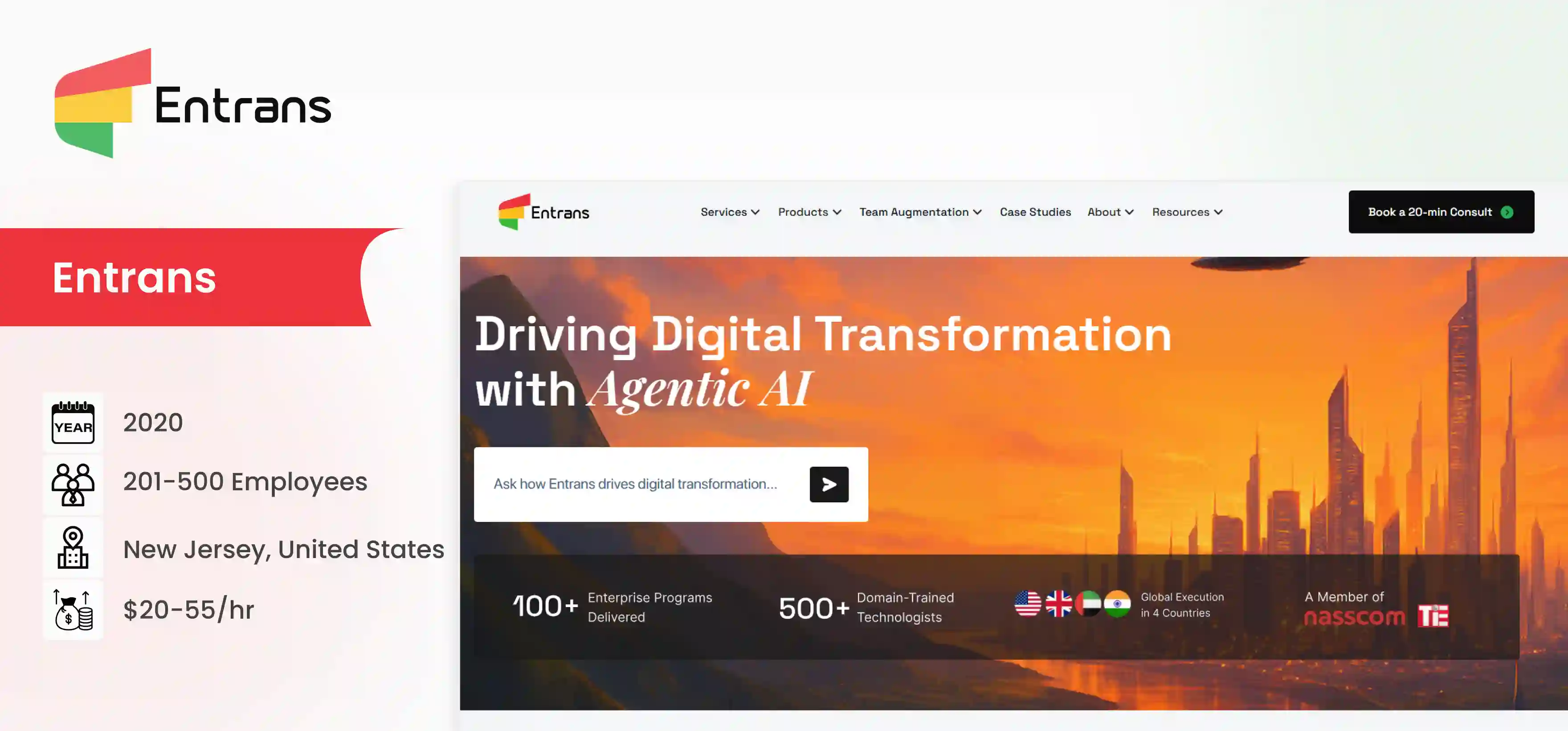
Entrans is an AI-first engineering partner that helps businesses transition from simple GenAI experiments to secure, production-grade applications. We provide custom generative AI model development by fine-tuning LLMs on a company’s proprietary data. Our end-to-end LLM development services include API integration, MLOps, automated guardrails, and private cloud deployments tailored to your business workflows.

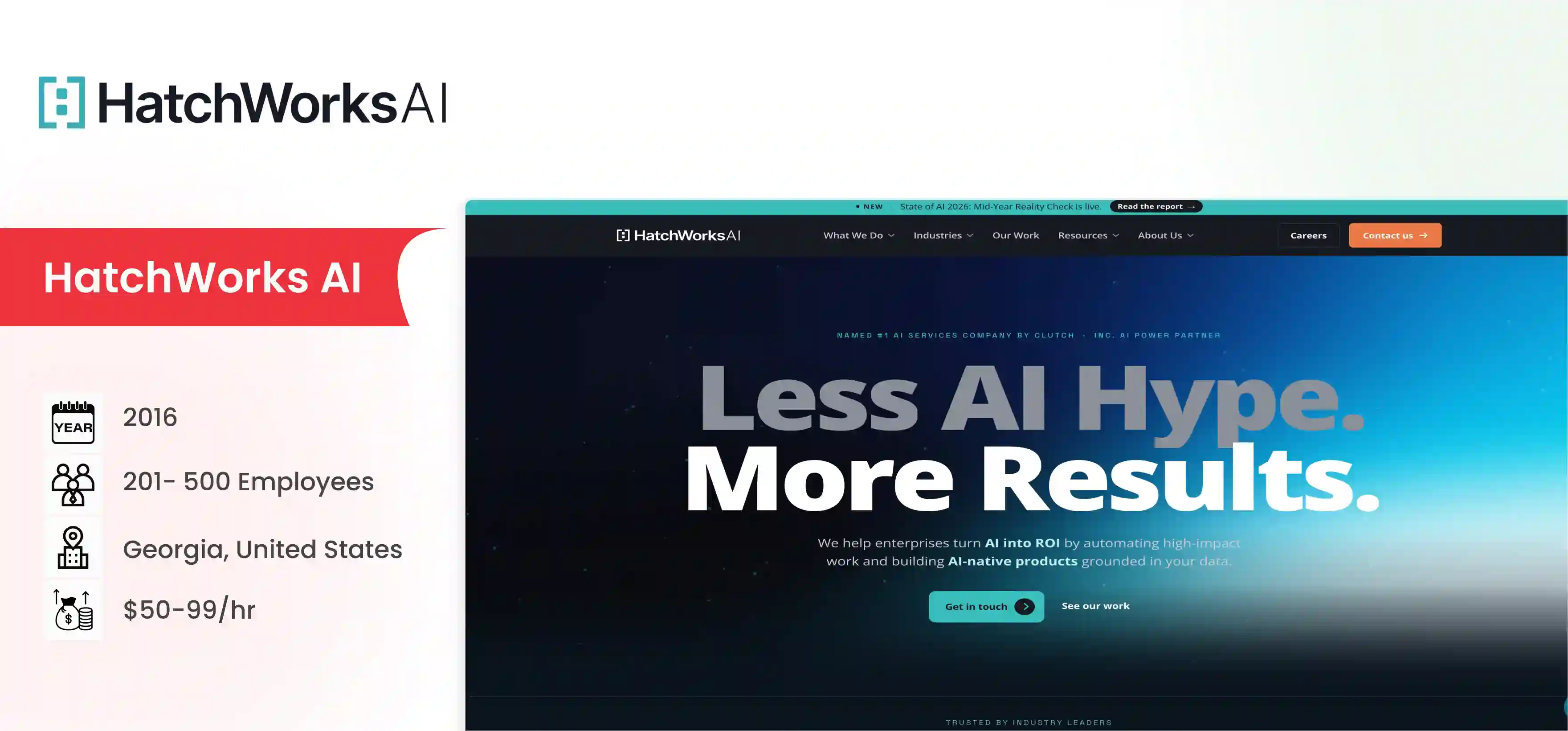
HatchWorks AI is a pure-play AI development and engineering partner. They deliver enterprise-grade LLM development services through their custom "Intelligence Layer" framework. The services it offers include custom LLM development, generative AI solutions, RAG, AI agents, and enterprise data integration. It helps businesses turn their data into valuable AI solutions.
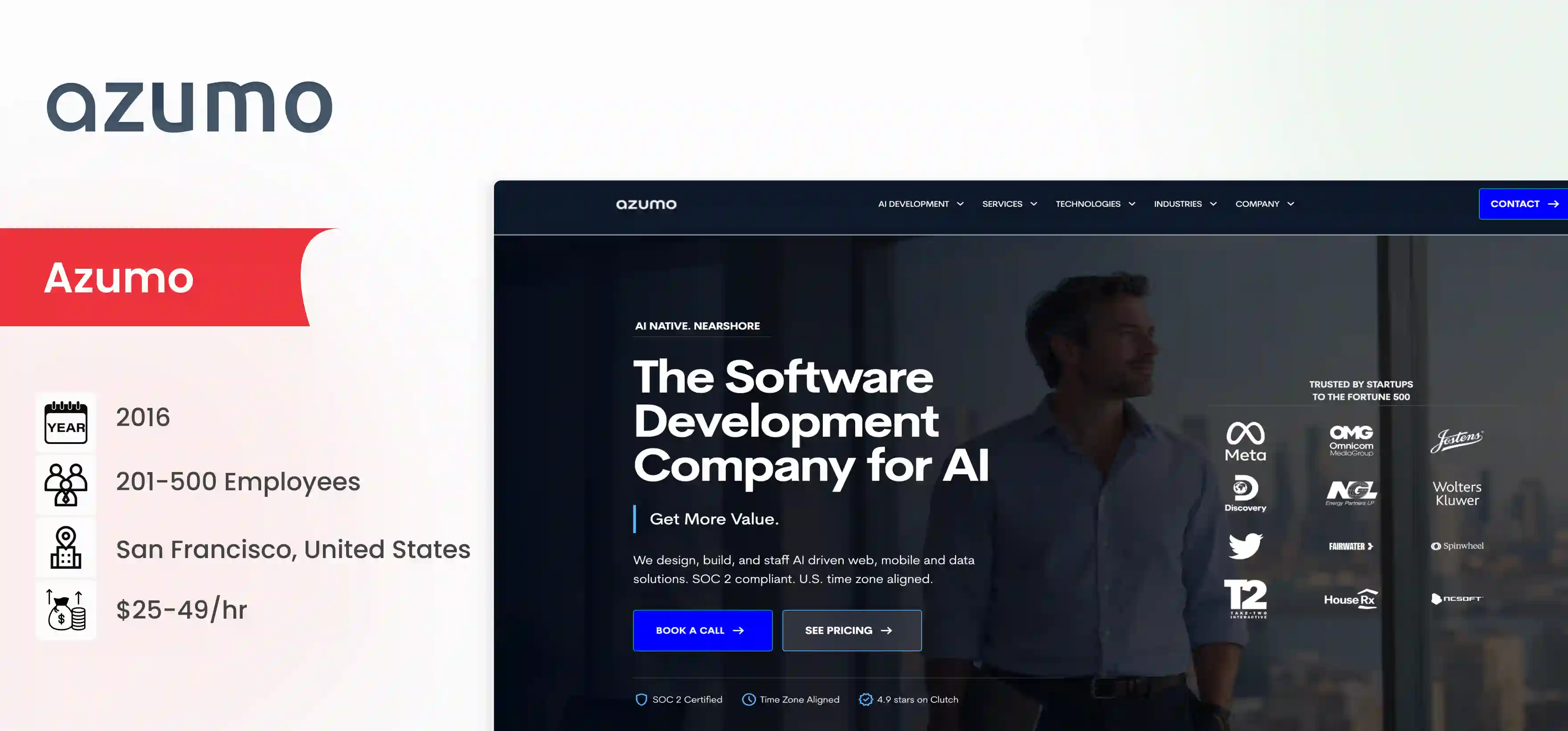
Azumo is a nearshore software development company that provides development of customized LLM applications, RAG architectures, and fine-tuned models for mid-market as well as enterprise-level companies. Azumo not only develops but also integrates these solutions with existing business systems.
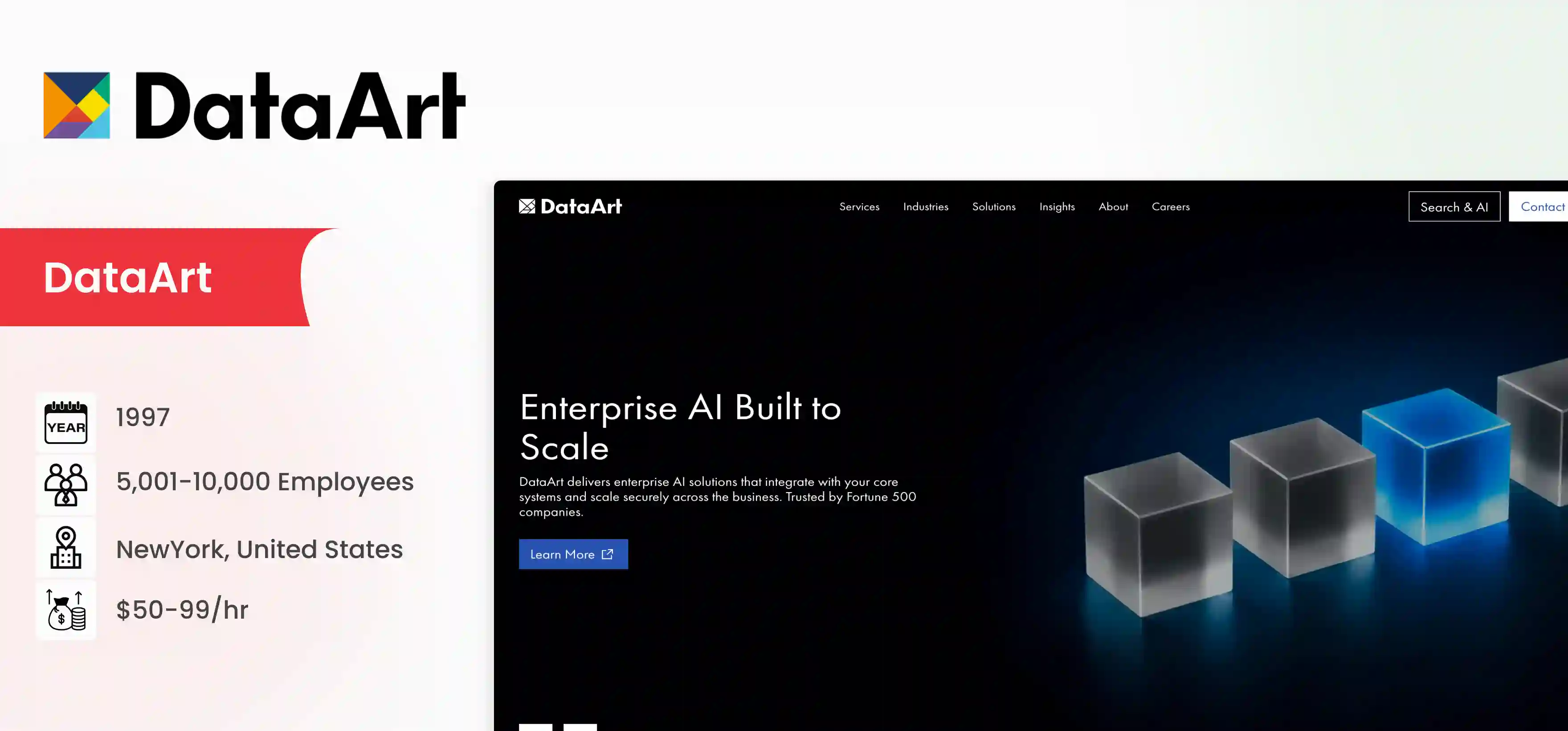
DataArt is a global software engineering firm that delivers breakthrough data, analytics, and AI platforms for the world’s most demanding organizations.
Its LLM development services include custom LLM development, model fine-tuning, RAG systems, generative AI applications, and AI agents. The team also helps connect these solutions to enterprise data and existing systems, from the prototype to production.
Intellectyx is a company that offers AI engineering services to enterprises by designing custom LLM applications, autonomous agents, and domain-specific models for data-driven organizations.
The delivery pods offered by Intellectyx design secure RAG pipelines, model integrations within the existing software stack, and governance frameworks.
Simform is a digital product engineering company with a global delivery team that specializes in digital product engineering, with a worldwide delivery team consisting of more than 1,200 developers, architects, and data engineers. Simform is an AWS Premier Tier Partner and Microsoft Gold Partner.

10Pearls is an AI-first software development company that designs customized generative AI solutions, fine-tuned LLMs, and RAG security solutions.
It has delivery centers across the globe where domain-specific AI agents are developed, foundation models are deployed in current cloud infrastructures, and MLOps pipelines are created.
Intellectsoft is a software firm that develops custom LLM applications, autonomous AI agents, and RAG architectures for all types of businesses, whether small or large.
Their multidisciplinary teams tailor open-weight algorithms and govern data to deploy production AI on legacy corporate systems.
Master of Code Global is an AI development company that focuses on the development of conversational AI, custom LLM solutions, and autonomous agents.
They also assist with data preparation, systems integration, deployment, and maintenance of models to help clients bring their LLM projects from concept to implementation.
LeewayHertz is an AI engineering and consulting firm operating within The Hackett Group. Their cross-functional engineering teams fine-tune domain-specific models, construct secure RAG pipelines, and integrate generative AI capabilities directly into complex cloud and legacy IT ecosystems.
Exploring specific LLM use cases can help real-world deployment patterns before committing engineering resources.
Partnering with a specialized LLM development company allows enterprises to transform raw foundation models into practical, business-ready applications. Here is how to select a team that matches your strategic goals:
Look for an LLM development company that has experience in custom LLM development, model fine-tuning, RAG, and LLM application development. Check which models and AI frameworks the team works with.
Choose an LLM development company that covers the services your project needs, from LLM consulting and development to LLM integration services and deployment. Ask about similar projects and their results.
Look for a specialized LLM application development company with proven experience in custom fine-tuning (such as PEFT and LoRA) and Retrieval-Augmented Generation (RAG). The right team should demonstrate how they connect models to enterprise data stores while strictly controlling hallucinations, which can be helped by monitoring against common vulnerability vectors identified in the OWASP Top 10 for Large Language Model Applications—including prompt injection, insecure output handling, and training data poisoning.
Choose an LLM development company that excels in LLM integration services. They must seamlessly link custom AI models to your existing cloud infrastructure, internal APIs, and enterprise software, all while enforcing data security and regulatory compliance.
Review pricing, project timelines, client feedback, and post-launch support. Make sure the team can explain technical decisions in clear terms. The best LLM development company should understand your goals, work with your existing systems, and help turn your AI plans into a solution your business can use.
Creating LLM-based solutions is not only about selecting an appropriate language model and integrating it with the application. Companies will require the proper data, language model configuration, security features, and maintenance to achieve meaningful outcomes.
An LLM development company should help integrate all these aspects. Below are the key services offered by an LLM development company.
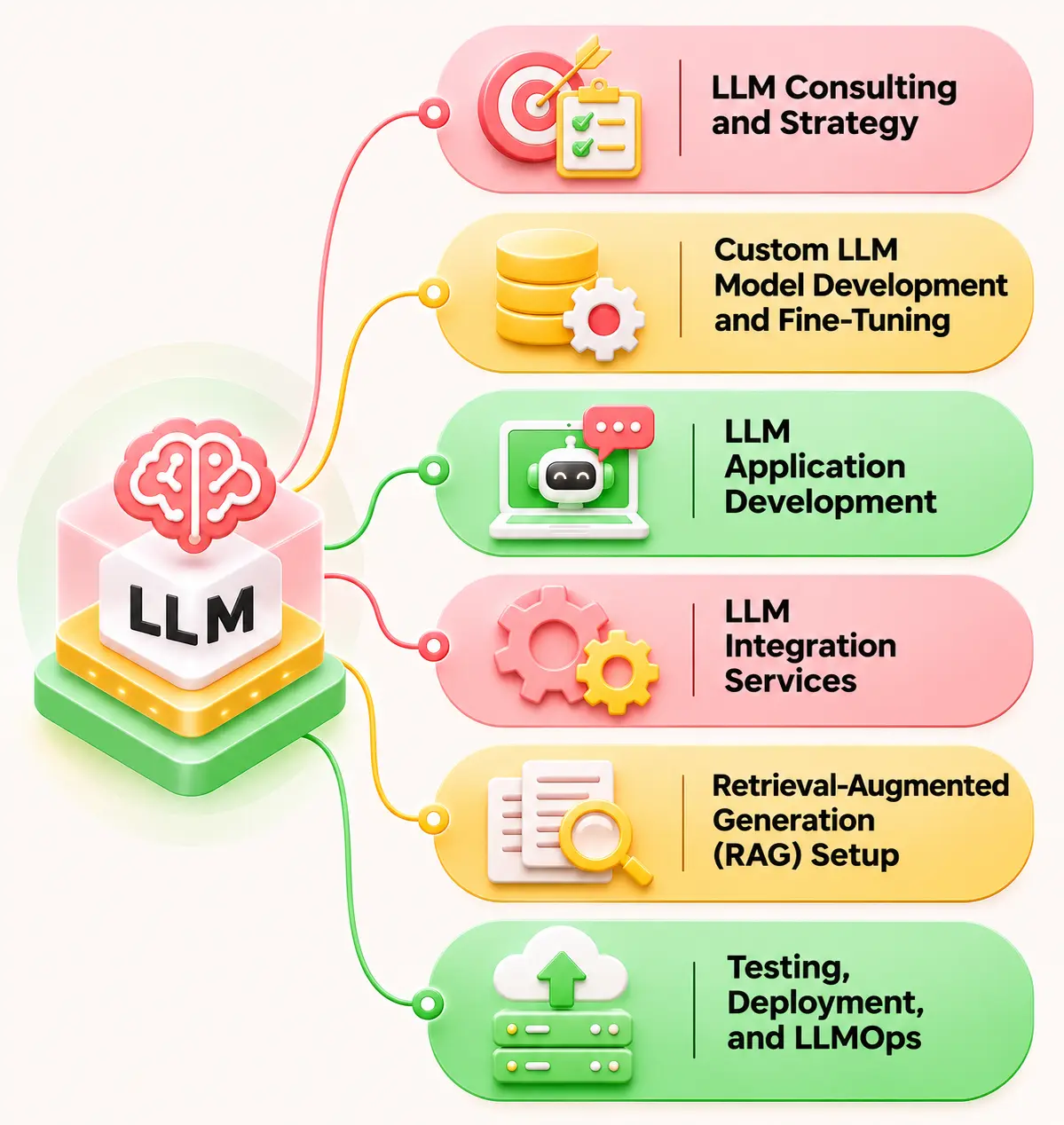
Before writing a single line of code, LLM development companies offer LLM consulting services to align business goals with the right AI architecture.
Consultants analyze business requirements, data availability, technical constraints, and costs involved. They also assist in choosing the appropriate model, setting project objectives, and designing the development methodology.
This initial phase prevents expensive experimentation and establishes clear metrics for performance, data security, and ROI.
A primary offering revolves around custom LLM development services since ready-made models may not fit for every business task. The models can be trained or fine-tuned on appropriate datasets, industry-specific data, and corporate examples.
In addition, developers modify model behavior to perform document review, content creation, and answering questions.
To fine-tune a model for everyday needs requires full-stack LLM application development. LLM application development entails making models that become useful as AI chatbots, virtual assistants, document search engines, internal knowledge assistants, and more.
An LLM application development company will create the interface and link the model to the required features for customers or employees.
Comprehensive LLM integration services connect intelligent engines directly to your existing enterprise software, such as CRMs, ERPs, databases, and custom SaaS platforms. By setting up robust API pipelines and tool-calling capabilities, the model can automate complex, multi-step actions across your software stack. Understanding how to integrate AI into existing enterprise systems can be helped by planning data access layers and security boundaries early in the deployment process.
RAG establishes a connection between the LLM and business data sources that can be trusted. First, the RAG system fetches relevant information from the corporate documents, databases, or knowledge base and then creates an answer to a user’s question.
Testing takes place before the launch of the model to assess its accuracy, performance quality, speed, security, and costs. It is launched after that in an appropriate cloud or private setting. Tracking output reliability across iterations can be improved by adopting a structured LLM evaluation framework to measure hallucinations, latency, and drift.
LLMOps includes performance monitoring, upgrades, error detection, and model improvement. Enterprises may also consider employing LLM developers to do all this.
The real success of LLM development depends on how the AI ideas are turned into practical solutions. Partnering with Entrans brings an AI-first digital engineering approach to custom model deployments.
Ready to turn complex generative AI concepts into secure, enterprise-ready software. Book a consultation call with us.

An LLM development company offers LLM consulting, custom LLM development, model fine-tuning, and RAG development. Its LLM development services may also include AI application development, system integration, testing, and deployment.
Engineers begin by gathering and anonymizing client proprietary data, defining specific schema outputs, and choosing a foundation base model. They then apply task-specific fine-tuning or pre-training to align the model with enterprise domain logic and strict operational requirements.
LLM development companies work with models such as GPT, Claude, Llama, and Mistral, along with frameworks like LangChain and LangGraph. They may also use Python, vector databases, cloud platforms, and APIs for LLM application development.
LLM developers train a pre-trained model on domain-specific data to improve its performance on selected tasks. They use techniques such as supervised fine-tuning, LoRA, and QLoRA to customize the model.
Teams evaluate applications using automated LLM-as-a-judge frameworks, golden evaluation test sets, and regression release gates. They run continuous telemetry to monitor output accuracy, semantic drift, response latency, and token usage costs in real time.
The cost of LLM development services depends on model selection, data preparation, fine-tuning, and application complexity. LLM integration services, cloud usage, and ongoing support can also affect the total project cost.
A basic LLM application development project may take a few weeks to build and test. Custom LLM development, enterprise integrations, and complex LLM product development can take several months.