Learn about the top 10 AI readiness assessment consulting companies of 2026, what services they offer, pricing, and how to select one.

Agentic Unconference 2026 - September 19, Chennai
View Event →




Navigating artificial intelligence without a clear framework can lead to risky, costly failure. That is why, before venturing into the business processes themselves, businesses must know if they are ready for it. And that is the point where an AI readiness assessment company can help. They audit your core infrastructure, score your team's readiness, and deliver a clear transformation blueprint.
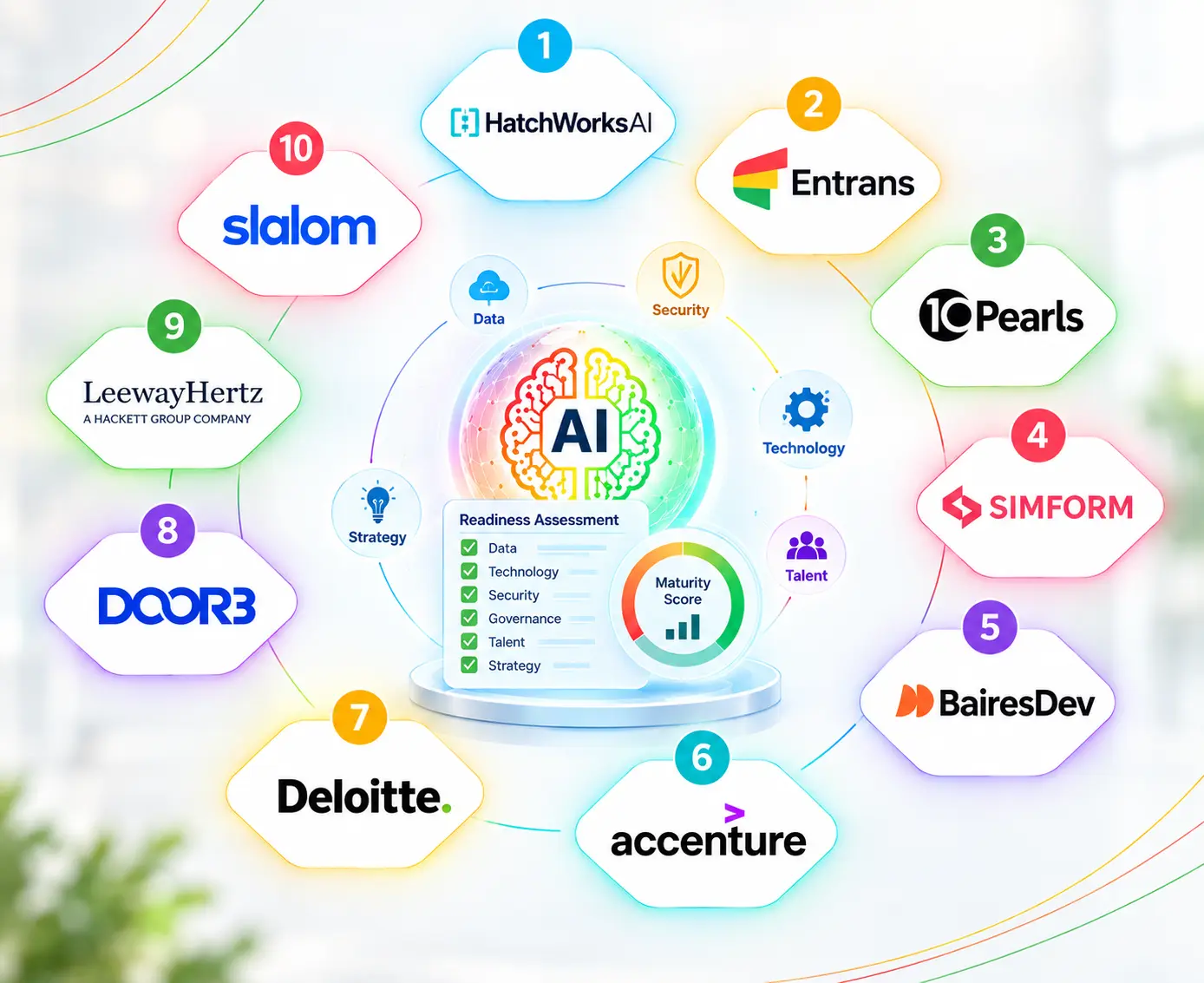
This blog contains an analysis of the top 10 AI readiness assessment consulting firms that are willing to learn about your current status and what comes next.
An AI readiness assessment is a process of conducting a thorough analysis aimed at determining if your company’s data, technology, talent, and processes are ready for implementation of AI solutions.
This will help you avoid wasting time and money by moving to AI without being fully prepared for it.
We have evaluated the top AI readiness assessment companies based on the following criteria that provide high-quality and reliable services.
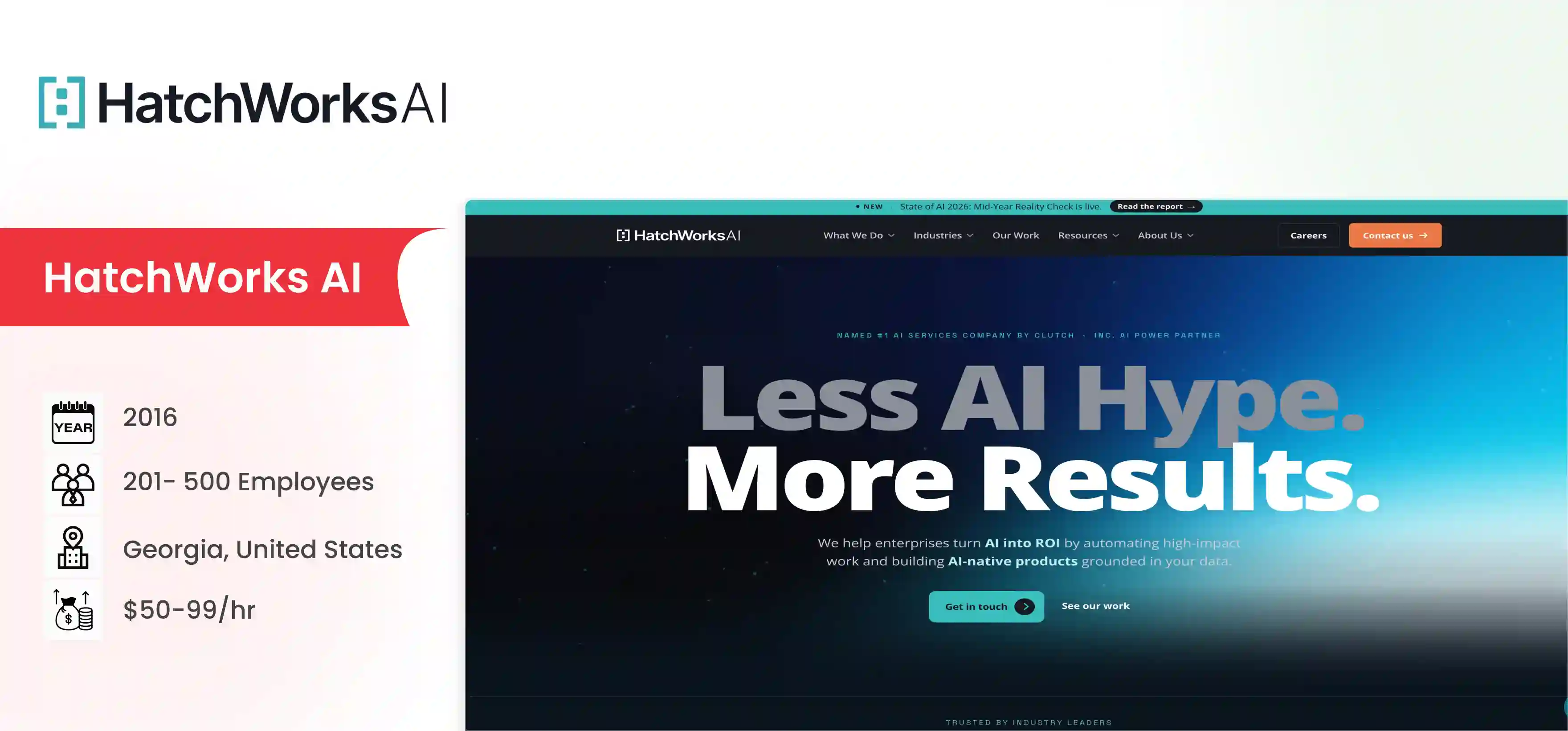
HatchWorks AI provides digital engineering, AI integration, and software delivery through strategic advice and centers for delivery firms located nearshore.
Their AI readiness assessment includes an assessment of the latest data lakehouse architecture, model observability, and readiness for MLOps deployment.
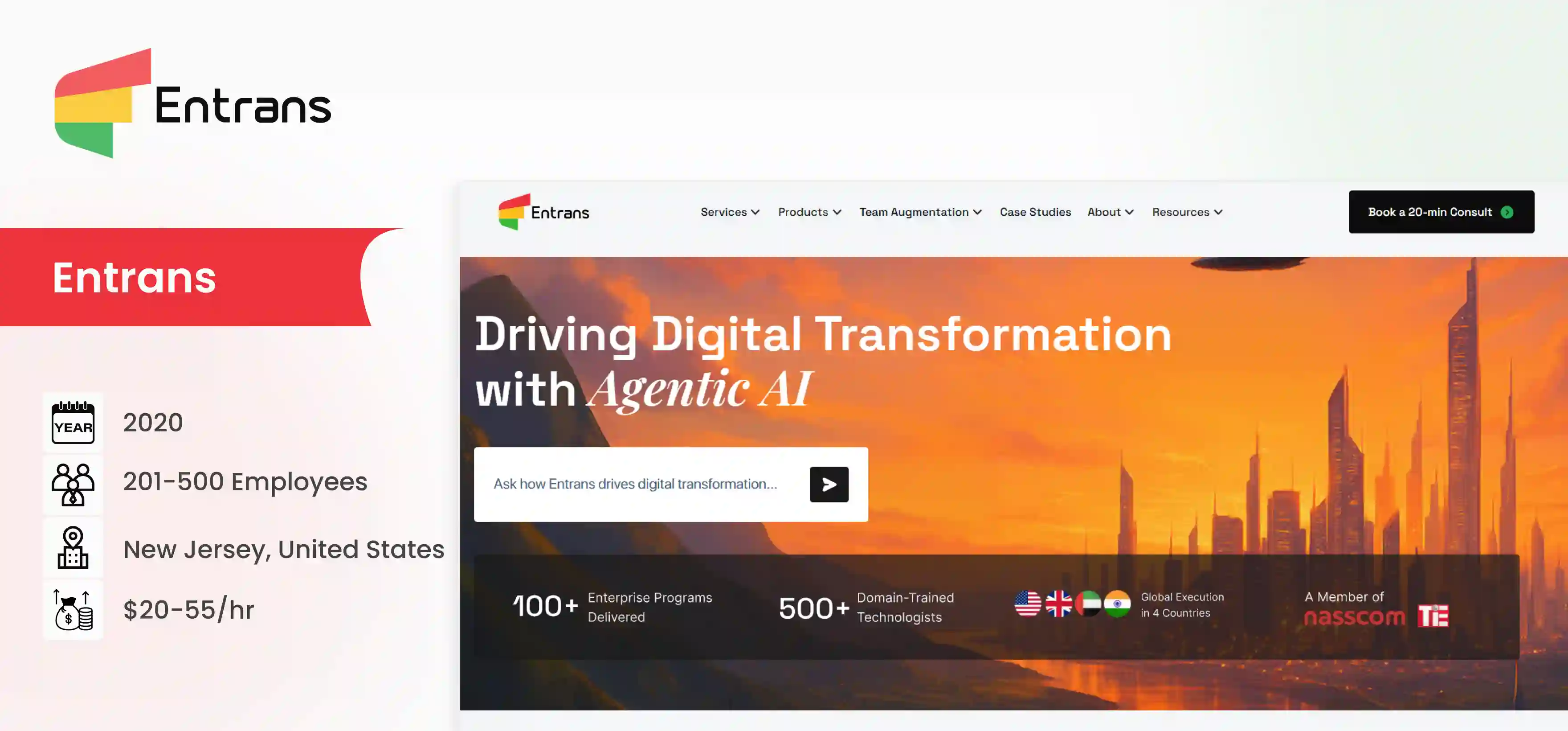
Entrans is a leading AI-first digital engineering partner that provides end-to-end digital engineering services for enterprises. Our definition of AI readiness assessment involves a detailed examination that helps enterprises discover the gaps in data, infrastructure, governance, security, skills, and processes before scaling artificial intelligence to production.
We have an enterprise-wide AI Readiness Assessment, which is designed to help medium-sized and international enterprises determine their readiness level before launching and scaling their artificial intelligence solutions.
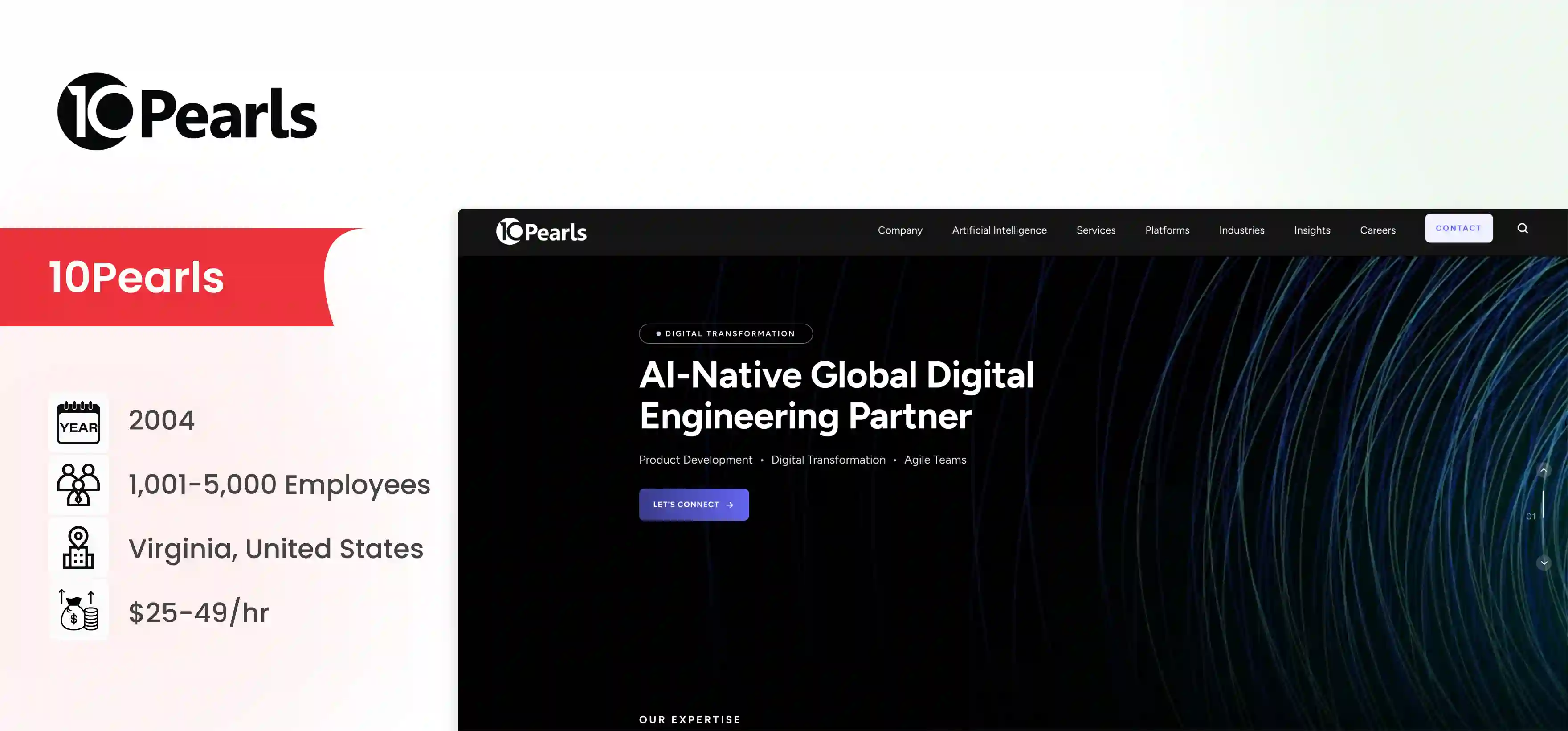
10Pearls is a global technology organization driven by data that offers tailor-made software solutions and digital transformation services to organizations. The company finds a perfect blend of rapid development and a product-oriented strategy.
Simform is a digital and product engineering company specializing in cloud, data, AI/ML, and experience engineering. Their AI readiness service evaluates the underlying engineering plumbing required to support advanced predictive and generative AI models.

BairesDev is an IT firm that provides high-quality and secure software development solutions for enterprises. It provides an AI readiness assessment as part of its strategy and transformation services. This assessment evaluates the level of maturity of AI, objectives of the business, processes, data, and technology to determine potential benefits from implementing AI.

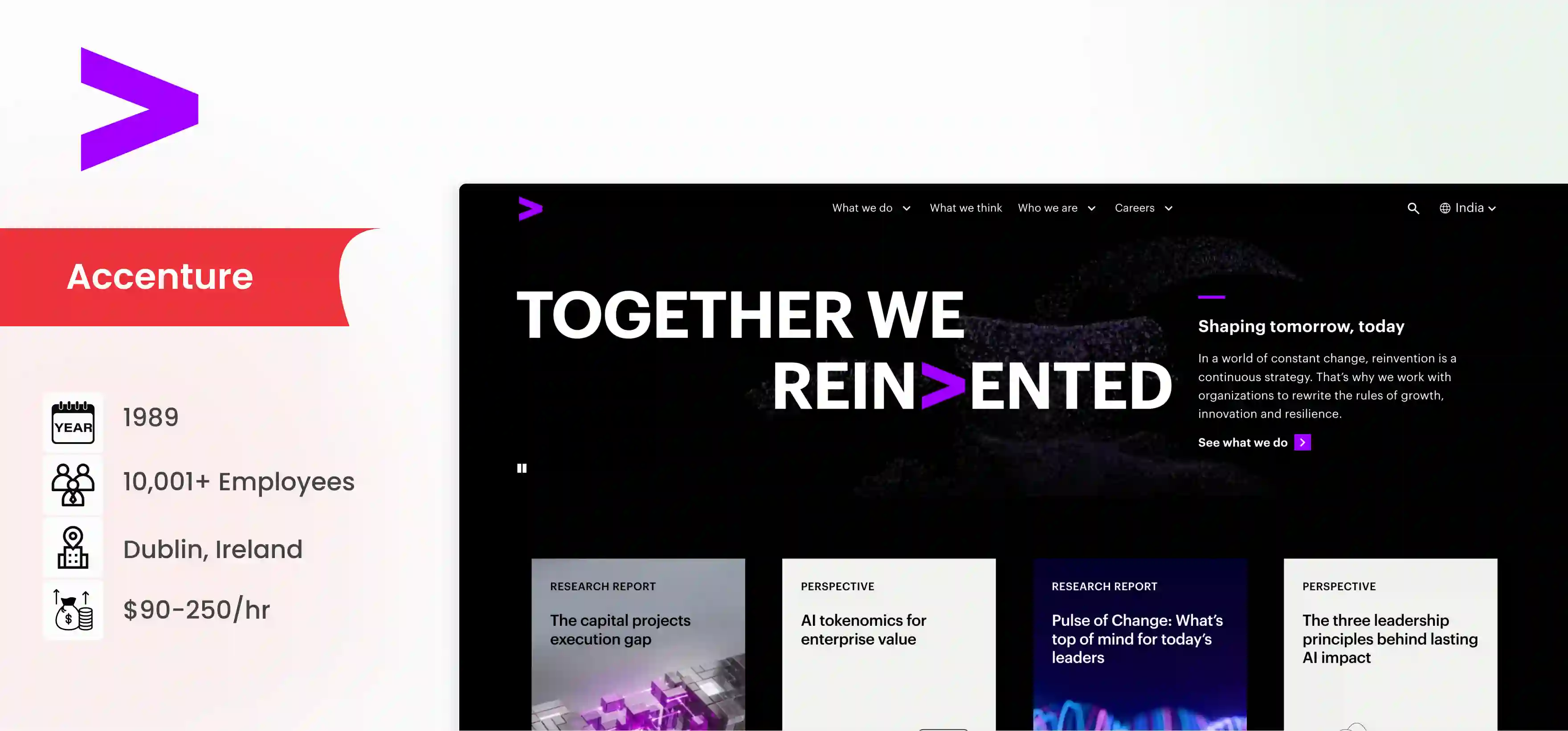
Accenture is a leading Information Technology (IT) and management consulting company. They offer AI readiness assessments that examine an enterprise’s strategy, workforce, workflows, risk and governance, data, engineering, operations, and ecosystem.
Deloitte is an international organization offering professional services and, at the same time, one of the "Big Four" audit companies. They tend to refer to the AI readiness review process as strategic diagnostics that help assess an organization's AI maturity based on six key pillars: Strategy, Data, Technology, Talent, Governance, and Research Capability.
DOOR3 is an AI consulting and technology firm that helps businesses assess AI readiness, identify high-value use cases, and build practical roadmaps for moving AI initiatives toward production.
LeewayHertz is a full-stack Enterprise AI-native development partner known for its ZBrain generative AI platform. Their AI readiness assessment focuses on foundation model viability, custom fine-tuning feasibility, and multi-agent workflow economics.
Slalom has scaled into an enterprise technology and business consulting firm employing several thousand consultants across North America and global markets. They approach the AI readiness assessment through the dual lenses of cloud infrastructure maturity and modern organizational operating models.
AI readiness assessment service providers evaluate your entire operation and build a clear, risk-controlled roadmap toward seamless integration. The comprehensive AI readiness assessment typically focuses on the following primary pillars
First, the AI assessment starts by analyzing the business goals and existing AI initiatives. AI consultants identify high-value use cases and check whether they meet business needs. They also help separate practical opportunities from ideas that may not deliver enough value.
The success of AI is very dependent on the data used and its accessibility. The best AI readiness assessment providers evaluate data availability, data quality, data lineage, metadata, data accessibility, permissions, and data governance to know whether data is suitable for the AI tasks.
The firm assesses the existing technology environment, including cloud computing, compute power, storage, databases, application programming interfaces, deployment, and artificial intelligence platforms. The objective is to establish whether the existing environment is capable of supporting AI processing on the desired scale and costs. Technical evaluations can be improved by performing an AI infrastructure readiness assessment to benchmark hardware and compute capacity.
AI adoption fails more often due to human friction than technical limits. AI readiness assessment consultants evaluate available skills, ownership, workflows, collaboration between technical and business teams, and the capabilities needed to operate AI systems over time.
Security is important as AI works with sensitive business information. AI readiness assessment service providers ensure data handling adheres to frameworks like HIPAA, GDPR, SOC 2, and internal enterprise governance policies. Organizations can be helped by performing a comprehensive enterprise AI readiness assessment to identify risks across large operations.
Several enterprise-level AI readiness assessment services at the enterprise level are now centered on generative and agentic workloads. This assessment may cover topics including RAG architecture, model choice, prompt control, retrieval permissions, monitoring, human oversight, agent actions, rollback, and auditability. Deployments can be improved by conducting a Gen AI readiness assessment to align modern LLM capabilities with business objectives.
Leading AI readiness assessment firms usually assign scores to the various readiness components in order to determine the current state of the organization. This gap analysis assists the leadership in determining which aspects need priority action over others. Tailored strategies can be helped by utilizing an AI readiness assessment by industry framework to address sector-specific requirements.
Finally, the process will entail translating the results of the assessment into a practical plan. For some organizations, AI readiness assessment services will include priority use cases, architectural suggestions, governance initiatives, budget considerations, and a 30/60/90 day roadmap.
AI readiness assessment companies provide the following deliverables
The ultimate goal of AI readiness assessment is to catch the hidden landmines before they burn your engineering budgets. Choosing the right AI readiness assessment consulting firm should cover practical gaps, prioritize the right use cases, and give a clear path.
Choosing an AI readiness partner is about getting a clear picture of what your business can realistically handle and not just receiving another assessment report. Partnering with AI readiness assessment service providers like Entrans means handling things differently.
Learn how we turn those findings into clear priorities, practical actions, and a roadmap for the next stage. Book a consultation call with us.

AI readiness assessment prevents costly failures by identifying technical debt, data pipeline gaps, and compliance risks before spending budget. It ensures your infrastructure, security, and team workflows are actually equipped to support scalable AI implementation.
AI readiness assessment evaluates data quality and architecture, cloud infrastructure capacity, governance and security guardrails, business use-case ROI, and employee skills. The scope can also include specific requirements for generative AI, RAG, or agentic workloads.
AI readiness measures whether an organization is prepared to start or scale AI initiatives cleanly, focusing on foundational infrastructure and data health. AI maturity evaluates how deeply and effectively AI is already embedded into existing production systems and company culture.
An AI readiness assessment usually takes two to six weeks, depending on enterprise size and system complexity. The process combines automated codebase/data audits with architectural reviews and stakeholder evaluations.
At the end of the AI readiness assessment, you should receive an Executive Maturity Scorecard, an evidence-backed Gap Register highlighting production blockers, and a phased 30/60/90-day implementation roadmap.
Yes, mid-sized firms often benefit the most because they have fewer resources to waste on failed pilot projects. An assessment helps them skip trial-and-error by pinpointing high-ROI use cases that fit their exact budget and existing tech stack.
The AI readiness assessment cost varies based on the company’s size, assessment scope, systems, data complexity, and consulting depth. Most firms price the engagement after understanding the specific requirements rather than offering a fixed rate.